How to reduce dependence on the founder before franchising
Find out which decisions need to move beyond the founder and how to build a management approach that future franchisees can replicate.
Published
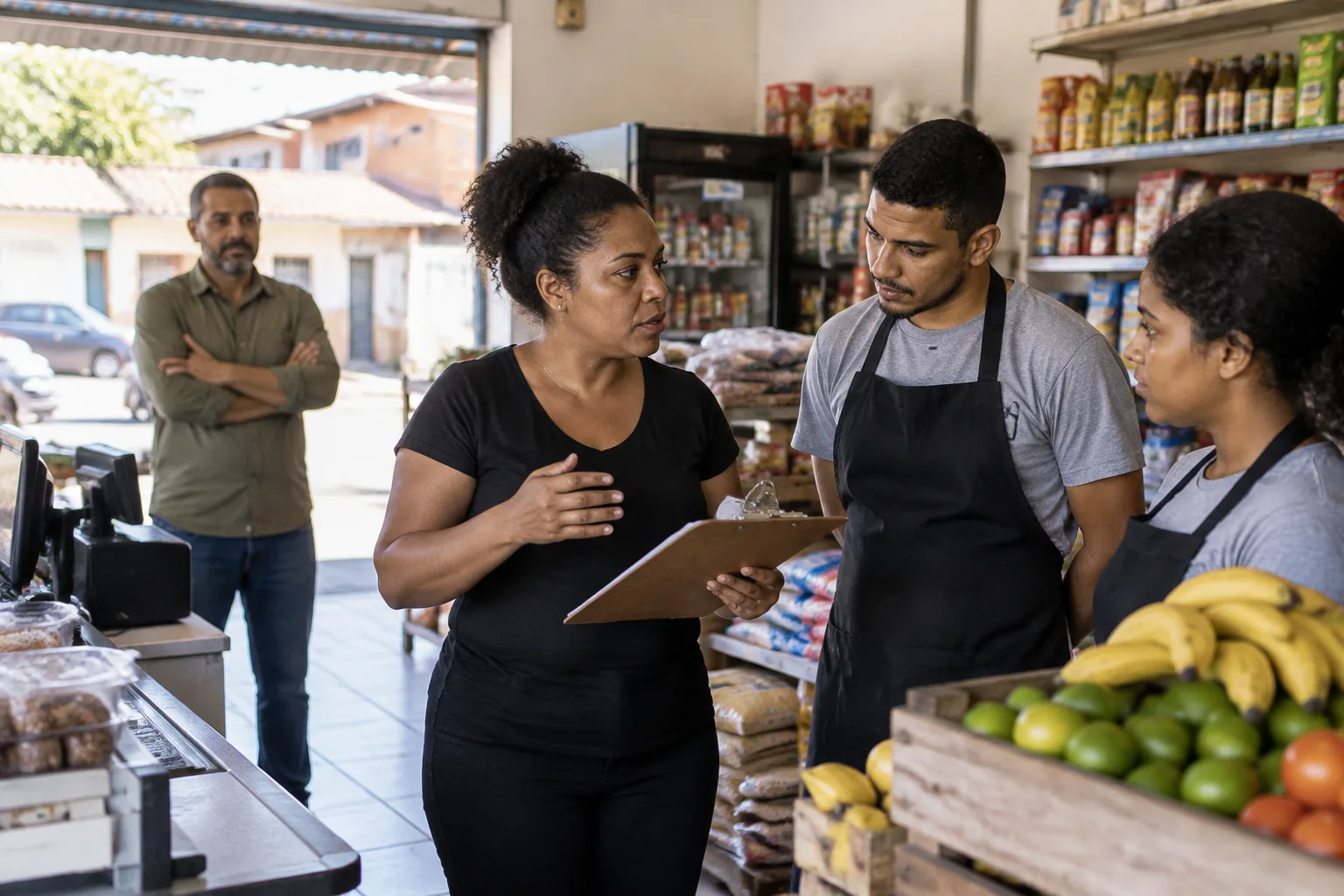
A business may run well because its founder handles everything: negotiating, dealing with difficult customers, organising the team and fixing problems. When the business is franchised, those personal capabilities do not transfer automatically. Building a sustainable franchise network means separating what belongs to the business model from what depends on the owner's presence. The aim is not to sideline the founder, but to ensure that each new outlet does not require a clone of them.
1. Identify where the founder is indispensable
Start by recording the founder's interventions in the existing operation. Look beyond routine tasks: identify decisions that nobody can make without their approval or personal knowledge.
Over a representative period of trading, note every request the founder receives, the reason for it, who else could resolve it and the impact of any delay. Include busy days, financial closing periods and occasions when staff are absent.
Sort the records into four groups:
- Concentrated knowledge: only the founder knows how to price a proposal or identify a fault.
- Concentrated authority: the team knows what to do but has to ask permission.
- Personal relationships: customers or partners accept terms only because they trust the owner.
- Recurring fixes: the founder repeatedly steps in because the process does not work.
This distinction helps avoid superficial solutions. An authority problem calls for delegation; a recurring fault calls for its underlying cause to be addressed. Writing instructions will not solve a situation where margins depend on informal discounts from a supplier who is a personal friend.
Prioritise dependencies that halt sales, affect safety or put cash flow at risk. These are the problems most likely to multiply when the business is run by others.
2. Turn personal judgement into practical decision criteria
The central question is: could someone else, with training appropriate to the intended franchisee profile, reach a sound decision?
Choose specific situations and make the founder's decision criteria explicit. When handling a complaint, for example, the decision may depend on the nature of the problem, proof of purchase, the risk to the consumer and the available remedies. “Use common sense” is not sufficient guidance.
For each priority situation, document:
- what information must be checked;
- who makes the decision and the limits of their authority;
- which circumstances require escalation to someone else;
- how to record the decision and monitor its outcome.
Also appoint a deputy for each person responsible. Replacing dependence on the founder with dependence on a single manager merely shifts the problem.
In commercial relationships, seek to replace personal arrangements with documented terms that will genuinely be available to a future outlet. If that is not possible, exclude that advantage from the assumptions used to assess whether the business can be replicated. Franchisees should not need to inherit the founder's circle of friends to run the business.
3. Test delegation in the existing operation
Before expanding, carry out a controlled test of how the business is managed without the founder's day-to-day intervention. This does not mean abandoning the operation or removing oversight. It means observing whether the allocation of responsibilities works in practice.
Assign people to take responsibility, set limits and maintain emergency contact channels. Risks to health, safety or compliance with legal obligations must not be used as experiments in autonomy.
Monitor objective indicators: stalled decisions, rework, unresolved complaints, cash discrepancies and requests for help. Record any behind-the-scenes interventions by the founder too. If they are still negotiating exceptions through private messages, the apparent independence may be an illusion.
At the end, examine each difficulty. Was information missing? Did the person lack authority? Were the criteria ambiguous? Did the task require a skill that had not been anticipated?
Repeat the test after making adjustments. The desired outcome is not a complete absence of questions, but the ability to resolve everyday situations and escalate exceptional ones appropriately. Expansion should wait if essential issues still depend on the founder's personal improvisation.
4. Align operational independence with the franchise offering
In Brazil, Law No. 13,966/2019 governs business franchising and repealed Law No. 8,955/1994. Article 2 requires the Franchise Disclosure Document, known locally as the Circular de Oferta de Franquia (COF), to set out the ideal franchisee profile and the requirements for direct involvement in operating and managing the business.
This makes the assessment of founder dependence relevant to the franchise offering. If the business requires the owner's daily involvement, do not present the franchise as a passive investment. If it can be run by an employed manager, clarify which responsibilities remain with the franchisee and which skills the manager needs.
The law does not impose a general requirement for a business to have operated for at least one year before it can be franchised. However, the age of a business is no substitute for evidence of readiness: the decision to expand must take account of whether the model can genuinely be replicated.
Practical conclusion: before offering franchises, list the decisions that remain exclusive to the founder, allocate responsibilities and test how the business runs without their routine intervention. Franchise a method that other people can follow, not the permanent availability of its creator.