Garnizé prepares to launch rural-meets-urban fashion franchises at R$200,000
With 13 company-owned outlets, Garnizé is preparing to enter Brazil’s franchise market and aims to sell 20 franchises over the next 12 months.
Published
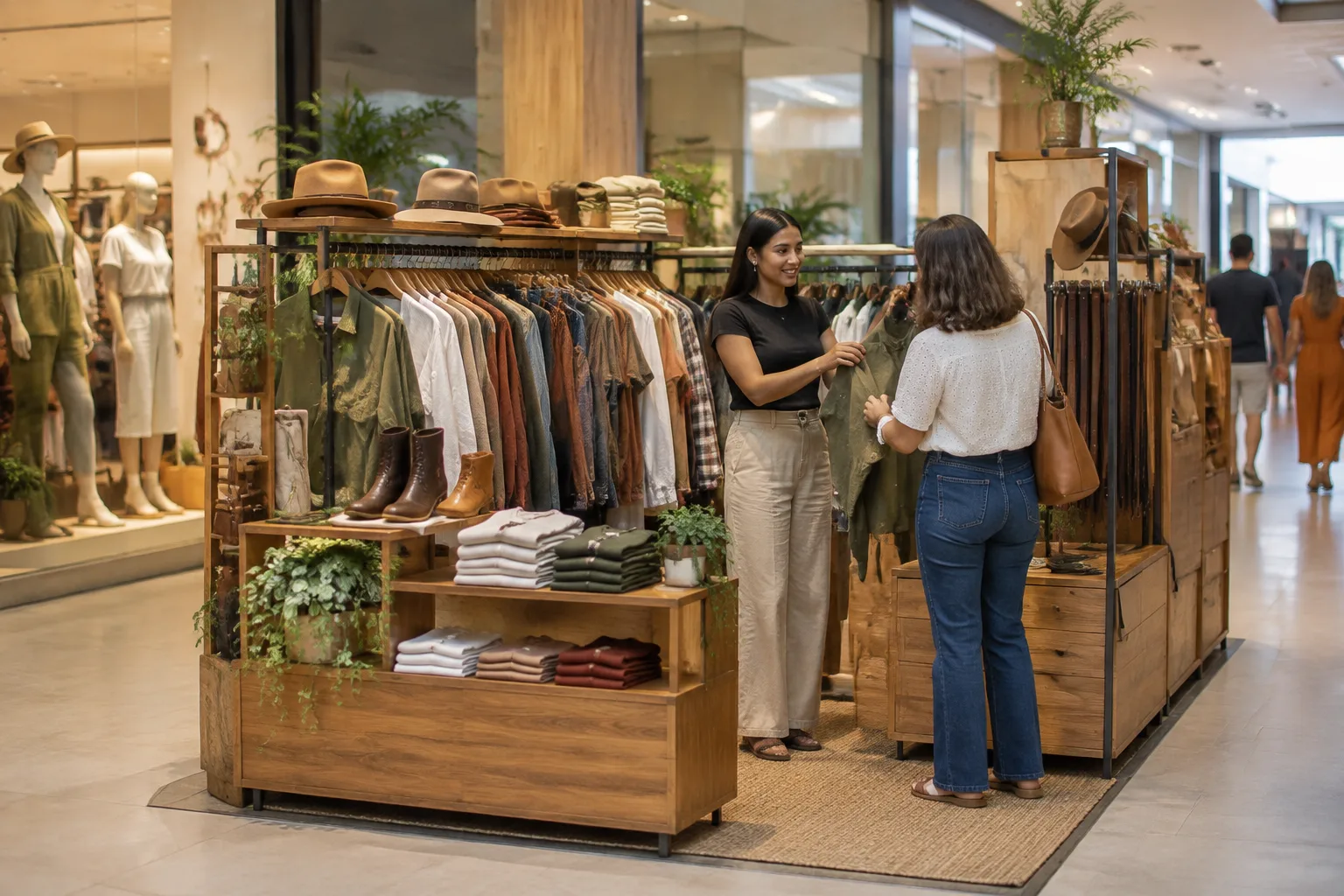
Garnizé, a fashion brand blending rural and urban styles with 13 company-owned outlets, is preparing to enter Brazil’s franchise market. According to a report published by Pequenas Empresas & Grandes Negócios on 29 September 2026, the company estimates an initial investment of R$200,000 (Brazilian reais) per kiosk and aims to sell 20 franchises over the next 12 months.
From company-owned outlets to franchise expansion
Garnizé’s story began with an olive oil venture that was discontinued before the business moved into fashion. In its new line of business, the brand chose shopping centre concourses as its operating base, rather than high-street shops or large retail premises.
Its first outlet opened in Araguaína, in the Brazilian state of Tocantins. Building on that experience, the company developed a network of company-owned outlets before preparing its franchise offering. It hired a specialist consultancy to help structure the franchise model.
In the report, Franco says the business model was tested through company-owned outlets to assess its profitability and replicability. Nationwide franchise expansion is therefore the company’s announced next step, rather than an already established network of franchisees.
This distinction matters for anyone following new entrants to the franchise market: the 13 outlets reported are company-owned. The 20 franchises, meanwhile, represent a future sales target, not signed contracts or completed openings.
Kiosks target agribusiness hubs
Garnizé’s physical presence spans cities across several regions of Brazil. Besides Araguaína, its outlets include locations in Imperatriz, in Maranhão; Porto Velho and Ariquemes, in Rondônia; and Marabá and Parauapebas, in Pará.
In Mato Grosso, the brand operates in Sinop, Rondonópolis and Cuiabá, with two outlets in the latter. In Santa Catarina, it has a presence in Jaraguá do Sul and Blumenau, also with two outlets in Blumenau. Together, these locations account for the 13 company-owned outlets listed in the report.
The announced expansion focuses on regional agribusiness hubs. Sinop, Rondonópolis, Cuiabá and Ariquemes are among the cities highlighted by the company. A 14th outlet is scheduled to open in mid-October 2026 in Rio Verde, Goiás. This is a planned opening; the source material does not confirm that it has taken place.
For franchise sales, Garnizé intends to prioritise locations in Pará, Amazonas and Rondônia. Its plans also include strengthening its presence in Brazil’s South, Southeast and Centre-West regions. These are expansion priorities, with no list of new franchised locations disclosed in the material reviewed.
What the R$200,000 investment is expected to cover
The model has been presented as a turnkey package, with an estimated initial investment of R$200,000 per outlet. According to the published figures, this covers the franchise fee, kiosk joinery and fittings, initial stock, IT and monitoring systems, training and company registration.
The estimated payback period is 24 months. This should be read as a forecast for the proposed model, not a guarantee that every location will recover its initial investment within that time. Likewise, the stated investment is an estimate: the source material does not compare costs across cities or shopping centres.
The material also provides no figures for royalties, advertising contributions, average turnover per kiosk or net profit per outlet. The R$200,000 investment and projected payback period alone are therefore insufficient to calculate the profitability of a future franchise.
Revenue spans physical retail, online sales and wholesale
In 2025, described as the first full year of combined operations, Garnizé recorded turnover of R$6.48 million. For 2026, the partners set a target of R$13 million, approximately double the previous year’s figure.
The projection covers physical retail, online sales and wholesale. It therefore does not relate solely to kiosk sales, nor is it a revenue forecast for future franchises. Keeping these figures separate helps put the business’s scale into perspective without attributing brand-wide results to individual outlets.
In practice: anyone considering the new franchise should verify the full costs, contractual terms and projections for their intended location. The company-owned outlets offer a useful reference point, but they are no substitute for a financial assessment of the specific outlet a prospective franchisee plans to open.