Franchise formats: how to choose between a shop and a kiosk
Shops and kiosks under the same brand can have different operational requirements. Here is how to compare formats before buying a franchise.
Published
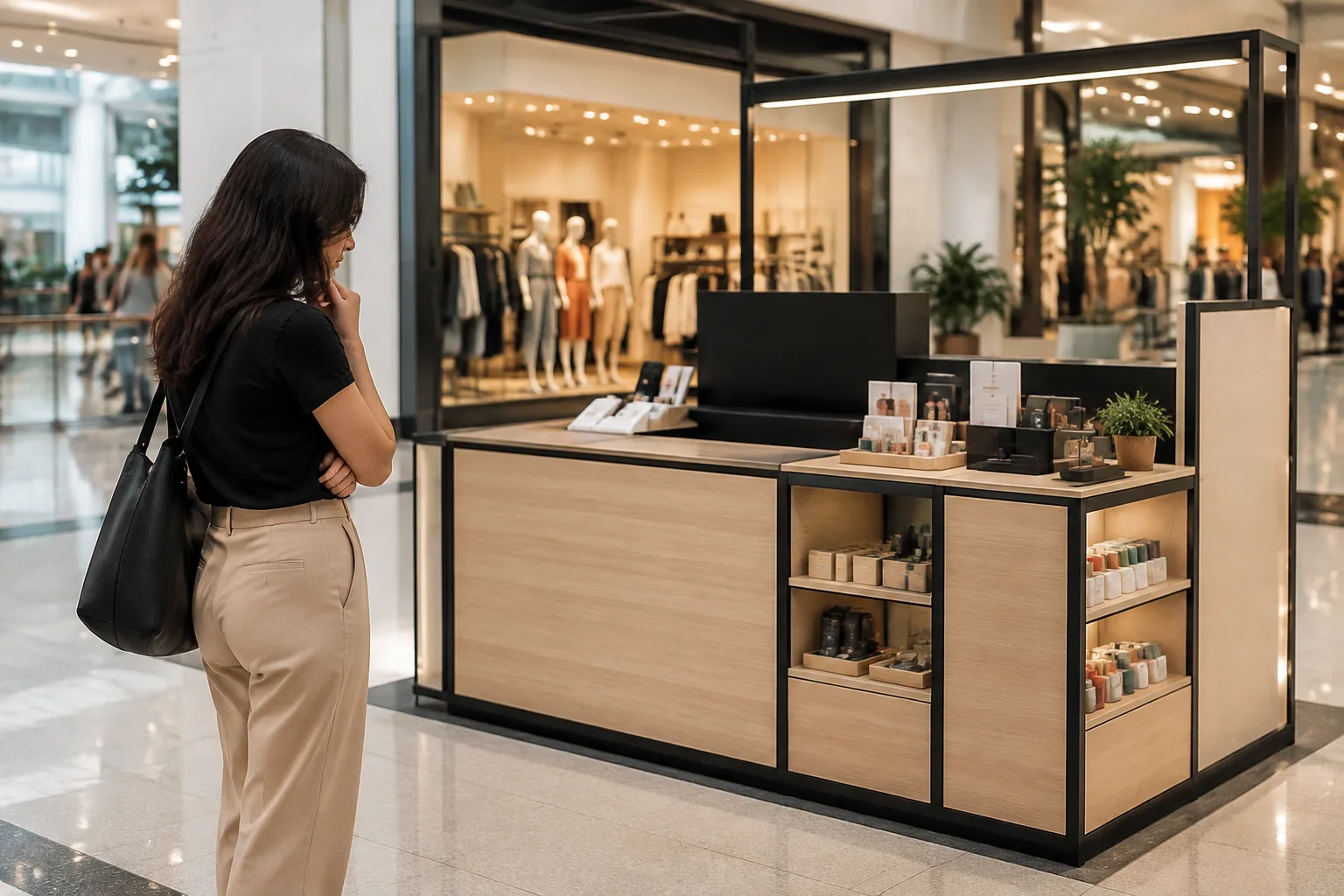
Choosing a brand is not the end of the buying decision: you also need to choose the format of your outlet. A high street shop, a shop in a shopping centre and a kiosk may share the same visual identity but require very different facilities and day-to-day routines. When comparing franchise formats, you need to look beyond the advertised investment and understand what each model allows you to sell, how you can serve customers and how you can fulfil orders.
1. Establish exactly what each format offers
Before comparing prices, ask the franchisor for a description of each available model. The difference is not just about floor space: it may involve product range, customer capacity, preparation space, storage and access to sales channels.
Create a fact sheet for each option, answering the same questions:
- Which products or services can you sell?
- Which activities take place within the outlet?
- Is there dedicated stockroom space, or will you need additional facilities?
- Can the format accommodate order collection and deliveries?
- Are there physical constraints on demonstrations, product trials or private consultations?
- Which tasks need to take place outside the customer-facing area?
A kiosk may seem simpler but rely on frequent restocking and off-site storage. A shop may accommodate more activities without necessarily having enough demand to sustain them. These are possibilities to investigate, not universal characteristics.
Ask for the proposal to identify the format being offered unambiguously. Terms such as “compact model” tell you little unless accompanied by an operational description and set-up requirements.
2. Check that the documents match your chosen model
In Brazil, Law No. 13,966/2019 governs business franchising. Article 2 requires the franchise disclosure document, known locally as the Circular de Oferta de Franquia (COF), to provide a detailed description of the franchise and a general description of the business and the franchisee’s activities.
The law also requires information on the desired franchisee profile, direct involvement in operations and management, and the estimated initial investment, including premises fit-out, equipment and opening stock, together with payment terms.
When comparing formats, check whether this information gives you a clear understanding of the option actually being offered. A presentation about kiosks should not be assessed using figures for full-sized shops without an explanation of the differences.
Ask for clarification if you find:
- investment figures that do not identify the format;
- activities that cannot be accommodated within the proposed facilities;
- financial estimates based on outlets with different characteristics;
- a contract or appendices that do not match the offer under negotiation.
As a rule, the COF must be provided at least ten days before you sign the contract or preliminary agreement, or pay any fee to the franchisor or a person or company connected with it. This is a minimum notice period, not a requirement to complete your review within ten days. Take the time you need to resolve discrepancies with legal support.
3. Compare operational capacity, not just turnover
A sales forecast is only useful if it accounts for the format’s limitations. Ask how customer volumes, the time needed to complete each sale and product availability during peak periods have been estimated.
For example, check whether the same counter will be used to make sales, receive goods and hand over orders. Also assess whether the layout allows staff to serve customers without blocking access to stock or equipment.
Ask for examples of comparable outlets and, where possible, observe their operations during both busy and quiet periods. The aim is not to replicate another franchisee’s results, but to check whether the assumptions make sense for that particular set-up.
In your financial comparison, separate set-up investment, recurring expenses and costs arising from physical limitations. Where relevant, include additional storage, transport between locations and more frequent restocking. A format with a lower initial outlay is not necessarily the cheapest to run.
Avoid using the turnover of a large shop to justify buying a kiosk. If the franchisor uses figures aggregated across the network, ask for a breakdown by format and an explanation of the criteria used.
4. Understand the implications of changing format later
Do not treat a potential conversion from kiosk to shop as a guaranteed solution. Before buying, ask whether such a change is permitted, whether it requires approval and whether it involves further investment or a new agreement.
Also check what would happen to equipment and stock, whether trading would need to stop temporarily and whether any amounts already paid could be credited towards the change. These terms need to be examined in the relevant documents; they should not be assumed on the basis of a sales conversation.
To help you decide, create a table with three columns: format requirements, evidence received and outstanding questions. Prioritise the model whose operations you can understand and finance, rather than simply the one with the lowest entry cost.
Practical conclusion: choose a format only when the proposal, COF, contract and operational reality all align. If your comparison relies on figures from another model or an uncertain future conversion, clarify those points before making a commitment.
Sources
- L13966 - Planalto
- Lei de Franquias (13.966/2019) para franqueadoras
- www.gov.br › inpi › pt-brFranquia - gov.br
- Perguntas para Comprar Franquia: Guia de Decisão Para ...
- L8955 - Planalto
- Franquia e seus aspectos jurídicos
- Quero comprar uma franquia, o que preciso saber?
- 7 cuidados essenciais na hora de comprar uma franquia - Exame