Tom&Co takes over franchised stores as owners struggle to find successors
Tom&Co has brought four franchised stores back under direct management. Succession challenges and control over investment underpin its choice of a mixed network.
Published
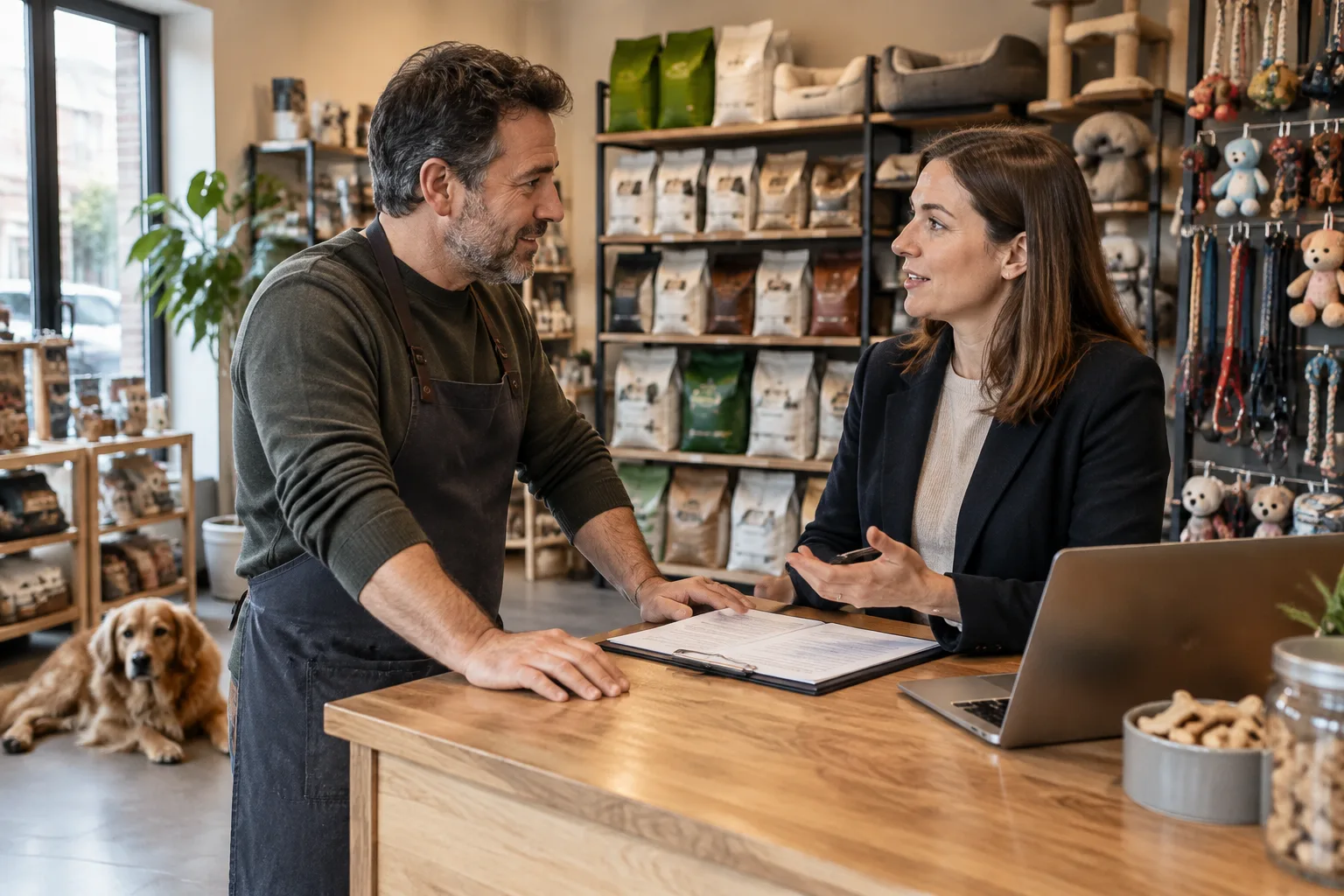
Tom&Co has deliberately chosen to operate a mix of franchised and company-owned stores in Belgium. The pet retailer brought four franchised stores back under direct management in 2025. According to CEO Jean Richard de Latour, independent operators looking to step down cannot always find a suitable successor. This highlights an important issue for Belgium’s franchise sector: how can a store remain part of the network when its owner leaves?
Four franchised stores return to direct management
The takeover of four stores was reported by Franchising Belgium on 6 November 2026. Tom&Co is also investing in new company-owned outlets. In doing so, the chain is partly moving in the opposite direction to retailers that are transferring their own stores to independent operators.
De Latour cites succession as one reason for this approach. A franchisee looking to leave the business cannot always find someone to take it on. Acquisition by the chain then offers an alternative to transferring the store to another independent operator.
This does not mean Tom&Co is moving away from franchising. The company explicitly favours a balance between company-owned stores and independent franchise partners. The four acquisitions should therefore be seen as an adjustment within that mixed model, rather than an announcement of a wholesale shift to direct management.
For the franchise sector, that distinction matters. The total store network and the number of independent operators are separate measures. A store can continue trading under the same brand while responsibility for running it shifts from a franchisee to the chain.
Greater control over investment and the store concept
Alongside succession, De Latour points to the direct control that company-owned stores offer over investment, refurbishment, the store concept and product ranges. At directly managed outlets, these decisions rest with the group itself.
Tom&Co’s approach is therefore not solely a response to owners leaving the business. According to the company’s explanation, company-owned stores also play a part in how the network is managed and developed. The chain is maintaining both operating models side by side.
This is an important nuance for entrepreneurs considering joining the network or taking over a store. The presence of company-owned outlets does not, in itself, mean a franchise brand places less value on its franchise partners. Tom&Co’s stated preference is precisely for a combination of both models.
For prospective franchisees, a practical point to discuss is how responsibilities would be divided within their future store. Who decides on refurbishments, what investment is expected, and how much flexibility is there in choosing the product range? The priorities highlighted by Tom&Co indicate which topics could usefully be raised in those discussions.
Succession alongside further expansion in Belgium
The shift in store management comes as Tom&Co seeks to expand its Belgian presence. The chain currently has 142 stores in Belgium and aims to open a further 60 to 70 by 2030. According to the November report, another three to four openings were still planned for 2026.
These figures refer to the store network. They should not be presented as an equivalent number of new franchise opportunities, since Tom&Co is also investing in company-owned outlets. For entrepreneurs, the distinction between overall network growth and expansion through independent partners is essential.
The chain says its expansion ambitions remain intact despite consumers becoming increasingly price-sensitive. De Latour suggests that customers may choose own-label products more often, but are unlikely to cut spending on their pets’ care and wellbeing. This is his assessment of the demand underpinning Tom&Co’s further development.
Discussing a transfer early
The stores brought back under direct management chiefly highlight the importance of discussing succession well in advance. For an existing franchisee, leaving the business is not simply about choosing a personal departure date; it also involves deciding how the store will be run in future.
Tom&Co’s approach shows that acquisition by the franchisor can be one possible outcome. It does not amount to a general commitment to take over every store in this way.
Practical takeaway: as a franchisee, discuss the available transfer options early, including the conditions that apply and the role the franchisor could play. Make a clear distinction between selling to a successor and a possible acquisition by the chain itself.