Petrol station franchises: formats and investment
Partnerships and new projects are bringing franchises to Argentina’s petrol stations. Which formats are specialists considering, and how much investment might they require?
Published
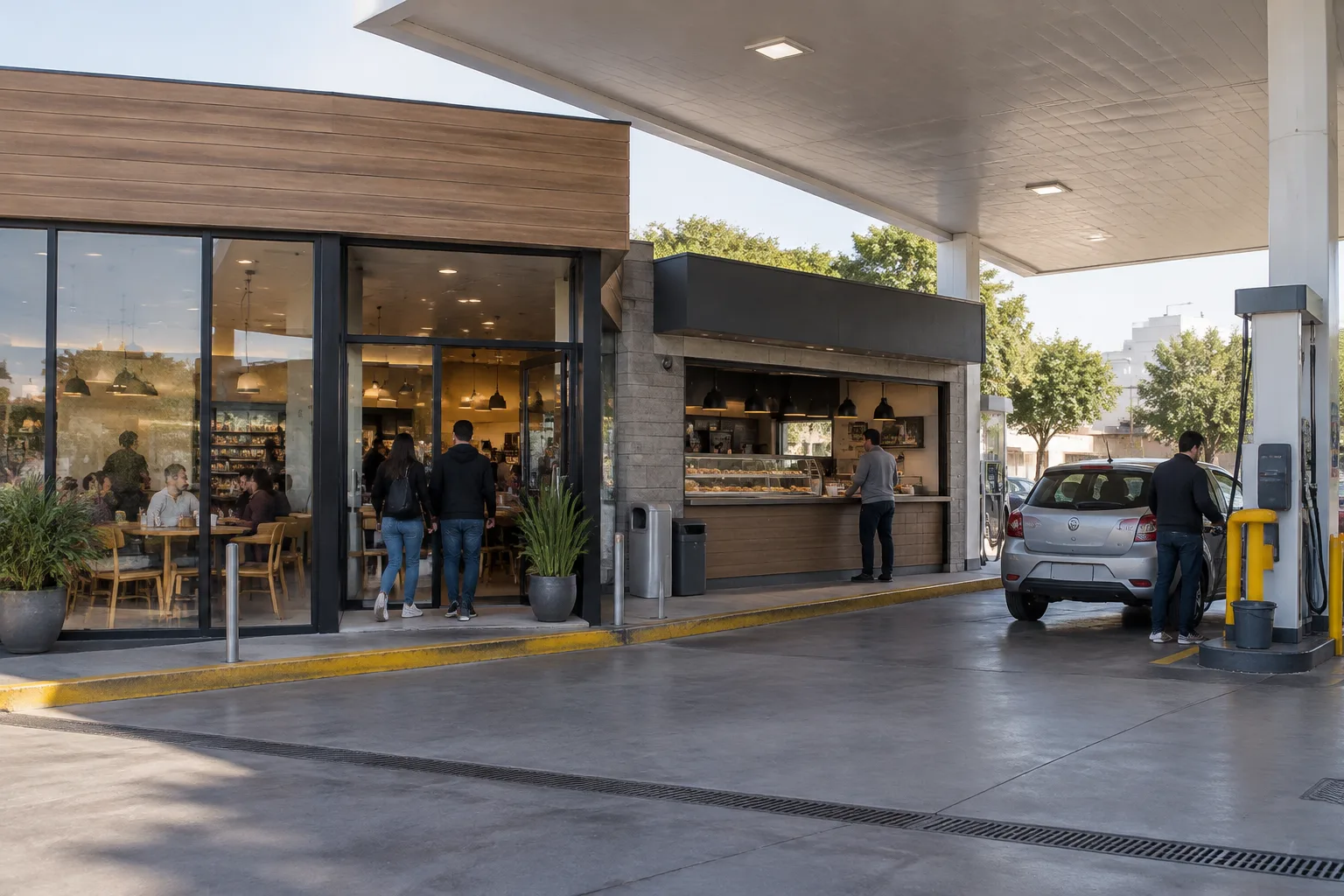
Petrol stations are gaining ground among the locations Argentina’s franchising community is considering. Agreements with food chains, announced openings and service-based concepts are expanding the options for operators. But the opportunity comes with one key condition: the new business must generate demand of its own without taking sales away from the existing shop.
Partnerships and announcements pointing the way
A consultation by industry publication Surtidores with four specialists brought together examples already in operation and options for introducing brands at petrol stations. The participants were Carlos Canudas Rivell, a specialist franchise consultant; Fernando Leguizamon, director of Chubits and president of the Asociación de Franquicias del Litoral; Juan Pablo Pasqualicchio, creative director of Franquicias Que Crecen; and Roberto Russo, director of GAF Guía Argentina de Franquicias.
Examples cited include Dean & Dennys with Puma Energy, Parada Sanguchera with AXION energy, and the agreement between YPF and McDonald’s, which covers several restaurant formats. Mostaza’s interest in developing drive-through outlets was also highlighted.
Another announced project is a Weiss outlet at a Shell station in Córdoba, initially through an agreement with an individual operator. The scope of that announcement is specific: it relates to one location and does not amount to a network-wide agreement.
A further development draws on experience outside Argentina. Café Martínez has nine outlets associated with Petromax in Paraguay and has expressed an intention to replicate the model in Argentina. This is an expansion ambition, not confirmation of Argentine openings under that model.
Compact food outlets and vehicle services
The food offering is not limited to large restaurants. The consultation also identifies compact formats from Havanna, Starbucks and Burger King, alongside regional concepts that the specialists consider suitable for this type of location.
The alternatives mentioned include John’s Burgers, for its potential in compact spaces and late-night urban trading; Don Pizza, for pizza by the slice and takeaway sales; and La Pastelería, for breakfasts, afternoon snacks and impulse purchases while travelling. These references describe commercial possibilities, not confirmed petrol station openings by those brands.
Pasqualicchio broadens the options beyond food. His list includes automatic car washes, vehicle detailing, oil-change centres, tyre services, last-mile logistics and bill-payment and collection centres. These are distinct activities, requiring an assessment of which service could work at each site.
The common aim is to make use of the location without relying solely on fuel purchases. According to the approach outlined in Surtidores, the new business should be able to operate as a commercial draw in its own right, attracting customers beyond those stopping for fuel.
How much investment different formats may require
Leguizamon provides investment benchmarks across three scales. A coffee, bakery or takeaway outlet may require between US$25,000 and US$60,000. For a format with a kitchen, such as a burger or pizza outlet, the estimate rises to US$60,000–US$120,000.
For a full-scale roadside offering, he puts investment at more than US$150,000. He also estimates payback periods of 18–36 months, with smaller formats at the lower end.
These figures are the specialist’s estimates for business categories, not published quotations from individual brands. Nor do they represent guaranteed results for a particular petrol station. Their value lies in providing an initial indication of the difference in scale between a limited offering and one with a kitchen or a broader range of products and services.
The key: complement existing sales, rather than displace them
For operators, the assessment does not end with choosing a well-known brand. The consultation focuses on adding revenue without taking sales away from the petrol station shop. That distinction is particularly important when the new outlet also sells coffee, takeaway food or grab-and-go products.
The practical conclusion is to compare each option with what is already available on site. Before proceeding, operators should distinguish between existing agreements, announcements and ideas still at the exploratory stage, and request a site-specific assessment of investment and demand. The opportunity will be clearer when the new franchise can attract customers and spending in its own right, as well as serving those stopping for fuel.