Franchising in Venezuela: how to agree territorial rights
Define the territory your franchise protects, which sales fall outside that protection and how to stop exceptions undermining exclusivity.
Published
An attractive location does not guarantee protection against new outlets opening under the same brand. Before investing in a franchise in Venezuela, check whether you are buying only the right to operate an outlet or also receiving territorial protection. The distinction must be set out in the contract, including how it applies to online orders, franchisor-owned outlets and any exceptions that could weaken that protection.
1. Distinguish between an authorised location and a protected territory
Permission to operate at a particular address does not give you exclusivity over the surrounding area. Nor do terms such as ‘allocated zone’ or ‘catchment area’ explain, on their own, what the brand can do within that space.
Ask for the contract to distinguish between three concepts:
- Authorised location: the specific premises where you may operate.
- Protected territory: the area within which the franchisor agrees to expressly defined restrictions.
- Service area: the places where you may deliver products or provide services, even without exclusivity.
Then identify the precise commitment. Will the brand refrain from granting other franchises, also agree not to open its own outlets, or restrict certain sales channels as well? A ban applying only to new franchises may leave other forms of commercial presence open.
Do not assume that buying a franchise automatically gives you exclusivity. If the offer is non-exclusive, assess the investment on that basis, without assuming protection that is not included in the signed agreement.
2. Define the area and record the exceptions
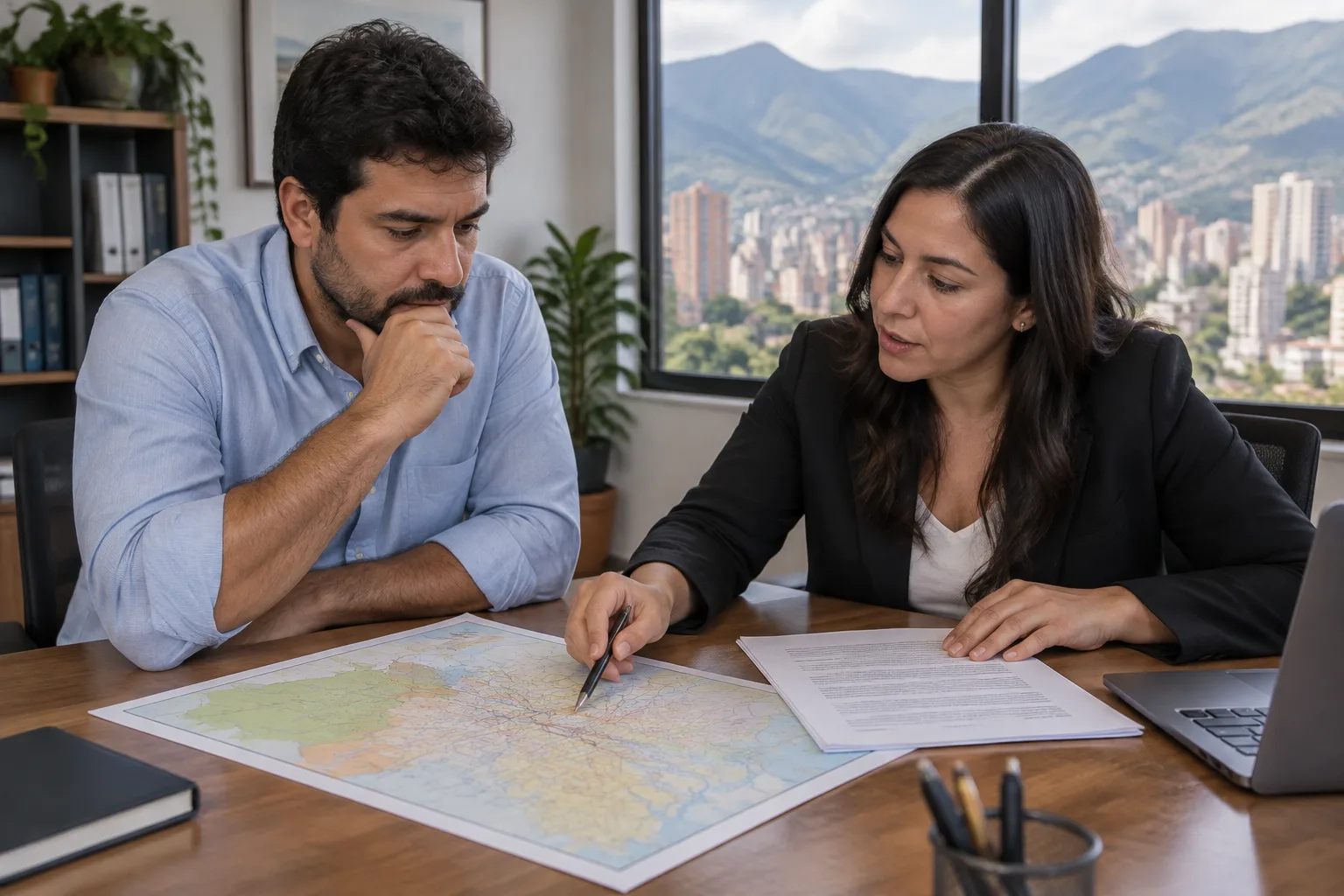
Request a schedule containing a clearly legible map and a description that identifies the territory without relying on verbal explanations. Streets, municipal boundaries or other verifiable landmarks can be used, provided they do not create inconsistencies.
If a radius is used, define the point from which it is measured and the measurement method. Also clarify what happens to outlets located exactly on the boundary and which document takes precedence if the map differs from the written description.
Ask for a dated list of existing outlets and any prior commitments to open outlets that could affect the area. Checking what is already open on the day of your visit is not enough.
Pay particular attention to exceptions for airports, shopping centres, supermarkets, mobile units or temporary outlets. For each one, ask:
- What format is permitted, and at which location?
- Who may operate it?
- Are there limits on its duration or scope?
- Could it later become a permanent outlet?
An exception covering ‘any future format’ could significantly reduce the value of the protection you have negotiated.
3. Include online sales and home deliveries
A map does not determine who fulfils an online order. Distinguish between the customer's location, the outlet preparing the order and the channel through which it is received.
Negotiate rules for the brand's website, delivery apps, telephone sales and corporate accounts. Define whether orders are allocated by delivery address, availability, customer choice or another verifiable criterion.
For example, a customer within your territory might buy through the central platform and receive products from another outlet. The contract should clarify whether that transaction is permitted, whether it gives rise to any compensation and how you can check that the order has been allocated correctly.
Avoid treating every sale originating within your territory as a breach. What matters is agreeing which transactions are protected, which are reserved to the franchisor and what information will allow you to verify compliance without requiring unnecessary access to personal data.
4. Review exclusivity under Venezuelan law
Venezuela has neither a comprehensive franchise-specific law nor a general statutory framework for standardised pre-contractual disclosure equivalent to those found in some other jurisdictions. This does not mean that territorial arrangements are subject to unlimited contractual freedom.
The Civil Code governs obligations and contracts, while the Commercial Code provides the relevant commercial rules. The Antimonopoly Law is particularly relevant when reviewing territorial and commercial restrictions.
There are also specific earlier instruments, such as the Guidelines for the Evaluation of Franchise Agreements issued by Procompetencia under previous legislation. Instruct a Venezuelan lawyer to verify their current scope and assess the proposed clause: they do not provide blanket authorisation for every restriction.
Also distinguish legal obligations from the Code of Ethics for Franchising in Venezuela, associated with Profranquicias. This is a self-regulatory code, not national legislation; its applicability should be checked in light of membership or its incorporation into the contract.
5. Prevent changes to protection without a clear procedure
Check how long the protection lasts and whether it depends on specific conditions. Do not accept that it can disappear following an undefined assessment of the ‘territory's potential’.
Propose that any reduction in territory require documented justification and follow an expressly agreed procedure. Define how to report an opening that appears to conflict with the agreement, what evidence to submit and when the franchisor must respond. The consequences of a breach also require legal review; do not assume that compensation is automatic.
Practical takeaway: before signing, obtain a map, an exhaustive list of exceptions and rules for online orders. You should be able to explain what your territorial rights protect and what competition from the same brand you will still be accepting.
Sources
- Guías y recursos sobre franquicias en Venezuela | QFA
- Comprar franquicia en Venezuela: revisar la carta de intención
- Franquicias en Venezuela: pactar la dedicación del propietario
- Franquicias en Venezuela: límites a los cambios del manual
- Comprar franquicia en Venezuela: quién puede firmar
- Franquicias en Venezuela: pactar precios y promociones
- Cómo Crear una Franquicia en Venezuela | PDF
- Guía para la constitución y operación de una empresa en Venezuela