Franchises in Venezuela: agreeing terms for temporary closures
Before buying a franchise, agree what happens to payments, obligations and reopening arrangements if you have to close temporarily.
Published
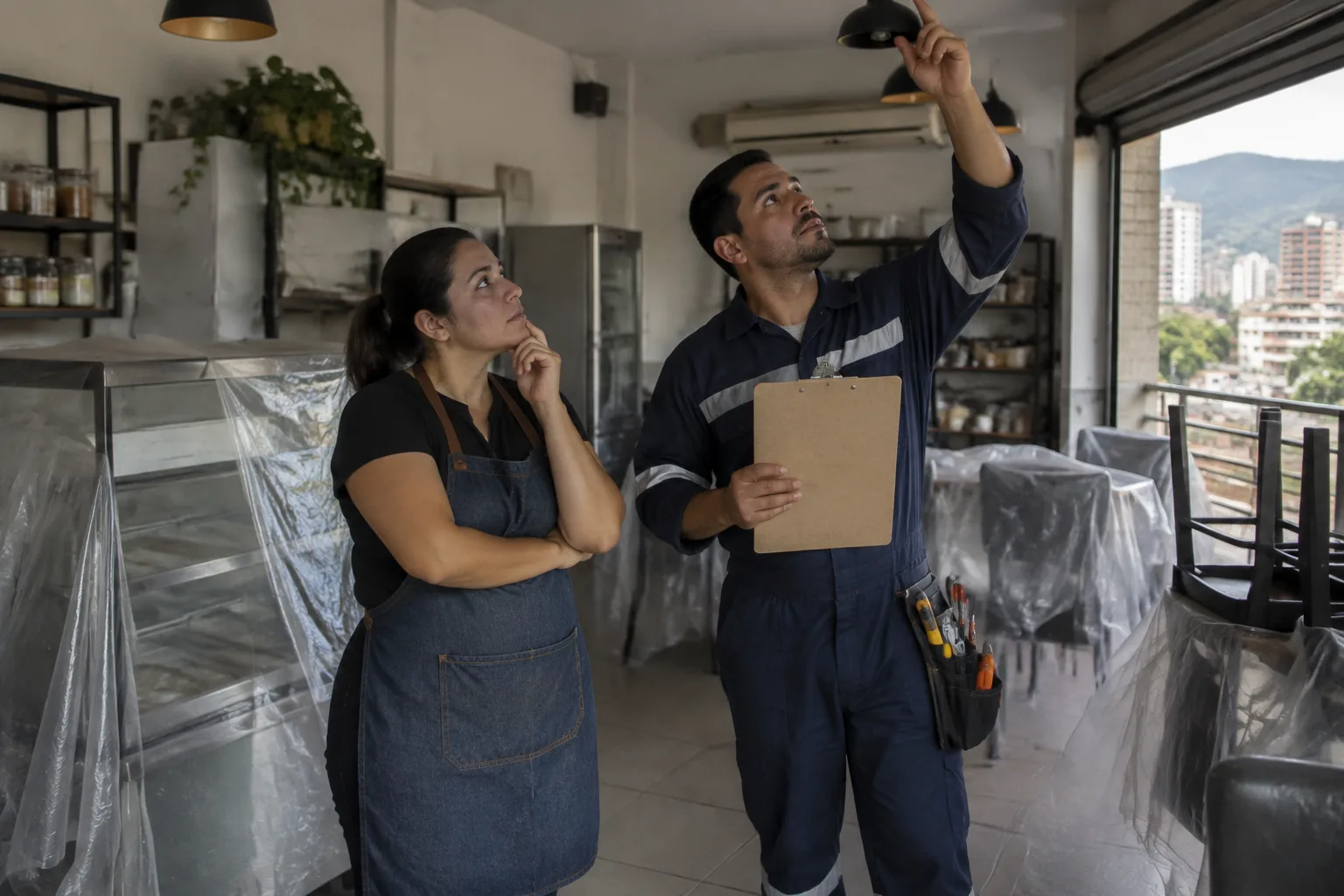
A franchise may be ready to trade yet still be forced to suspend operations. A major breakdown, damage to the premises or access restrictions can make it impossible to serve customers. Before entering the Venezuelan franchise market, check how the contract deals with temporary closures. Stopping sales does not automatically suspend all your obligations.
1. Define which disruptions the agreement covers
Do not accept a clause that merely refers to ‘exceptional circumstances’. You need to distinguish between a complete shutdown, partial operations and difficulties that increase costs without preventing the business from operating. Each situation may call for different contractual consequences.
Work with the franchisor to draw up a list of scenarios relevant to the outlet: physical damage, prolonged disruption to essential utilities, inability to access the premises or decisions by a public authority that affect operations. The aim is not to declare that all these events constitute force majeure, but to agree how they will be assessed.
For each scenario, identify:
- Scope: whether it prevents all operations or only part of them.
- Cause: whether it is external or connected to an act or omission by either party.
- Evidence: technical reports, correspondence from the landlord, official orders or other relevant documents.
- Response: reasonable measures to limit damage and restore operations.
Also distinguish between a precautionary closure for safety reasons and a voluntary closure because of poor profitability. Treating both under the same rule can lead to disputes over who bears the cost of the disruption.
2. Separate payments from operational obligations
Ask for a detailed schedule covering the closure period. It should state which obligations continue, which are suspended and which are reduced, subject to a legally valid agreement between the parties.
A sales-based royalty may be treated differently from a fixed minimum fee. Technology services, advertising contributions and support services may also continue to be billed. Relief from liability for a particular breach does not necessarily mean that payments are waived.
Avoid vague wording such as ‘concessions will be granted’. If you negotiate protection, specify:
- When financial relief starts and ends.
- Whether payments are permanently reduced or merely deferred.
- When deferred amounts fall due and whether interest accrues.
- What supporting documents are needed to verify the length of the closure.
Review separately the tasks that must continue: protecting stock, maintaining equipment, securing the premises and communicating with customers. Closing to the public does not mean abandoning the business.
An agreement with the franchisor does not, in itself, change your commitments to employees, your landlord, suppliers or the tax authorities. Budget for those outgoings separately to establish the true cost of keeping the outlet temporarily closed.
3. Agree notification procedures and reopening conditions
Define whom you must notify of the disruption, through which channel and within what timeframe. It is worth specifying what happens if the incident itself prevents you from using the usual notification method. An initial notice can describe the known facts, with supporting documents supplied later.
Negotiate a straightforward procedure: notification of the incident, assessment of its impact, a written response from the franchisor and updates while the disruption continues. Clarify which interim measures apply while a request is being considered; a lack of response should not leave payment arrangements uncertain.
For reopening, identify the essential checks and who must carry them out. If the franchisor requires a technical inspection, agree its scope, cost and the deadline for a response. The franchisor’s approval does not replace any permits or other official procedures required by the relevant authorities.
Also check whether the franchise term continues to run during the closure. Any extension must be expressly negotiated, including how it will be calculated and any limits. Do not assume that the days lost will automatically be added back.
4. Review the clause under Venezuelan law
Venezuela has neither comprehensive franchise-specific legislation nor a general standardised pre-contractual disclosure regime equivalent to a mandatory franchise offering circular. The relationship is governed by the Civil Code and the Commercial Code, alongside the rules applicable to the business activity.
The Civil Code contains rules on obligations, breach and causes beyond a party’s responsibility, including fortuitous events and force majeure. Applying these rules requires an assessment of the specific event, its effect on the obligation and the surrounding circumstances: simply calling an event ‘force majeure’ in an email is not enough.
Ask a Venezuelan lawyer to review the business continuity, payment and liability clauses together. Negotiated protections cannot override mandatory legal rules and should not be presented as special rights guaranteed to every franchisee.
Practical conclusion: before signing, obtain a contract annex that answers three questions: what happens during the closure, how much you must pay and what you need to reopen. A generic reference to force majeure does not answer those questions.
Sources
- Comprar franquicia en Venezuela: quién puede firmar
- Franquicias en Venezuela: límites a los cambios del manual
- Franquicias en Venezuela: pactar precios y promociones
- Guías y recursos sobre franquicias en Venezuela | QFA
- Franquicias en Venezuela: cómo pactar la fecha de apertura
- Cómo crear y gestionar una franquicia rentable en ...
- Guía para la constitución y operación de una empresa en Venezuela
- Elementos esenciales para la constitución y protección de ...