Buying a Franchise in Venezuela: Agreeing the Training Terms
Before you buy, establish what training you will receive, what it will cost and how you and your team will demonstrate that you are ready to operate.
Published
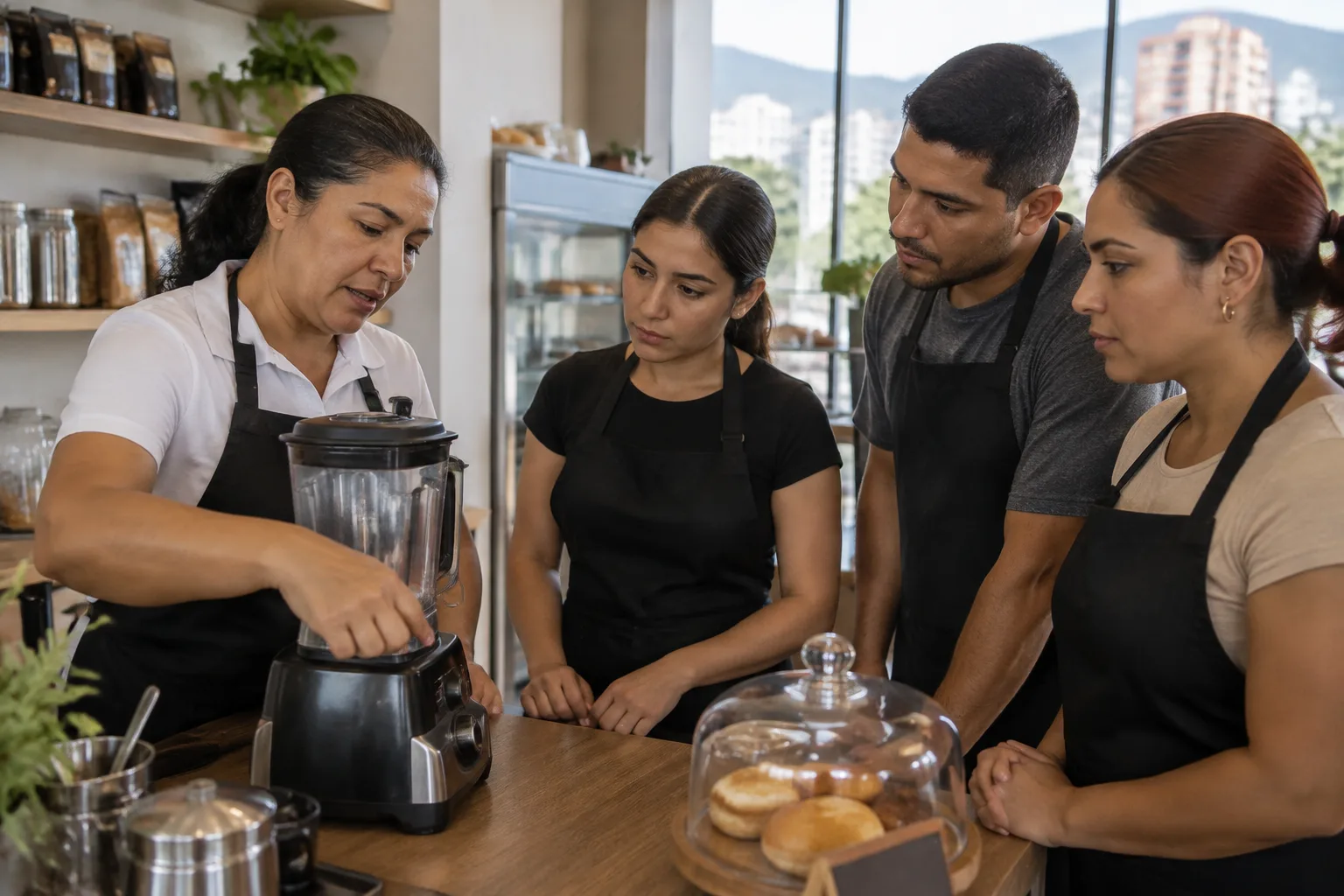
Training is part of the value you expect when joining a franchise network. Yet an offer promising ‘comprehensive training’ does not tell you what you will learn or how much you will have to pay. Before buying a franchise in Venezuela, turn that promise into a verifiable contractual programme, specifying its content, responsibilities, costs and pass criteria.
1. Define what the training covers and who receives it
Ask for the programme before signing. Knowing its duration is not enough: you need to check whether it prepares the team to carry out the actual tasks involved in running the outlet. Distinguish between training for the owner, the manager and operational staff; their responsibilities are not interchangeable.
Request a contract schedule detailing:
- Participants covered: roles, number of places and entry requirements.
- Content: operations, customer service, equipment use, stock control and relevant safety procedures.
- Delivery format: in-person sessions, supervised practice or distance learning.
- Time commitment: planned hours, timetable and required availability.
- Responsibilities: who organises, delivers and supervises each activity.
- Materials: documents, platform access and reference resources available afterwards.
Check that practical training is included where the task requires it. Watching a demonstration does not necessarily mean someone can carry out a procedure unaided. Ask for the skills each participant must demonstrate to be specified.
If a third party delivers the training, clarify who is accountable to you for its delivery. Hiring an external provider should not leave you uncertain about whom to approach over a cancelled session or missing content.
2. Place the commitment within Venezuela’s legal framework
Venezuela has neither a comprehensive franchise-specific law nor a general statutory regime for standardised pre-contractual disclosure equivalent to those in countries requiring an information document with mandatory content and deadlines. Do not therefore assume that every purchase includes a legally prescribed training package.
The Civil Code (Código Civil) provides the general rules on obligations, contracts and liability; the Commercial Code (Código de Comercio) governs the relevant commercial matters. Employment obligations relating to staff attendance should also be reviewed under the Organic Labour Law for Workers (Ley Orgánica del Trabajo, los Trabajadores y las Trabajadoras, or LOTTT).
There is also a specific competition-related instrument covering franchises: the guidelines for assessing franchise agreements contained in Resolution No. SPPLC-038-99 of 9 July 1999. Its scope should be considered alongside the Anti-Monopoly Law (Ley Antimonopolio) and the specific terms of the agreement. It is not a comprehensive franchise law and does not, on its own, prescribe the training programme you will receive.
The Code of Ethics for Franchising in Venezuela (Código de Ética para las Franquicias en Venezuela), associated with Profranquicias, is a self-regulatory code, not national legislation. Check whether it applies through membership or incorporation into the contract. In practice, protection comes from expressly defining what must be provided, rather than confusing voluntary recommendations with automatic legal rights.
3. Separate what is included from additional expenses
Request a training-specific budget. The phrase ‘included in the initial franchise fee’ may refer only to the classes, without covering travel, accommodation, materials or staff cover.
Divide the costs into three groups:
- Included: activities and participants covered by the initial payment.
- Payable by the buyer: travel, staff pay during attendance and other identified expenses.
- Potential additional costs: reassessments, extra places and training for new employees.
For each additional charge, agree the amount or calculation method, who will invoice it and when payment is due. If the amount cannot yet be determined, require a quotation and prior approval before the expense is incurred.
Also clarify what happens if the franchisor changes the venue or cancels a session after you have booked travel. Agree how non-refundable expenses will be shared. Do not accept that rescheduling automatically leaves you bearing all the costs.
4. Agree how readiness will be demonstrated
If passing the training is a condition of operating, insist on criteria set out in advance: the tasks to be assessed, the assessment method, the assessor and how the result will be recorded. Avoid relying solely on a general statement that the brand is satisfied.
Negotiate a process for receiving feedback, addressing shortcomings and retaking the assessment. Distinguish between a participant’s absence, inadequate performance and training that the franchisor has not delivered in full; each situation calls for different consequences.
At the end, retain records of attendance, materials supplied, results and outstanding activities. A certificate of attendance does not, by itself, prove that the entire contracted programme has been completed. Nor should you confuse training with ongoing operational support: the latter requires a separate commitment.
Practical conclusion: before buying, put in writing who will be trained, what they must master, who pays and how the outcome will be verified. This allows you to assess training as a clearly defined service, rather than a sales promise.
Sources
- Comprar franquicia en Venezuela: revisar la carta de intención
- Comprar franquicia en Venezuela: autorización de la cesión
- Comprar franquicia en Venezuela: quién puede firmar
- Franquicias en Venezuela: límites a los cambios del manual
- Franquicias en Venezuela: pactar la dedicación del propietario
- Comprar franquicia en Venezuela: pactar la confidencialidad
- Franchising in Venezuela: how to agree minimum sales requirements
- Guías y recursos sobre franquicias en Venezuela | QFA