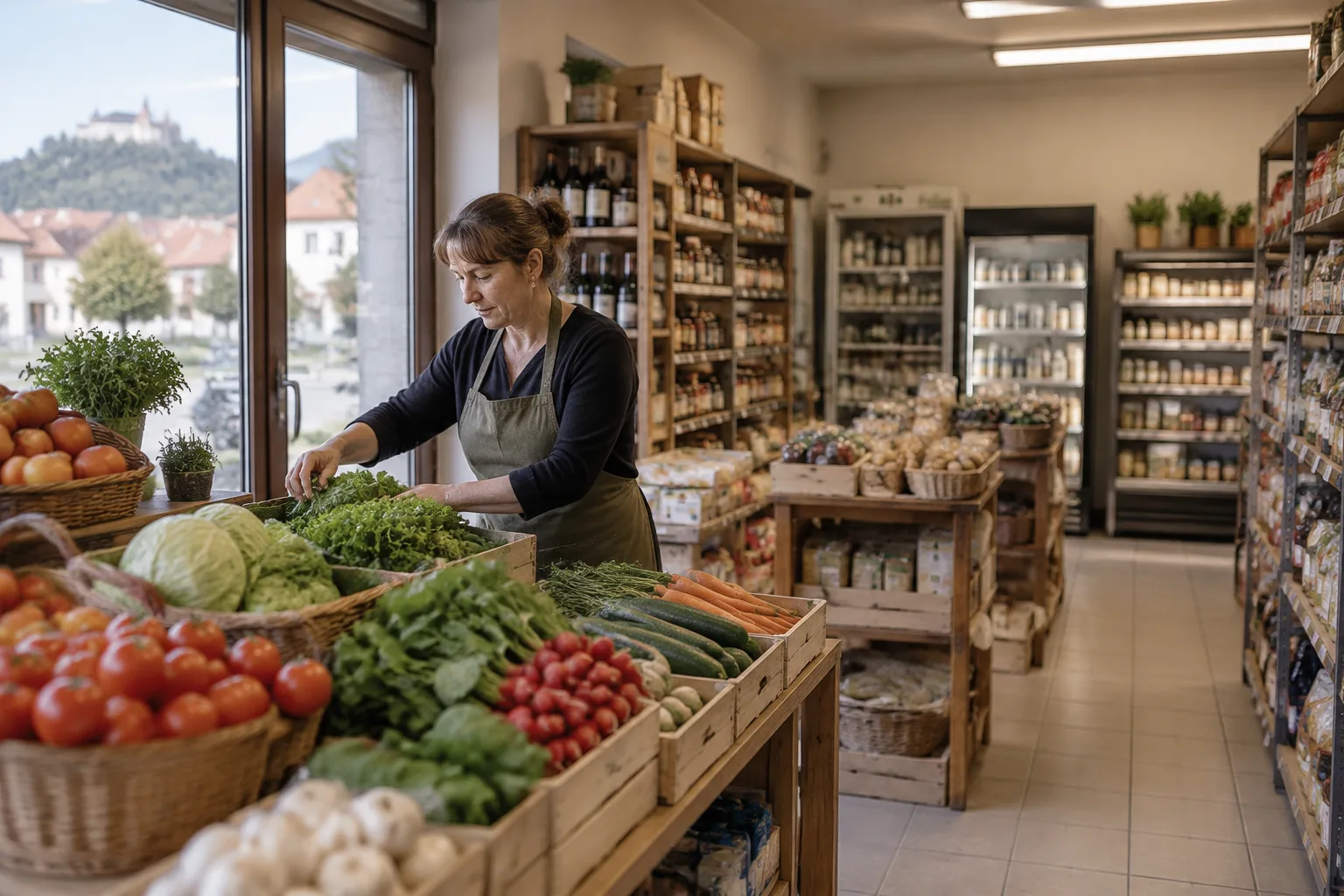
Sanee’s presents a turnkey franchise model
Sanee’s describes its franchise model as a turnkey package. What does that mean, and what should prospective franchisees check before deciding?
Published

In a presentation on Franchising.si dated 10 September 2026, Sanee’s highlights a franchise model designed around a turnkey approach. For prospective franchisees considering the Slovenian market, this is an introduction to the opportunity rather than a comprehensive account of the terms of cooperation. The available extract confirms the model’s basic approach but does not reveal exactly what it covers.
What Sanee’s presents
The article, entitled ‘Sanee’s franchise: Independent in business, but not alone’, focuses on the balance between entrepreneurial independence and working within a franchise network. The only specific feature of the business model identified in the available source material is its practical, turnkey approach.
That is also the limit of what can reliably be reported. The supplied extract does not specify which services, equipment or other elements the package includes. Nor does it provide details of the initial investment, fees, contract term or experience required of prospective franchisees. These gaps cannot be filled with assumptions about how the model might work.
Publication on a Slovenian portal does not, in itself, confirm that an outlet has opened in Slovenia, that an agreement has been signed with a local partner or that the network has begun expanding into the Slovenian market. The article introduces the Sanee’s franchise concept; reporting on a specific location or a new franchisee would require further confirmation.
‘Turnkey’ is a starting point for specific questions
For prospective franchisees, the key question is what ‘turnkey’ means in this particular package. It is sensible to request a written list of everything they would receive on joining, alongside a separate list of the tasks that would remain their responsibility. This would allow them to compare the description of the model with the actual terms of the agreement.
Questions for the franchisor should cover premises preparation, any equipment, opening stock, training and launch support. The available Sanee’s extract does not confirm any of these items; they are listed here as areas to investigate, not as components of its package. The same applies to any support once trading has begun.
Prospective franchisees should also check the timetable: when the franchisor would fulfil each obligation and when they would need to fulfil their own. If preparations for opening depend on external contractors, permits or delivery lead times, they should ask how these might affect the launch date. The aim is to obtain a verifiable plan, rather than assume that ‘turnkey’ means having no responsibilities of their own.
Independence and support need clear boundaries
The title of the Sanee’s presentation emphasises independence while also conveying that the business owner is not alone. When assessing the opportunity, it is useful to translate that message into questions about decision-making: which decisions would rest with the franchisee, and which would require them to follow the franchisor’s instructions or obtain approval?
Prospective franchisees can ask for clarification on location selection, purchasing, the product or service range, local marketing and day-to-day work organisation. Again, these are not confirmed features of Sanee’s, but recommended questions to ask before entering into an agreement. Without answers, it is impossible to assess the extent of the promised entrepreneurial independence.
Support should also be clearly defined. Who would be the point of contact, which communication channels would be used, and what assistance would be agreed if problems arose? A description of procedures and responsibilities is more useful to a prospective franchisee than a general message about working together. Membership of a franchise network is best assessed through the substance of a relationship that both parties clearly understand.
Check costs and documentation before deciding
The available material does not allow an assessment of the financial appeal of the Sanee’s opportunity. Without details of the investment, ongoing financial commitments and anticipated costs, there is no basis for drawing conclusions about profitability or the payback period. The ‘turnkey’ label alone does not indicate how much additional funding a prospective franchisee would need to launch and sustain the business.
Before deciding, prospective franchisees should therefore obtain a breakdown of payments, a draft agreement and an explanation of any additional costs. It is useful to distinguish one-off payments from recurring commitments and to check the renewal and termination terms. In their financial assessment, they should treat any projections as assumptions that need supporting explanations, not as guaranteed results.
Practical takeaway: use the Sanee’s presentation as a starting point for an initial discussion. Before making any commitment, request a written definition of the turnkey package, a complete breakdown of costs and a clear allocation of responsibilities.