Fit+ focuses on staff-free franchising. How much does a gym cost?
Fit+ is promoting a gym model with no permanent on-site staff. The chain quotes PLN 599,000 excluding VAT for equipment and operating systems.
Published
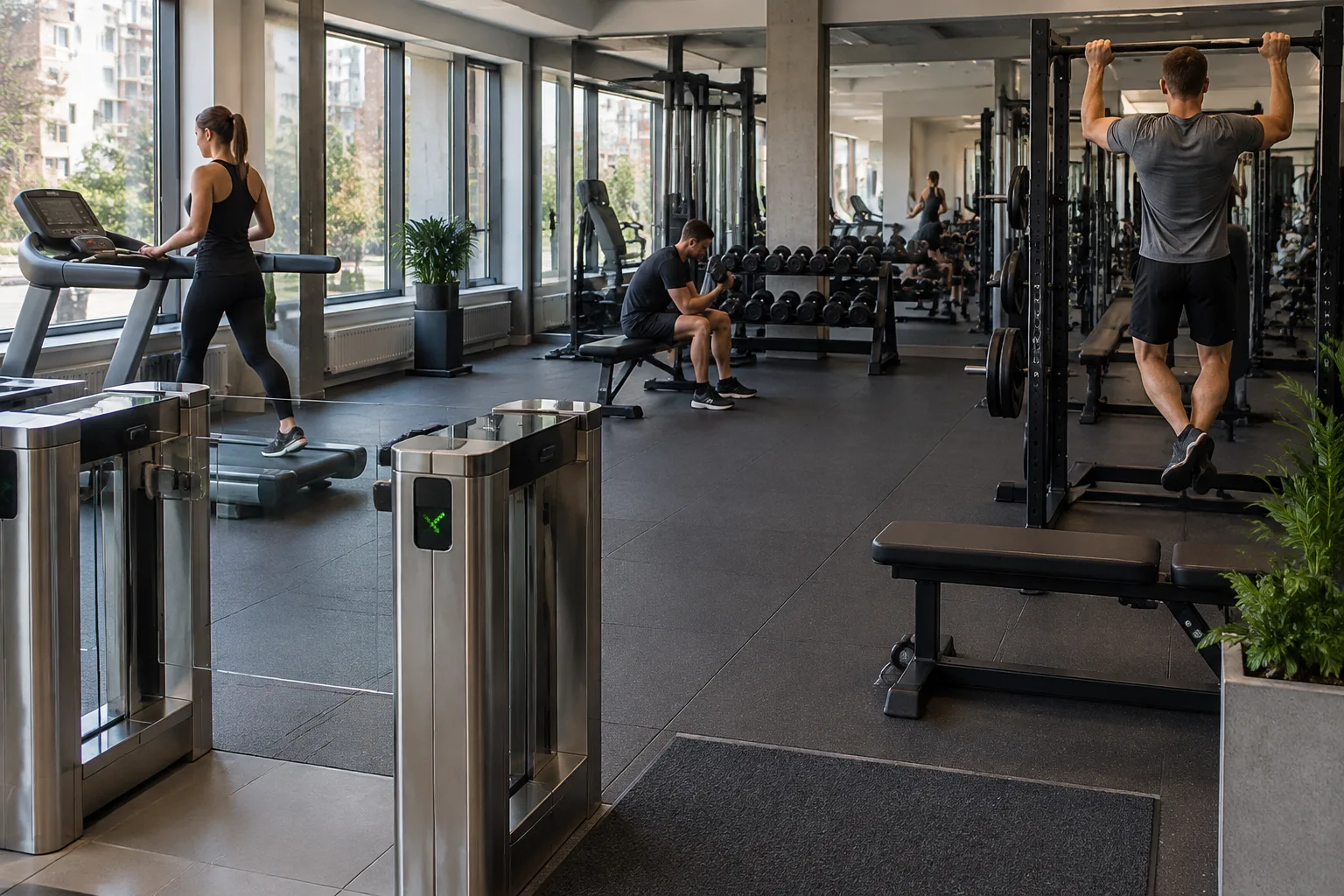
A gym with no permanent on-site staff, membership income and just a few hours of the owner's time each week — this is how Fit+ presents its franchise model. In an article published by Polish news outlet WP on 28 September 2026, the chain set out investment figures and reported performance figures for established clubs. For prospective franchisees considering the Polish market, the proposition merits attention, but the brand's figures must be clearly distinguished from forecasts for any particular location.
Automation instead of permanent staff
Fit+ clubs are automated and operate without on-site staff. According to the description in the article, franchisees are expected to spend only a few hours a week running their gym. This limited day-to-day workload is one of the central features of the chain's proposition.
Marcin Dobrowolski, president of Fit+ and its master franchisee, links the model's financial rationale to three factors: staff-free operations, low operating costs and membership income. In his view, this combination makes for a stable business. However, this is the assessment of a brand representative, not an independent guarantee of a future franchisee's results.
The meaning of ‘staff-free’ also matters. In the source article, it refers to how the club operates, not to an absence of responsibilities for the owner. Since the chain itself mentions a few hours of work each week, prospective franchisees should establish which tasks that covers and which fall outside it. The published description does not provide a detailed breakdown of these responsibilities.
PLN 599,000 excluding VAT for equipment and systems
According to the information cited by WP, a full set of gym equipment and operating systems costs PLN 599,000 excluding VAT. This is the main upfront investment figure quoted for the Fit+ model, but its scope should be read literally: it covers the specified items, rather than a verified total opening budget for any club.
The article does not provide a detailed investment breakdown. There is therefore no basis for assuming that the quoted sum covers every expense involved in preparing a particular property and launching the business. Before making a decision, prospective franchisees should request a list of what is included in the offer and what they must fund separately.
Monthly operating costs are said to range from PLN 10,000 to under PLN 20,000, excluding VAT. This figure also comes from the chain's description of its model. Without an itemised breakdown, it is difficult to apply it to premises with a different floor area, lease terms or service requirements.
Prospective franchisees should therefore do more than compare the investment figure with their available capital. It is equally important to obtain a monthly budget tailored to the chosen location and establish the assumptions behind the quoted cost levels.
Established club results, not a promise from day one
The article states that an established Fit+ gym generates monthly revenue of PLN 30,000–60,000. Reported net profit is PLN 15,000–40,000 a month, with the potential to rise to PLN 50,000 as the customer base expands. These figures should be treated as results and potential outcomes presented by the chain in the article.
The key word is ‘established’. The figures are not described as results achieved from the first month of trading. Nor does the article say how long it takes to reach that level, how many clubs the figures cover or what proportion of locations achieve the upper end of the ranges.
The extremes of the revenue and profit ranges should not be freely combined, either. The published ranges are not a complete profit and loss account for a single gym. On their own, they cannot establish a particular club's margin or a reliable investment payback period.
A practical step before signing an agreement would be to request performance examples from comparable clubs, together with their trading history and number of active memberships. The start-up period should be analysed separately from the stage at which a club has an established customer base. This distinction helps prospective franchisees assess the offer without treating the best-case scenario as the baseline.
Smaller towns in the growth plans
Dobrowolski suggests that the limited demands on an owner's time could make it easier to open additional locations. He also identifies smaller towns as a potential market, arguing that staffing costs there could make a traditional gym harder to operate.
This is an argument for the model's flexibility, not evidence that every location will be profitable. The source article provides no list of new openings, target number of clubs or expansion timetable. What is clear is that the chain presents automation as the basis for growth and for reducing the time needed to manage each location.
Practical takeaway: assess the Fit+ offer using a full cost breakdown, a clear account of the franchisee's responsibilities and results from comparable gyms. The claimed few hours of work per week and the performance of established clubs are a starting point for due diligence, not a substitute for your own financial plan.