Removing Branding When a Franchise Ends
Before offering franchises, plan how to remove branding, deal with remaining stock and keep customers informed when a franchise ends.
Published

Before franchising your existing business, plan how its branding will be removed when an agreement ends. Simply instructing someone to take down the sign is not enough. The name may remain on packaging, web pages, location listings and receipts. Across a franchise network, orderly debranding protects customers, the former franchisee and outlets that remain authorised.
1. Separate the end of the agreement from the obligations that follow
Expiry, voluntary termination and termination for breach may involve different procedures. In every case, however, it must be clear when the right to use the business name, logo and other brand identifiers ends.
The Philippines has no single comprehensive franchise law. The Civil Code governs obligations and contracts, while Republic Act No. 8293, or the Intellectual Property Code, governs trademark licensing and protection. Executive Order No. 169 also sets specific rules for franchise agreements involving micro, small or medium-sized enterprises. These include registration with the Department of Trade and Industry (DTI) and minimum requirements for the contents of agreements.
Have a lawyer check that the post-termination obligations comply with these rules. Do not assume that every business is subject to the same statutory deadline for removing branding. Set out a reasonable timetable, what triggers it and how completion will be verified.
Also distinguish debranding from a prohibition on continuing to operate any business. These are not automatically the same obligation.
2. Create an inventory of everything that carries the brand
Before the first franchise opens, prepare a checklist that can be used when it closes. There is no need to wait until a franchisee leaves to establish who holds the keys, access permissions and control over business identities.
Cover the following:
- Physical premises and assets: signs, painted logos, menus, uniforms, vehicles and in-store materials.
- Sales materials: packaging, labels, catalogues, receipts, vouchers and loyalty cards.
- Digital identities: outlet pages, map listings, delivery platform pages, email addresses and domain names.
- Franchisor-owned documents: copies of manuals, design guidelines and materials supplied on loan.
For each item, record who owns it, who has authority to make changes, who will pay and what evidence of removal is required. A photograph may be sufficient for a sign, but a page that is no longer publicly visible will require a different form of proof.
If an outlet page sits within the former franchisee’s personal account, changing it may be difficult. Put suitable management arrangements and permissions in place while the relationship is still positive, without asking for their personal passwords.
3. Decide what to do with remaining stock
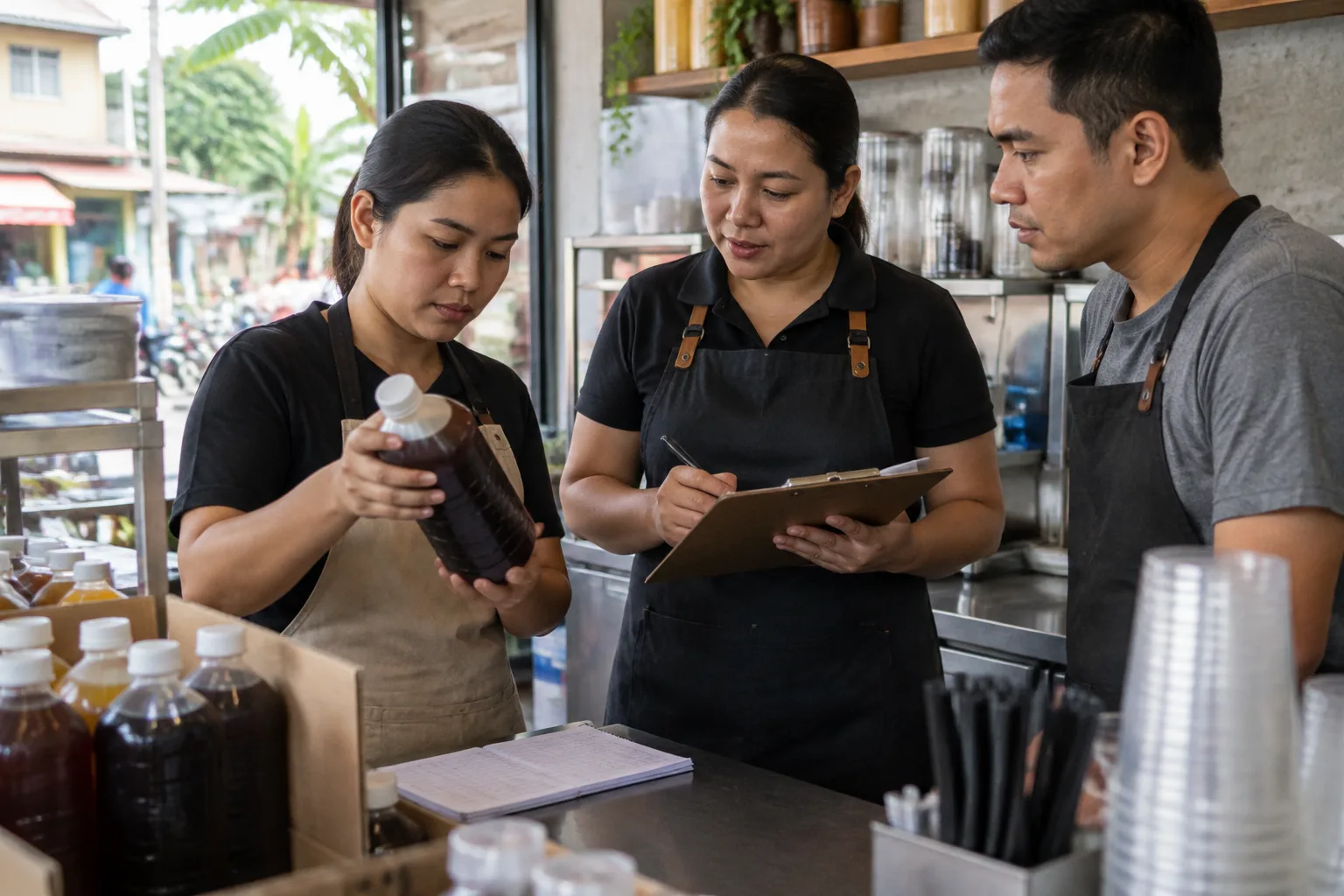
Remaining stock is often harder to deal with than signage. There may be products that are still saleable, branded packaging and materials that should not end up in another shop.
Specify in the agreement whether stock will be bought back, returned or transferred to an authorised outlet, and whether certain materials must be destroyed. If there is a buy-back arrangement, clarify the required product condition, valuation method, transport costs and inspection process before payment. Do not promise to buy everything back unless you can fund it.
If a temporary sell-off of remaining products is permitted, clear written authorisation is needed. Define its scope, final date, quality standards and how customers will be informed. It must not become a disguised continuation of the franchise.
Distinguish equipment owned by the franchisee from the branding attached to it. Owning a fridge or table does not automatically confer continued permission to use the brand.
4. Set up checks and customer communications
Appoint someone to receive evidence and monitor outstanding tasks. Use a consolidated checklist showing what has been completed, what remains outstanding, who will take action and when the next review is due.
Prepare a short, factual announcement as well. Explain that the location is no longer an authorised outlet and tell customers where to direct enquiries. Avoid making accusations or disclosing private details of any dispute.
Clarify who will handle existing orders, advance payments, vouchers, complaints and warranty claims. The allocation of responsibility in the contract should not be treated as automatically removing customers’ rights under applicable law.
Practical summary: Before offering franchises, prepare a branding inventory, a policy for remaining stock, a debranding timetable and customer communications. Have these reviewed alongside the agreement so that an orderly exit is clearly defined and achievable.
Sources
- Franchising a Business Into the Philippines: Legal and Registration ...
- How to Start a Franchise Business: A Step-by-Step Guide
- Philippine Franchise Entry Guide | PDF
- Franchise Business in the Philippines: Legal Rules, Contract ...
- Philippines: Franchise & Licensing
- How to Register a Franchise Business in the Philippines - CBOS Business Solutions Inc.
- How To Start a Franchise Business in the Philippines: A ...
- How To Register a Franchise Business in the Philippines