Disaster Planning Before Franchising Your Business in the Philippines
Prepare your business for typhoons, floods and power cuts before franchising. Set clear rules for closures, support and a safe return to trading.
Published
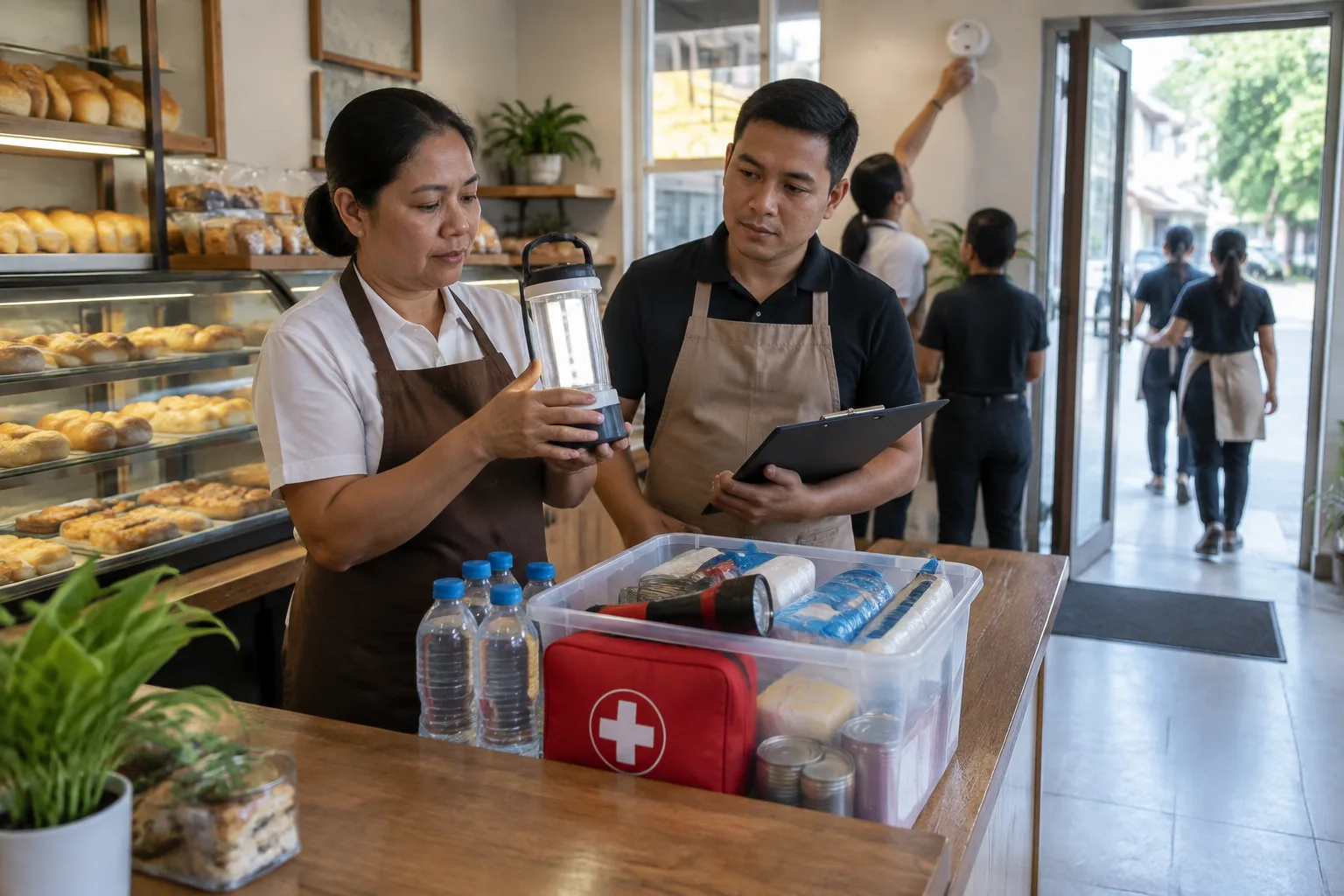
Before franchising your existing business, make sure it can cope with sudden disruption without every decision depending on you. Across a franchise network, preparing for typhoons, floods, fires and power cuts is a shared responsibility. You need a clear plan: who can authorise closure, what support is available, and when it is safe to reopen.
1. Identify what needs protecting
Start with activities whose interruption could put people, products or livelihoods at risk. General advice to “take care during a typhoon” is not enough. The plan must be usable even when the brand owner cannot be reached.
For each type of outlet, list:
- Risks: flooding, fire, earthquakes, or loss of water, power or communications.
- Affected activities: cooking, refrigeration, taking payments or delivering services.
- Immediate response: safe shutdown, evacuation, separating affected stock or using an approved alternative.
- Responsibility: the decision-maker and their deputy if they are unavailable.
Keep safety separate from the drive to maintain sales. For example, wanting to recover lost revenue is no reason to sell food whose safe storage can no longer be assured. Likewise, an employee who needs to evacuate because of immediate danger should not have to seek permission from head office.
Also record how long essential activities can remain suspended before further action is needed. Base this on the business’s actual equipment, products and operating conditions, rather than assumptions borrowed from elsewhere.
2. Allocate decision-making authority and define available support
Prepare a short list of decisions franchisees can make independently and changes they must refer for approval first. Make it clear that official orders must be followed and that nothing should prevent immediate action to protect people.
Local decision-making may include temporarily closing an outlet because of a clear danger. Relocating, using different equipment or making substantial changes to the service, however, may require a separate assessment.
Also specify the support the brand owner will provide:
- A primary contact and a backup if that person cannot be reached.
- A way to report incidents even without a reliable internet connection.
- Help with assessing damaged equipment and resuming operations safely.
- A process for requesting temporary changes to financial obligations.
Do not promise support you cannot provide to several outlets at once. If you rely on a single repair contractor, arrange an alternative. If head office could lose power, make sure every outlet has a securely stored copy of essential contact numbers and instructions.
3. Align the plan with the agreement and the law
The Philippines has no single comprehensive franchise law, but that does not mean the sector is unregulated. Executive Order No. 169, series of 2022, sets minimum requirements for franchise agreements with franchisees that are micro, small and medium-sized enterprises. These include both parties’ rights and obligations and a dispute resolution mechanism. It also requires agreements within its scope to be registered with the Department of Trade and Industry (DTI).
For operational disruption, the Civil Code is important, particularly Article 1174 on events that cannot be foreseen or avoided. A typhoon or other disaster does not automatically remove all obligations. The cause of non-performance, the relevant law and the agreement itself all matter.
Ask a lawyer to review provisions covering notification, evidence of damage, temporary suspension of operations and the allocation of costs. Clarify whether any scheduled payments remain due while an outlet is closed and how to request an extension. Do not leave these matters to verbal promises.
Review insurance too: which assets and risks are covered, who will submit a claim, and whether there is business interruption cover. Do not assume that property insurance covers all lost income.
4. Test the plan before taking on a franchisee
Run a drill using a specific scenario: a power cut during a busy trading period, with the owner out of reach. Have the manager make decisions, report the situation and record the incident. Observe which instructions are unclear or impossible to follow.
Next, test the reopening process. Who will inspect the building and equipment? How will potentially damaged or spoiled stock be separated? Who will confirm that service can resume? Obtain an assessment from a qualified professional or approval from the authorities where necessary; photographs alone are not enough when there may be structural or electrical damage.
Revise the plan after every drill or real incident. Practical takeaway: before offering a franchise, make sure an outlet can close safely, seek help and reopen even when you are not there.
Sources
- Franchise Business
- Franchising Law and Practice in Philippines
- A Guide to Starting a Franchise Business in the Philippines
- How do I Franchise my Business? - Blog
- Philippines: Franchise & Licensing
- CHAMBERS GLOBAL PRACTICE GUIDES Franchising 2025
- How To Start a Franchise Business in the Philippines: A ...
- Low-Cost Franchise Business in the Philippines - Wise