NeNe Chicken opens two new outlets in the Philippines
NeNe Chicken and Bongousse Rice Burger share premises at NeNe Chicken’s second and third outlets in the Philippines, offering both brands’ food under one roof.
Published
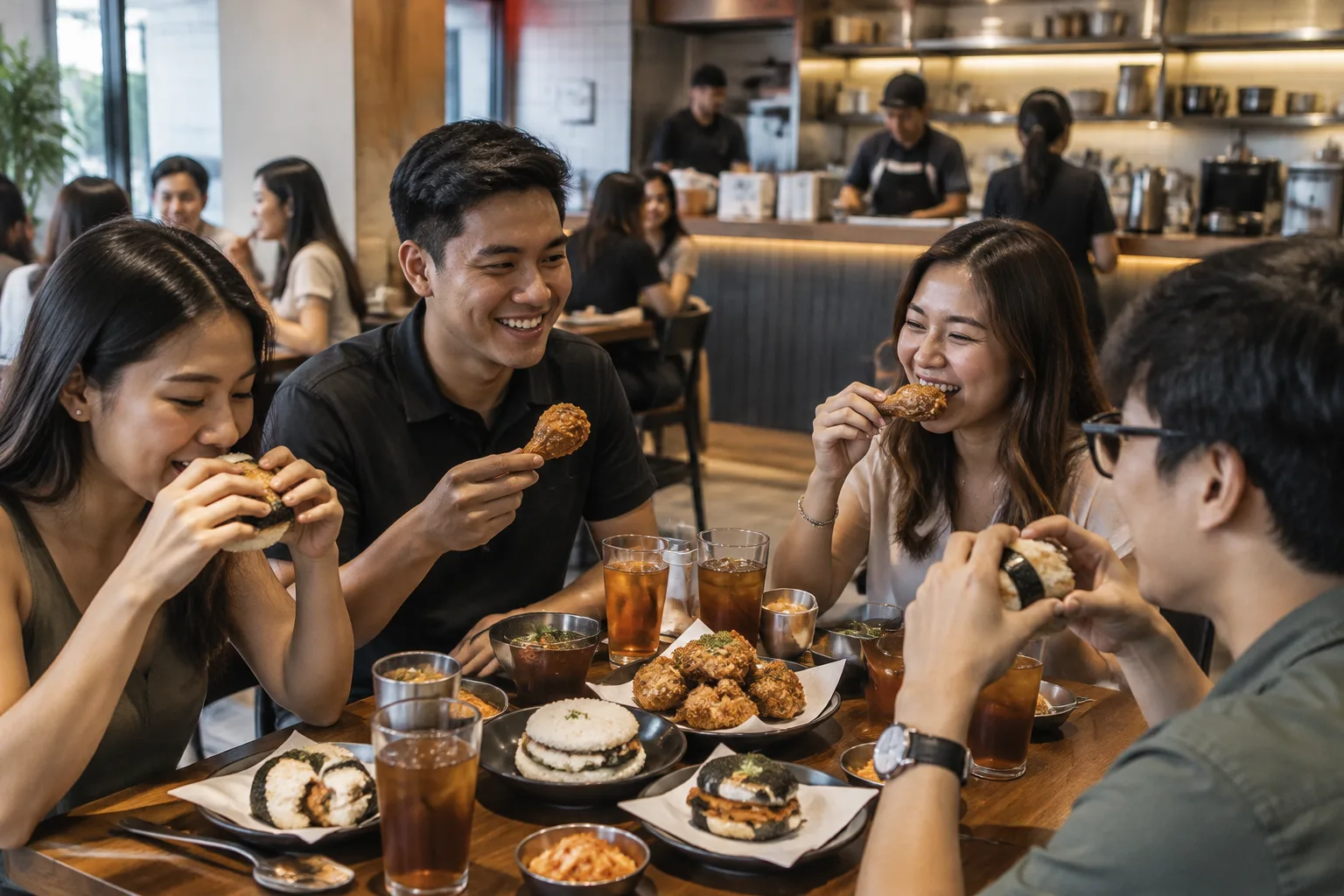
NeNe Chicken has added two outlets in the Philippines, following its first branch in Makati. The expansion brings NeNe Chicken and Bongousse Rice Burger together under one roof, giving customers access to both Korean-style fried chicken and rice burgers.
Second and third outlets open
According to a report by Maeil Safety Newspaper dated 28 October 2026, NeNe Chicken recently opened its second and third outlets in the Philippines. These follow the brand’s first outlet in Makati, bringing its reported total in the country to three.
The additional outlets are intended to expand local operations and strengthen the brand’s business outside Korea. Through its Philippine outlets, the company is introducing local customers to Korean-style chicken dishes and the NeNe Chicken dining experience.
For those assessing the Philippine franchise market, the significance goes beyond the growing outlet count. The two new locations also introduce a different format, with each sharing premises with another Korean food brand.
Two brands under one roof
The second and third outlets both combine NeNe Chicken and Bongousse Rice Burger. This arrangement allows customers to choose chicken dishes and rice burgers at the same location.
The report described the pairing as a way to broaden the range of Korean food available to local customers. Rather than focusing solely on chicken, the offering includes a different type of food from the partner brand.
It is important to distinguish this format from simply adding dishes to one brand’s menu. Here, two brands operate together in a shared outlet. That is the distinctive feature of the two new Philippine branches covered in the report.
However, a wider choice does not automatically demonstrate higher sales or better profitability. Anyone assessing this type of business should treat the shared-outlet format as an arrangement to evaluate, not a guarantee of success.
Part of operations across 12 countries
Maeil Safety Newspaper also reported that NeNe Chicken has a total of 120 outlets across 12 countries outside Korea. The Philippines is among the markets where it is expanding as it strengthens its business as a Korean chicken brand.
The figure of 120 refers to its overseas outlets, not its Philippine network alone. The specific development in the Philippines is the addition of two outlets following the first branch in Makati.
The international total provides context for the scale of the brand’s operations. For a prospective partner in the Philippines, however, assessing actual local outlet performance is more meaningful than relying solely on the size of its overseas network.
What should prospective investors assess?
This news provides a concrete example of two brands serving customers from the same premises. For those in franchising, it can serve as a starting point for examining site selection, food preparation and the management of different product ranges.
When evaluating this format, useful questions include how space, equipment and staff responsibilities are allocated. It is also worth clarifying how ingredient sourcing, quality control and service are organised across the different food offerings.
These questions are intended to guide due diligence, not describe the brands’ actual agreement. Equally, the opening of new outlets should not be taken as an announcement that franchise applications are being accepted.
Practical takeaway: Before committing to a shared outlet, request clear details of the local operations and contractual arrangements. Assess responsibilities, costs and site requirements—not just the number of brands or dishes on offer.