Too Good To Go expands: lessons from PLUS stores’ participation
Too Good To Go is adding non-food products. Participation by more than 300 PLUS stores shows how local initiatives can spread across a retail network.
Published
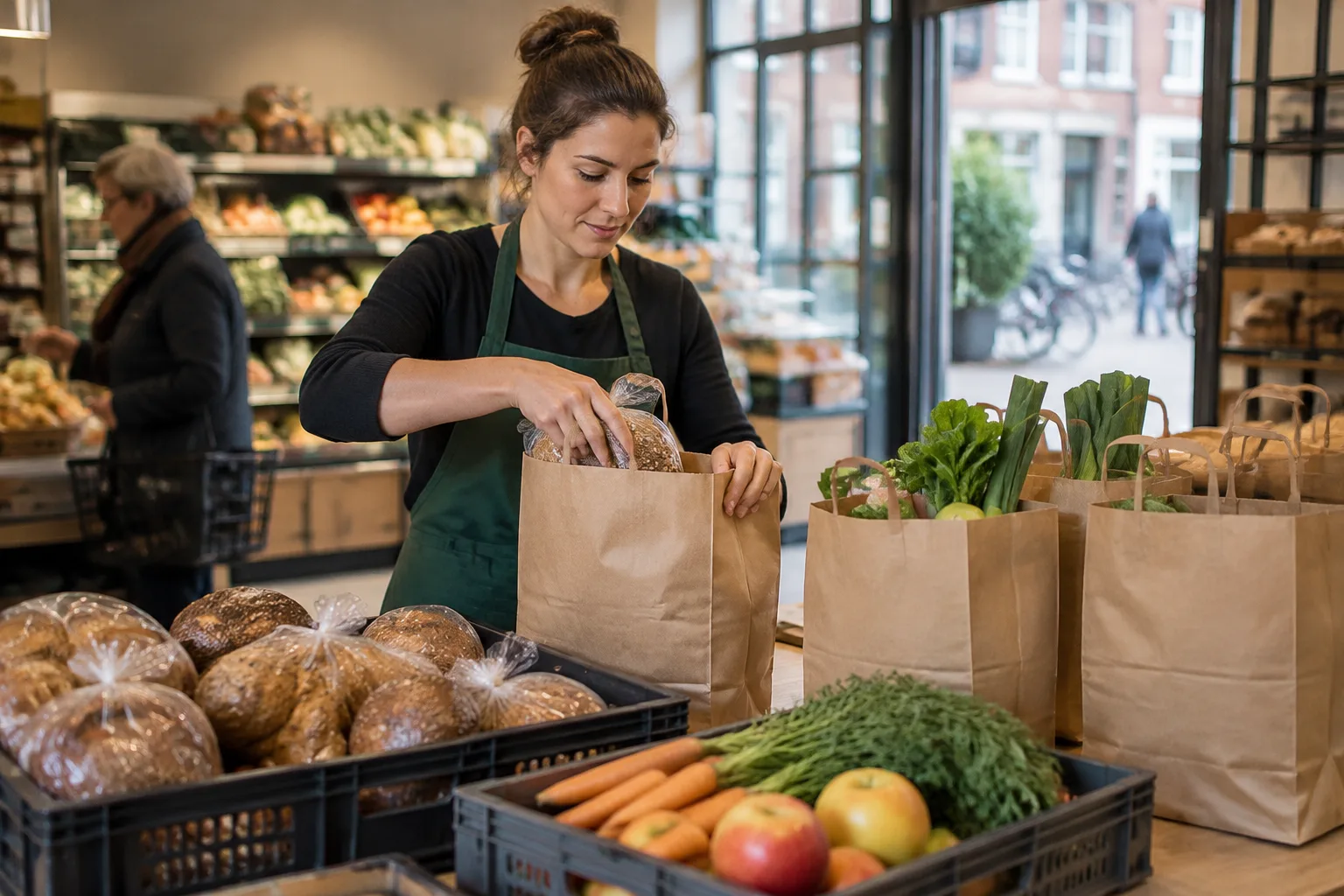
Too Good To Go is expanding its offering in the Netherlands to include non-food products. Welkoop and Vitamin Store already offer products through the expanded service. For those considering the Dutch franchise market, developments at supermarket chain PLUS are also relevant: what began at a single store in 2019 has grown to include more than 300 of its 440 locations.
From food parcels to a broader range
The expansion was announced in the week before an article published by Dutch newspaper NRC on 23 October 2026. Retailers can now offer surplus products in five additional categories: personal care, pet care, flowers and plants, food supplements, and home. The last category includes items such as decorations and cleaning products.
This broadens Too Good To Go’s original approach: using an app to sell products that would otherwise be thrown away at a reduced price. Availability and participation still vary considerably by country. In the Netherlands, NRC names Welkoop and Vitamin Store as retailers offering products under the expansion.
The app has been available in the Netherlands since 2018 and has now been downloaded almost six million times. Until now, its offering has included vegetables, fruit, dairy products, bread, cold meats, sweet treats and complete meals. Buyers choose a bag whose contents are partly a surprise, with categories such as ‘bread and pastries’, ‘vegetarian’ and ‘groceries’. According to the article, the average discount on the original retail price is between 50 and 66 per cent.
PLUS: from one retailer to more than 300 stores
Developments at PLUS show how participation can grow within a network of independent retailers. According to PLUS spokesperson Marlijn Simons, one store started using Too Good To Go in 2019. Other retailers then followed. More than 300 of the 440 PLUS stores have now joined the platform.
NRC visited the local PLUS store in Abcoude to explore this development. There, Simons explained that tackling food waste is now part of company policy. PLUS is a co-operative of independent retailers: participation therefore began locally before more and more stores joined.
For the franchise community, that sequence is particularly interesting. Growth at PLUS did not begin with every location joining at once. One store took the first step, followed by other retailers. It is a concrete example of how a local initiative can gain traction across a larger retail network.
The picture is different at Jumbo. According to Too Good To Go, some franchisees participate, while the platform would welcome a broader partnership with the supermarket chain. Albert Heijn is also on its wish list. Albert Heijn To Go already works with the platform; larger Albert Heijn supermarkets, following an earlier partnership, have since started offering their own discounts on surplus products.
More bags sold, but demand still exceeds supply
In its first five years in the Netherlands, Too Good To Go sold 18 million bags. A further 22 million were sold over the following three years. The company describes this as more than doubling its pace of growth.
At the same time, the platform sees scope for more businesses to join. According to Too Good To Go’s Van Schoot, around 25,000 bags are available each day. He says this is fewer than the number of people visiting the app, meaning not every visitor can find something to buy.
That balance is relevant to retailers, but it does not in itself guarantee that every bag offered will sell. For an individual store, the practical question remains what surplus stock is available and how it can be turned into a suitable offering. The national figures describe the scale of the platform, not the returns for any individual store.
Staff time is a factor in the decision
According to Van Schoot, staff time is a significant obstacle. Retailers have to weigh up how employees spend their time. Putting together a bag of surplus products takes work; throwing them away may seem quicker and cheaper by comparison.
Against this, he argues that participating stores can attract visitors who might not otherwise have come in. He presents additional purchases as a possibility, not a guaranteed outcome. For franchisees, participation therefore requires more than simply assessing the price of a bag: the work involved also deserves attention.
Practical tip: before joining, establish which products are left over and how much staff time is needed to assemble and hand over the bags. Draw on the experience of other retailers within the same chain to make an informed assessment of a local trial.