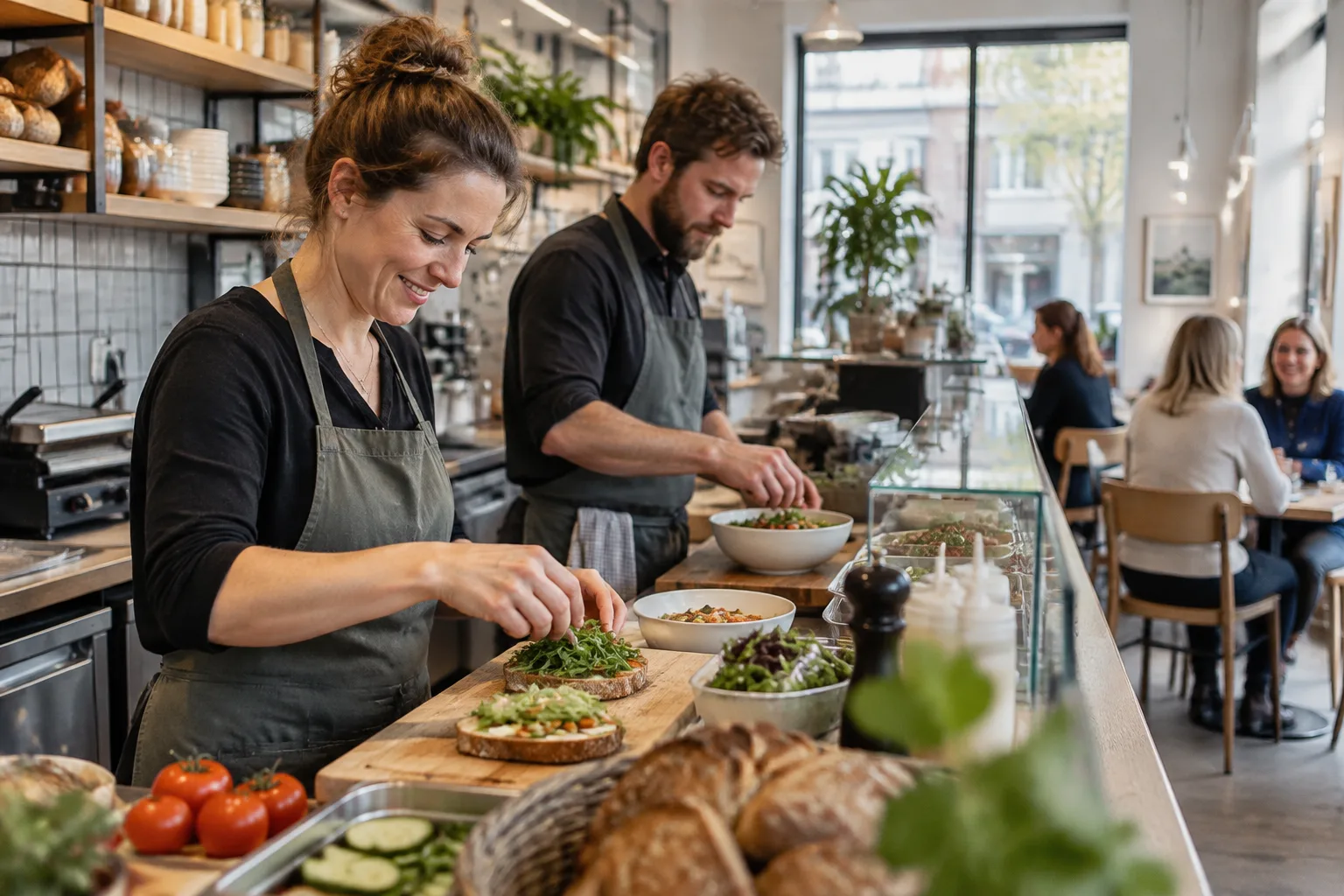
Entrepreneurs in their twenties take over five Barista Cafe branches
Five of the eight changes of ownership at Barista Cafe in 2026 involved entrepreneurs in their twenties. Progression from within existing teams is one route into ownership.
Published

Young entrepreneurs are playing a growing role at Barista Cafe. Of the eight branches that changed hands in 2026, five were taken over by people in their twenties. One in six branches is now owned by an entrepreneur under thirty, according to a report published by Lunchroom on 4 November. Progression from within existing teams is one route into business ownership.
Five takeovers by entrepreneurs under thirty
Barista Cafe has thirty branches. Eight welcomed a new owner in 2026, five of whom were in their twenties. Entrepreneurs under thirty therefore account for the majority of the changes of ownership reported this year. These were takeovers of existing branches, not five additional café openings.
The figures provide a clear picture of new owners joining this franchise network. They do not indicate how the age profile of the wider Dutch franchise community is changing. They do, however, show that some Barista Cafe candidates are becoming business owners before they turn thirty.
According to Simone den Daas, operations director at Cavesco, young people are making a more deliberate choice to become entrepreneurs because they want to take responsibility and build something of their own. At Barista Cafe, that ambition takes several forms: taking over an existing business, opening a new branch or progressing from an existing role.
From employee to owner in Houten
Barista Cafe Houten is one example of this internal progression. The branch was recently taken over by a 23-year-old entrepreneur who started as an employee within the network and went on to become a branch manager before moving into ownership.
The new branch in Weesp also has a connection to the company's existing workforce. The two young entrepreneurs behind this location previously worked at Barista Cafe. Houten and Weesp therefore illustrate two different routes: taking over an established business and opening a new branch.
These examples highlight the role of staff development. A job within the network can provide an introduction to the concept, followed by greater responsibility and, ultimately, business ownership. This is not presented as a standard pathway for every employee, but it is the background of the new owners at these branches.
For the franchise community, this link between employment and ownership is particularly relevant. The story is not simply about recruiting external candidates, but also about people who already know the franchise before taking charge of a branch themselves.
Support goes beyond day-to-day operations
Barista Cafe attributes part of its appeal to young entrepreneurs to the combination of independence and support. According to the franchise, candidates want to build something of their own without having to work out every aspect of running a hospitality business from scratch.
Support begins with preparation and training and continues throughout the day-to-day running of the branch. Barista Cafe says this covers more than operational matters: leadership, team development, quality and identifying commercial opportunities are also included.
That distinction matters when moving from employee or branch manager to business owner. The support described focuses not only on delivering the concept, but also on leading and developing a team. At the same time, Barista Cafe says owners retain the freedom to put their own stamp on their business.
The franchise thus presents the partnership as a combination of a shared concept and local entrepreneurship. For prospective franchisees, both the scope of support and the freedom to make their own decisions are important points to discuss in advance.
Selection looks beyond age and experience
Barista Cafe says it looks beyond age or hospitality experience alone when selecting new franchisees. Prospective owners undergo assessments. Among younger candidates, the franchise says these regularly reveal a sense of responsibility, stability and a strong focus on quality.
This observation comes from Barista Cafe itself and is not a general judgement about all young franchisees. It does, however, clarify which qualities the franchise recognises in this group and why age is not its only selection criterion.
Barista Cafe started in Alphen aan den Rijn in 2009 and has since grown into a nationwide network of thirty branches in the Netherlands. Alongside further expansion, the franchise sees opportunities for a new generation of entrepreneurs to grow within the organisation. This year's takeovers and the examples from Houten and Weesp illustrate that in practice.
Practical advice: as a prospective franchisee, discuss not only the branch available, but also training, leadership support and your freedom to make decisions. For franchisors, these examples offer a reason to actively identify entrepreneurial talent within existing teams.