Chocolaterie Albert targets growth through franchising
Chocolaterie Albert aims to grow through local entrepreneurs. Its franchise model combines an in-house factory in Udenhout, the Netherlands, with scope for franchisees to shape their own shops.
Published
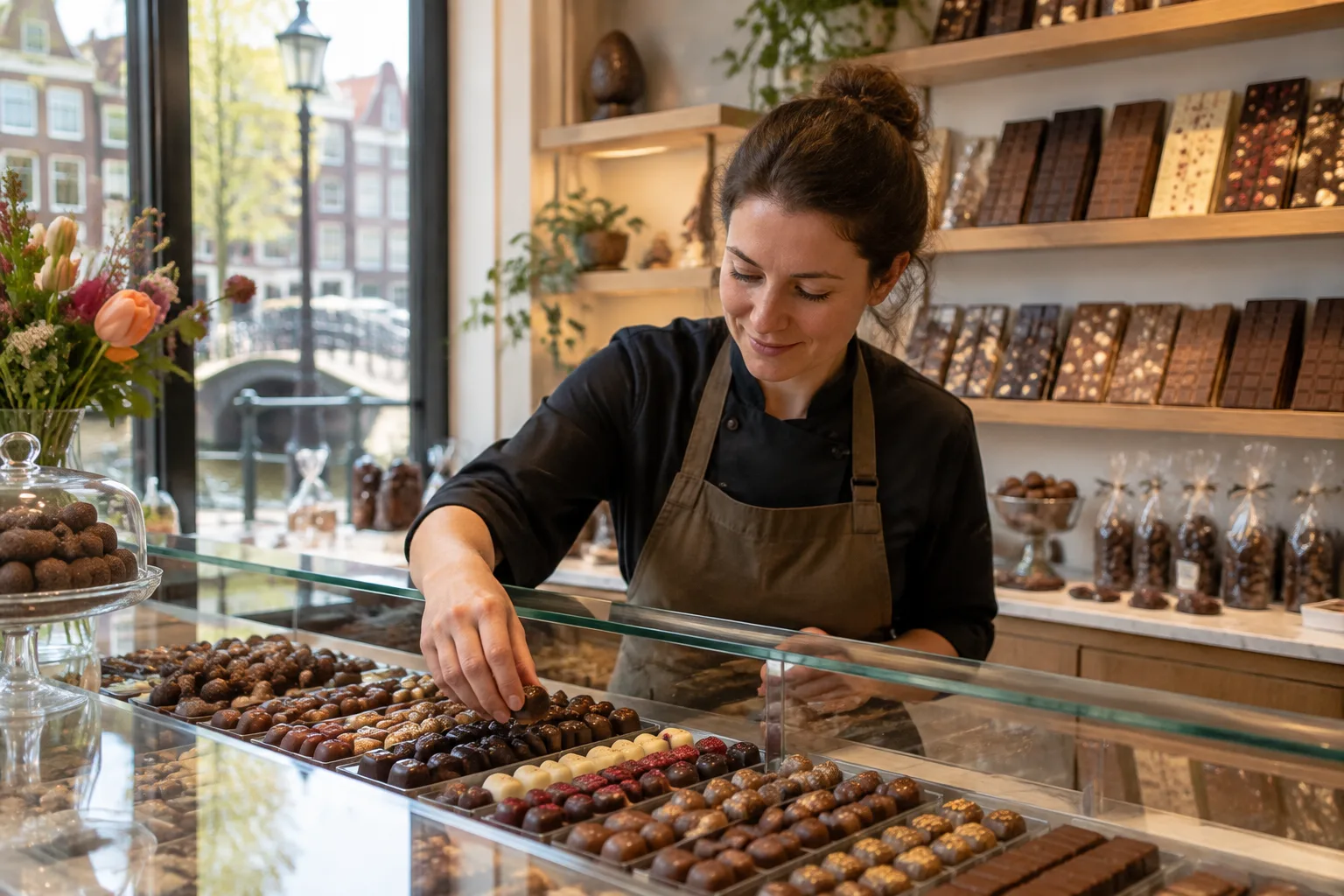
Chocolaterie Albert is choosing franchising as a way to supply more shops from its own factory in Udenhout, the Netherlands. The family business, which has been making chocolate since 1982, is targeting local entrepreneurs. In a presentation on Franchise+ dated 20 October 2026, the company emphasises direct supply from its production facility and freedom for franchisees.
Growth built on in-house chocolate production
Chocolaterie Albert is based in Udenhout, where it began in 1982 as a small artisan chocolate maker and still operates its own factory. Its range includes filled chocolates, chocolate bars, seasonal creations and personalised chocolate. According to the company profile, the range is refreshed and expanded every year.
The decision to franchise is directly linked to its production capabilities. Chocolaterie Albert says its factory has capacity to supply more shops. To support further growth, it is therefore seeking local entrepreneurs who want to sell chocolate in their own towns and cities.
Albert is presenting a growth model in which existing production provides the foundation for expansion through independent business owners. The focus is not just on the product, but also on how each local shop is run. The family business wants to combine its artisan heritage with entrepreneurship close to the customer.
For those considering the Dutch franchise market, this combination is particularly relevant: a manufacturer offering its own franchise concept and promising entrepreneurs scope to shape their shops. The factory and the local retail outlet each have a distinct role within the model.
Buying directly from the producer
A key part of the proposition is the direct relationship between franchisee and producer. At Chocolaterie Albert, entrepreneurs join forces with the company that makes the chocolate itself. The company explicitly highlights this as an advantage of its franchise model.
Albert contrasts this with franchise networks that buy their products from a separate manufacturer. According to the presentation, that arrangement adds another margin. At Albert, in-house production is instead part of the relationship with the franchisee.
This explanation describes how products are supplied, but it is not a substantiated comparison of the profit a shop can ultimately make. Prospective franchisees should therefore examine the specific purchasing terms and the other costs involved in the partnership. Buying directly and achieving an attractive return from a shop are not the same thing.
The product range also deserves attention. Filled chocolates, bars, seasonal products and personalised chocolate are all available. Prospective franchisees should discuss in advance how that range would translate into their own shop and what choices they would have.
Local freedom as a guiding principle
Alongside its own factory, Chocolaterie Albert emphasises franchisee independence. According to the company, entrepreneurs largely decide for themselves how to fit out their shops, approach customers and build relationships. In return, the franchise provides the brand, the concept and behind-the-scenes support.
This description shows where Albert sees its model's appeal: not simply in a shared product range, but also in room for a personal approach. Local entrepreneurs should be able to play their own part in how the shop is presented and how it engages with customers.
The word ‘largely’ is important for anyone interested. Freedom within a franchise requires clear agreements about what entrepreneurs can decide for themselves and which elements are set across the network. Candidates would therefore be well advised to ask for concrete examples of permitted choices in shop design and customer engagement.
From initial interest to clear agreements
Chocolaterie Albert's presentation centres on three connected elements: artisan production since 1982, capacity to supply additional shops and local entrepreneurs with scope to make their own decisions. These form the core of its chosen franchising approach.
For interested candidates, the next step is to test those principles against a specific shop business plan. What support does the partnership include? How are deliveries from Udenhout organised? And where are the limits to the freedom the company describes? Questions like these help candidates assess the proposition in practical terms.
Practical takeaway: discuss both the supply terms and the scope for local decision-making with Chocolaterie Albert. The combination of in-house production and independent shop ownership is central to this franchise model.