Kyochon and BBQ seek customers for their own apps — look beyond sign-up figures to actual usage
South Korean restaurant franchises including Kyochon and BBQ are reportedly stepping up efforts to attract customers to their own apps. Readers should distinguish how the published figures are counted from evidence of actual usage.
Published
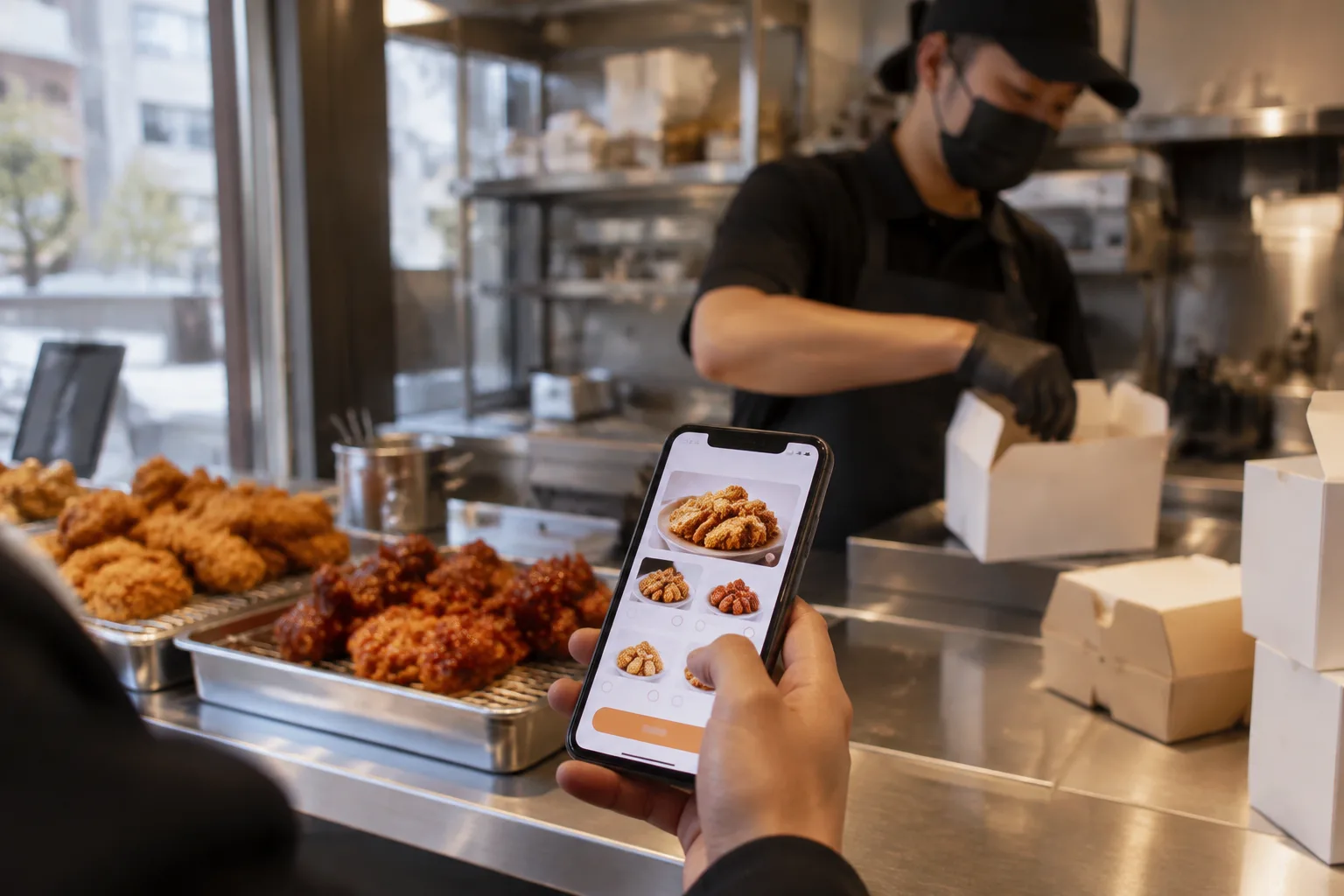
Customer acquisition through brand-owned apps remains a topic of discussion in South Korea’s restaurant franchise sector. In a report dated 25 September 2026, Newsway said restaurant franchises were actively seeking customers for their own apps. Its headline cited figures of ‘8 million’ for Kyochon and ‘5 million’ for BBQ. However, the material provided does not establish how either figure was counted or what results these efforts have delivered in terms of orders.
Kyochon and BBQ highlight the drive to attract app customers
The central point of the report is that restaurant brands are trying to attract customers through their own apps. The coverage describes this trend, highlighting Kyochon and BBQ in its headline.
What can currently be confirmed, therefore, is that restaurant franchises, including these two brands, are working to attract customers to their own apps. The supplied material contains no announcements of new features, specific discount campaigns or franchisee support policies.
The headline figures attract attention, but they alone are not enough to assess each brand’s digital capabilities. Establishing what was counted should come before comparing the size of the figures.
In particular, ‘8 million’ and ‘5 million’ should not automatically be described as the numbers of current app users or customers placing orders. The supplied extract does not explain whether these are cumulative registrations, downloads or figures compiled on another basis.
Nor is it clear whether the two figures refer to the same reporting date. Even metrics with the same name may not be directly comparable if they cover different periods or groups.
From a QFA perspective, too, it is important to distinguish the aim of attracting customers from the outcome in terms of business performance. The supplied material confirms the former, but does not yet provide evidence on which to judge the latter.
This distinction does not diminish the importance of brand-owned apps. Rather, if the franchise community is to use news of franchisors expanding their customer touchpoints to inform outlet-level decisions, it needs to separate published facts clearly from matters requiring further verification.
Sign-up figures and actual usage answer different questions
The first question when reviewing app figures is: ‘How many customers have registered?’ The next is: ‘How many customers actually use the app?’ These questions may be related, but they do not ask the same thing.
For example, a cumulative registration figure cannot, on its own, reveal ordering activity over the past month. This is a distinction about how to read metrics, not an additional claim about the results reported here.
Assessing actual usage requires data with clearly stated definitions, such as the number of users, customers placing orders or orders placed over a specified period. Assessing repeat usage also requires comparable data using consistent periods and definitions.
However, the research material supplied here does not include these metrics. It is therefore not possible to judge whether Kyochon or BBQ has more active app usage, or how effective their customer acquisition efforts have been.
The relationship between app customer numbers and franchisee sales also needs separate verification. A large number of registrations does not, by itself, establish that individual outlets have increased their sales or profits.
A shift in ordering channel is also different from generating additional orders. If performance data is published later, readers should check whether it distinguishes between the two.
It is therefore more accurate to read this news as evidence of customer acquisition activity than as proof of which brand is winning the app competition. Keeping interpretations within the limits of the figures is the starting point for any subsequent comparison.
Franchisees should check costs and operating terms together
When franchisees receive app-related guidance from their franchisor, they should first check the terms that apply to their own outlet. Nationwide customer figures need to be considered separately from the orders handled by an individual outlet.
If app promotions or benefits are announced, franchisees should check the dates, eligibility and who bears the costs. The material supplied here contains no specific promotional terms for either brand, so no particular cost-sharing arrangement can be assumed.
It is useful to look beyond the size of any discount and check payment settlement arrangements and cancellation terms as well. Again, these are practical checks for franchisees, not a description of Kyochon’s or BBQ’s current policies.
On the operational side, a starting point is to ask who handles incoming orders and customer enquiries. Any necessary guidance is clearer if provided in a written form that outlet staff can refer to.
Consistent comparison periods are also needed when assessing app-based customer acquisition at outlet level. Failing to separate promotional periods from normal trading periods may obscure differences that matter to operational decisions.
Even where sales data is provided, franchisees should check whether the associated costs are shown too. Changes in sales and results after costs answer different questions; a single figure should not be used to explain both.
The same principle applies to prospective franchisees. App customer numbers can be useful background when assessing a brand, but should not be treated as proof of a proposed outlet’s operating conditions or profitability.
The next report needs to define the figures
The first thing to establish in any follow-up is the precise definition of the figures in the headline. The population counted and the reporting date must be disclosed before Kyochon’s ‘8 million’ and BBQ’s ‘5 million’ can be interpreted on a comparable basis.
Next come the details of the customer acquisition activity. How the brands are attracting customers, and what guidance they are giving franchisees, must be verified through follow-up material rather than inferred from the information currently available.
If subsequent announcements discuss performance, it will be worth examining orders, repeat usage and which outlets the data covers. Readers should also distinguish between figures covering the whole network and results from a subset of participating outlets.
The franchise community needs to know not just how large a figure is, but what it actually explains. Linking a franchisor’s customer acquisition activity to results experienced by franchisees requires evidence of the steps in between.
For now, the supported conclusion is limited to the report that restaurant franchises are actively seeking customers for their own apps. The supplied material offers no basis for broader claims about market-wide growth or improved profitability at individual brands.
Practical takeaway: Check how app figures are counted before comparing their scale. Franchisees and prospective business owners should assess actual order data, applicable terms and cost responsibilities separately from headline customer numbers.