Dining competition on Gangnam-daero: overseas brands’ debut outlets meet a local taco pop-up
As overseas restaurant franchises open their first outlets in Gangnam, South Korean brands are responding with a collaborative taco pop-up. We examine the competition between permanent outlets and temporary shared spaces on Gangnam-daero.
Published
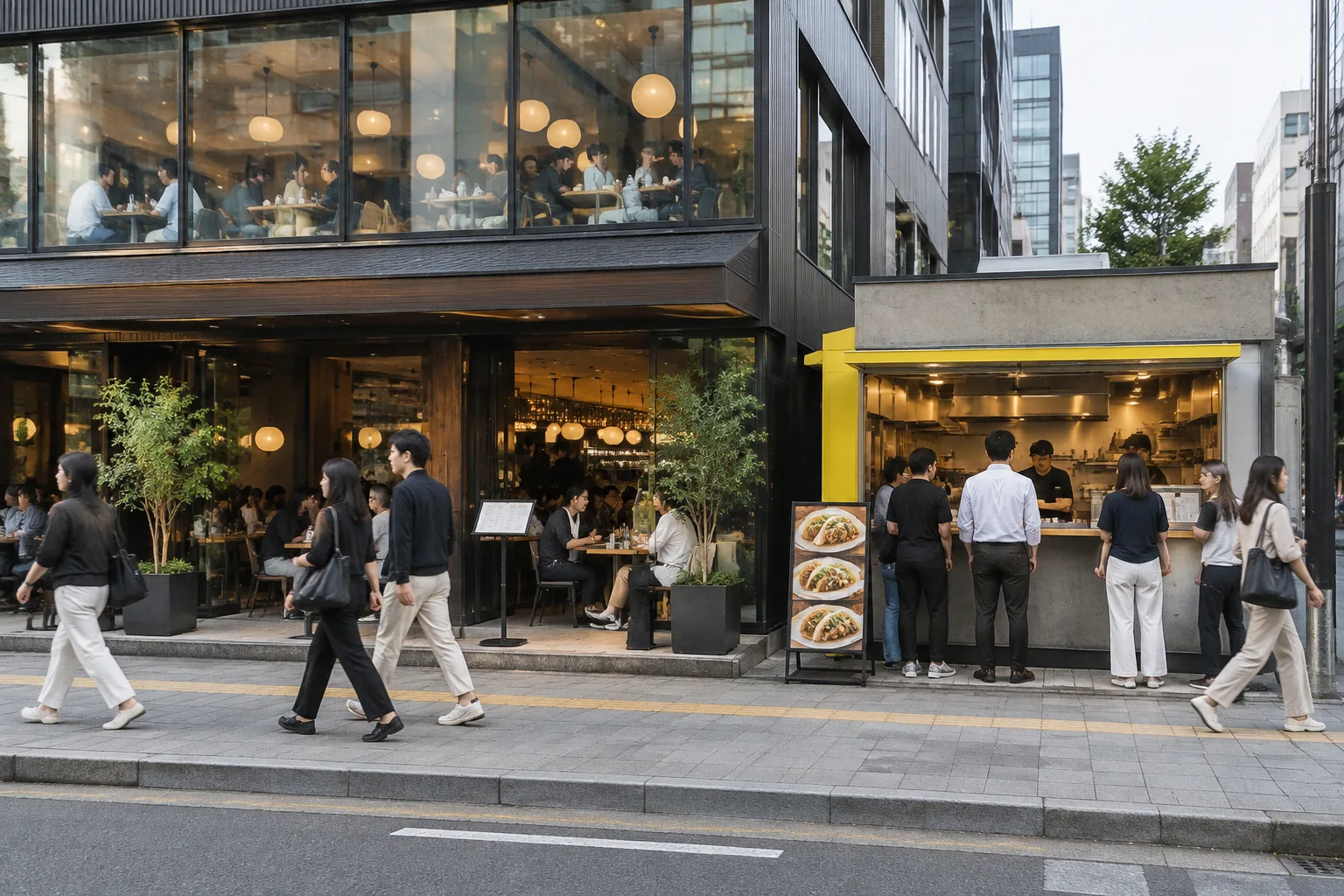
Overseas restaurant franchises’ debut outlets and a collaborative pop-up by South Korean brands are coming together on Gangnam-daero, a major road in Seoul. According to a YTN report dated 26 September 2026, global restaurant franchises have recently opened their first outlets in Gangnam in succession, while local brands are responding with a taco pop-up. For those following South Korea’s franchise market, the point of interest is not just the arrival of overseas brands, but also how local operators are using collaboration to compete on the same street.
Gangnam draws overseas brands’ debut outlets
YTN described Gangnam as a ‘testing ground’ for global restaurant brands, reporting a succession of first outlet openings by overseas franchises. Its coverage focused on Gangnam-daero. With outlets introducing new overseas brands and a collaborative space run by local brands appearing close together, different operating formats are competing in the same area.
However, the report provided does not include opening dates for individual overseas brands, outlet counts or investment figures. It therefore cannot be treated as statistical evidence of the scale of overseas brands’ expansion in South Korea. What it establishes is a recent pattern of debut openings in Gangnam, not the pace of nationwide expansion or changes in market share.
The opening of a first outlet must also be distinguished from proof of commercial viability in the South Korean market. An opening marks the start of trading, but assessing subsequent performance requires separate evidence. The information in this report does not establish individual outlets’ sales, profitability or repeat custom. The Gangnam openings reveal a new competitive landscape, but are not in themselves evidence of success.
Nor should the term ‘first outlet’ be taken to imply plans to expand through franchising. The information provided does not say whether these outlets are company-owned or franchised, or whether the brands plan to recruit franchisees. Prospective franchisees need to distinguish between a brand’s arrival in South Korea and an actual opportunity to join its network.
A taco pop-up beside Chipotle: local brands respond together
One specific detail in the report is a taco pop-up immediately next to Chipotle. YTN explained that local brands had joined forces to operate it in response to overseas competitors. Competition between overseas and local brands is therefore taking the form not only of separate outlet openings, but also of collaboration among local operators.
The source material provided does not name the South Korean brands involved. Nor does it establish the pop-up’s exact operating period, menu, prices or the role of each participating brand. Rather than assessing any particular company’s strategy or the results of the collaboration, the focus should remain on the fact that local brands have created a shared taco pop-up space.
The pop-up’s proximity to Chipotle makes the geographical context of the report clear. But location alone does not tell us which outlet customers visit first, or whether visitors to one move on to the other. Whether neighbouring outlets actually compete for the same customers or encourage visits to each other requires further investigation.
The word ‘collaboration’ does not establish the contractual relationship either. The material provided does not show whether the arrangement involves joint operation, menu development or another form of participation. The key point currently supported by the information is that local brands chose to collaborate rather than respond individually, and that the result was presented as a taco pop-up on Gangnam-daero.
Take care when comparing permanent outlets and pop-ups
Any assessment of this competition needs to account for the difference between overseas brands’ debut outlets and local brands’ pop-up format. Even if both attract attention on the same street, their operating periods and business objectives cannot be assumed to be identical. The report provides no operating conditions or performance measures that would allow a direct comparison.
There is therefore insufficient evidence to conclude that either side has the upper hand. Interest outside an outlet or news of its opening cannot be used to estimate sales, while the appearance of tacos on the menu does not establish a shift in South Korean consumer preferences. This case illustrates different approaches to competition, not its ultimate outcome.
For those following the franchise sector, it is useful to monitor collaborative pop-ups separately from long-term outlet expansion. Questions for follow-up coverage include whether the pop-up becomes a permanent outlet and whether the same collaboration appears in other areas. However, no such plans were announced in this report, so these possibilities should not be treated as scheduled steps towards expansion.
The same principle applies to overseas brands. Any further openings or franchise roll-out after a Gangnam debut must be confirmed through separate announcements and supporting information. An accurate reading of this news should avoid presenting a new mix of outlets in one district as evidence of a restructuring of South Korea’s entire restaurant market.
What franchise market observers should check next
The significance of the report lies in capturing overseas brands’ entry and local brands’ collaborative response in one specific location: Gangnam-daero. The overseas debut outlets and the local taco pop-up illustrate different ways of participating in the market. The use of a collaborative space by local brands is what sets this story apart from a straightforward report of new openings.
When following subsequent coverage, check not only brand names and locations, but also operating formats, the pop-up’s closing date and official outlet expansion plans. If performance figures are published, establish whether they refer to sales or visitor numbers, and which period they cover. The material currently provided contains no specific figures to support such assessments.
For prospective franchisees, it is particularly important to separate publicity from decisions about signing a franchise agreement. An outlet’s presence in Gangnam, or a brand’s overseas origins, is not enough to assess the terms of a business opportunity. Whether a brand is actually recruiting franchisees, and what operating conditions it offers, must be checked separately from this opening report.
In practical terms, this news is best used not as a ranking of successful brands, but as a starting point for identifying new outlets and forms of collaboration. Before planning a visit or considering an investment, confirm whether the outlet is trading and how it operates, and exclude unverified performance claims or expansion plans from your assessment.