Disclosure registrations cancelled for 1,345 franchise brands as attention turns to company-owned outlets
The number of South Korean franchise brands whose disclosure document registrations were cancelled rose by 3.2% year on year in January–August 2026. Prospective franchisees should examine how company-owned outlets inform expansion plans, without mistaking registration cancellations for closures.
Published

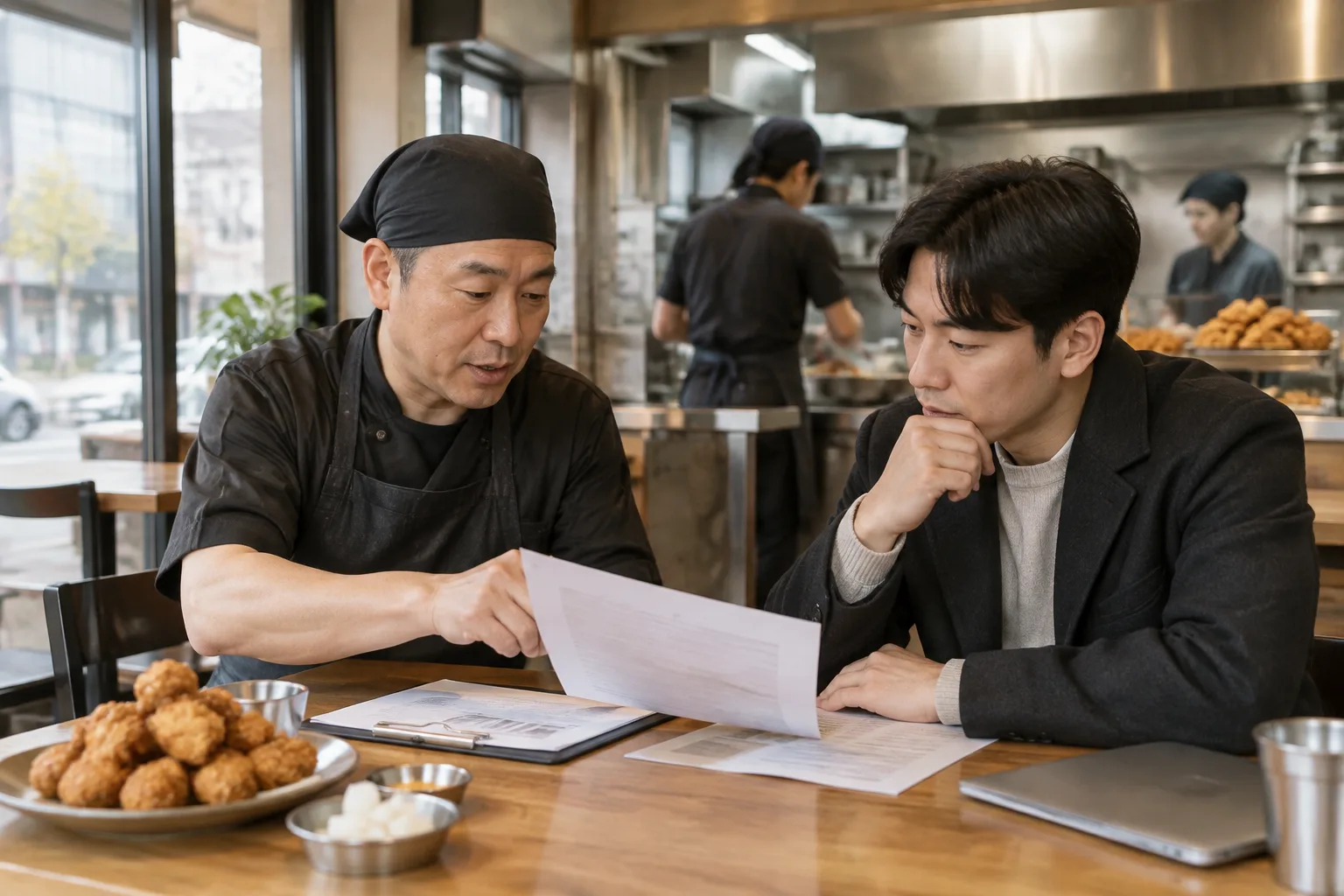
South Korea’s franchise sector is reportedly paying closer attention to testing commercial viability and operational stability at company-owned outlets before expanding franchise networks. On 9 September 2026, Newsway reported that a succession of brands were either expanding their franchise networks after testing the business model at company-owned outlets, or scaling back franchising in favour of company-owned operations and distribution. Disclosure registration cancellation figures cited in the same report also highlight why prospective franchisees need to check a brand’s current business direction.
What do 1,345 registration cancellations tell us?
According to Newsway, citing the Korea Fair Trade Commission’s franchise information system, 1,345 brands had their franchise disclosure document registrations cancelled between January and August 2026. That was 42 more than the 1,303 recorded in the same period a year earlier, an increase of 3.2%. Both figures cover January to August and count brands whose disclosure registrations were cancelled.
The most important point when interpreting these figures is to keep the unit of measurement clear. The figure of 1,345 was not presented as a count of outlets that had closed. Registration cancellations should not be treated as a measure of franchise outlet closures or franchisees’ losses. A brand’s disclosure registration status and the trading status of individual outlets are separate matters to investigate.
The report provided does not set out why each brand’s registration was cancelled or how those brands subsequently operated. There is therefore no basis for concluding that all the brands concerned switched to a company-owned model. The rise in cancellations and the growing emphasis on testing business models at company-owned outlets appeared in the same article, but that does not establish a causal link between them.
For prospective franchisees, these figures are a starting point for more specific questions rather than a reason to rule out a particular brand immediately. Check separately whether the brand is currently recruiting franchisees, the status of its disclosure document, and whether the franchisor’s stated expansion plans match publicly available information. The key is to distinguish sector-wide developments from the assessment of an individual contract.
The year-on-year increase also needs to be read within its limits. The 3.2% figure measures the change in the number of brands with cancelled registrations; it is not the proportion of all registered brands whose registrations were cancelled. These data alone cannot establish the net change in brand numbers after accounting for both new entrants and departures, or whether the franchise sector as a whole is growing.
Testing company-owned outlets: the operational evidence to check before expansion
Newsway described this trend as a move towards prioritising profitability and operational stability over expansion for its own sake, amid growing regulatory burdens and business friction. The report’s focus was not the scale of growth in company-owned outlets, but how experience from running them informs business strategy.
Two distinct paths need to be considered. One is to test commercial viability at company-owned outlets before expanding the franchise network. The other is to reduce franchising and shift towards company-owned operations and distribution. Both involve direct operation, but they have different implications for prospective franchisees. The first may be preparation for future franchise expansion; the second reduces the role of franchising in the business.
The existence of company-owned outlets should therefore not be taken as evidence of plans to expand through franchising. Ask what the franchisor is testing at those outlets and how it intends to apply the findings to franchise operations. The reported trend does not present ownership of outlets as proof of success; it concerns efforts to establish commercial viability before expanding.
Specific evidence also matters when assessing claims that a model has been tested. Useful questions include which trading period the results cover, what kind of trading location produced them, and whether costs are shown alongside sales. These are practical questions for reviewing claims about company-owned outlet performance, not findings about individual brands established by this report.
It is also worth examining how closely conditions at the company-owned outlets resemble those at the outlet a prospective franchisee would operate. Setting comparison criteria in advance—such as lease terms, staffing and opening hours—makes it easier to distinguish a simple sales presentation from evidence of commercial viability. However, the material provided contains no brand-level figures for comparing these factors, so it cannot establish that one operating model is superior to another.
Different questions for prospective and existing franchisees
Prospective franchisees should first establish the brand’s expansion strategy. The questions to ask will differ depending on whether it is preparing to add franchise outlets, continuing to test its model at company-owned outlets, or seeking to reduce its reliance on franchising. A practical starting point is to compare its current operating strategy against documents and data, rather than relying solely on a recruitment pitch.
Next, ask how broadly the performance figures presented for company-owned outlets can be applied. Consider whether results from one particular outlet are being presented as expected performance across all franchise outlets, and whether any cost categories have been omitted. To assess a claim that profitability comes first, start by identifying the evidence supporting it.
Existing franchisees should separately establish what any change in the franchisor’s business direction means for their contracts and support. If the franchisor says it is shifting towards company-owned operations and distribution, franchisees can also ask about its plans to support the franchise network. This report alone, however, does not establish that any particular brand has reduced support or changed contracts.
When reviewing the answers, pay attention to consistency. If the business strategy is described differently in discussions, public information and contract-related documents, ask for those differences to be explained. This approach focuses on evidence from the actual contracting party, rather than turning a sector-wide rise in registration cancellations directly into a risk assessment of an individual brand.
Verifiable explanations matter more than headline figures
The change highlighted by this report is that strategies other than simply increasing franchise outlet numbers are attracting attention: establishing operational evidence before expansion, or changing the focus of the business. But a single set of registration cancellation figures cannot reveal the financial health of every brand or guarantee the profitability of a company-owned model.
This also points to questions that franchisors and franchisees should discuss. Alongside asking how many outlets a brand plans to open, ask what evidence it has used to establish operational viability and how closely that evidence matches actual franchise outlet conditions. The trend is best read as an opportunity to examine the basis for expansion, rather than its pace.
Practical takeaway: Check the brand’s disclosure registration status, current franchising strategy and evidence from company-owned outlet testing as separate issues. Start by avoiding two assumptions: that registration cancellation means closure, or that owning outlets guarantees profitability.