Franchise Late-Night Trading Requirements: Checking Staffing Costs and Rights to Reduce Hours Before Signing
Mandatory late-night trading can affect profitability long after your initial investment. Before signing, check the costs by trading period, the conditions for requesting shorter hours and the franchisor’s approval process.
Published
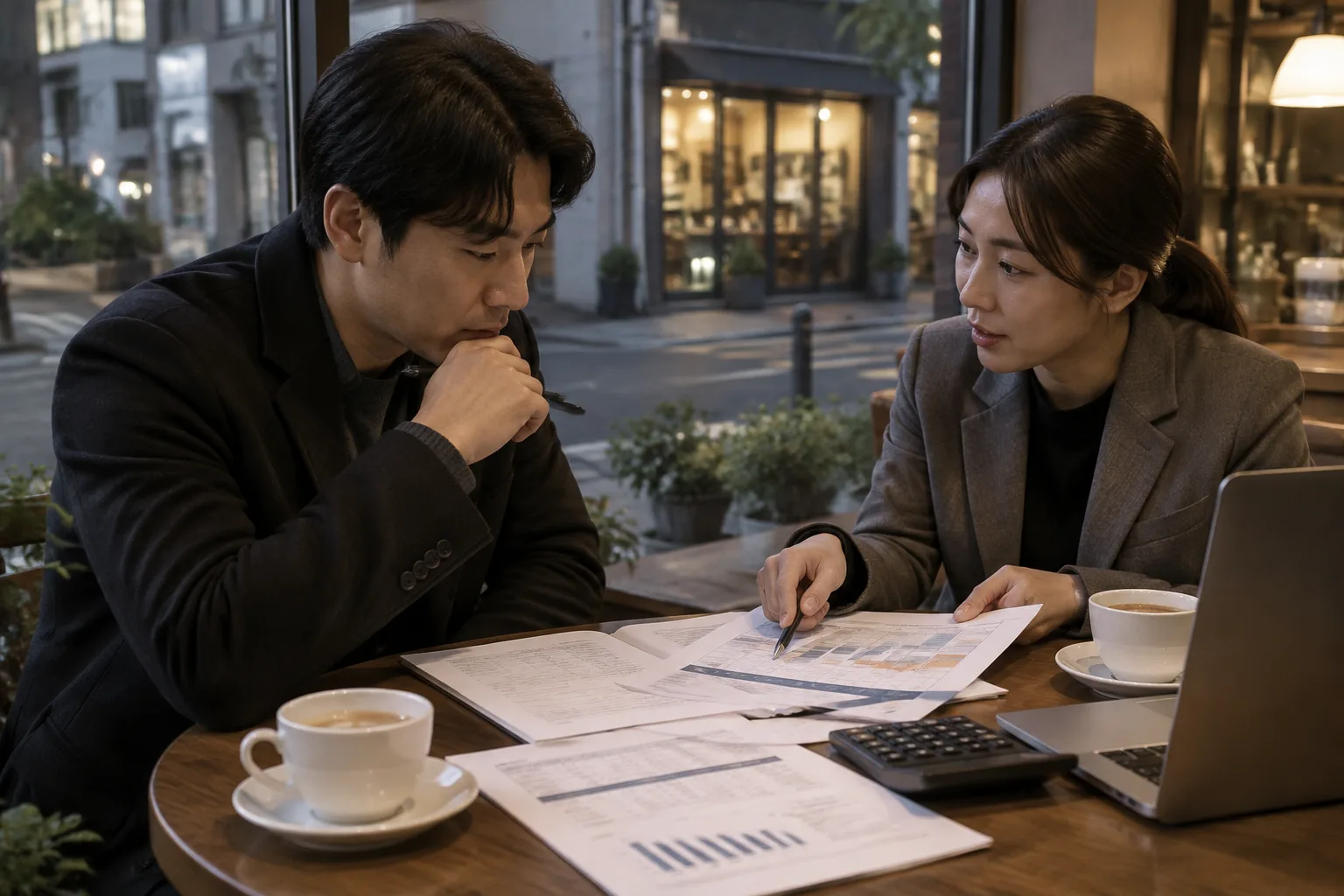
When choosing a franchise brand in South Korea, you need to consider how many hours you must work as carefully as daily sales. Even with the same turnover, actual profit and the impact on your life will differ if you need to hire dedicated night staff or cover the late shift yourself. Before entering the franchise market, treat late-night trading not simply as an operating policy, but as a contractual condition linking costs and rights. This is particularly important if you plan to keep another job during the day or run the business in shifts with family members: it is safer not to translate your available working hours into projected earnings until you have confirmed the required trading hours.
1. Establish the Trading Hours Required of Your Particular Outlet
Being told during a consultation that “flexible operation is possible” does not remove the burden of night work. Check the standard trading hours, permitted closure days and procedures for changing hours in the agreement, and obtain separate confirmation of the conditions that will apply to your proposed outlet. Examples from across the brand may not reflect your individual outlet’s obligations.
Ask the franchisor to answer the following questions in writing.
- What time must the outlet open each day, and when may it close?
- Do trading hours differ on weekdays, weekends and public holidays?
- Is late-night trading compulsory or optional for each outlet?
- Does reducing hours require advance notice only, or the franchisor’s approval?
- What contractual action can be taken if the required hours are not observed?
If the wording says hours are “subject to discussion depending on the trading area”, ask when those discussions will take place and what criteria will be used. Your options will be limited if the late-night trading requirement is only finalised after you have signed a lease and invested in fitting out the premises. It is safer to agree the hours before signing the franchise agreement, in a document identifying the outlet’s address and applicable trading hours.
Also distinguish between customer-facing opening hours and actual working hours. Even if sales end at midnight, cleaning, organising stock and cashing up may mean leaving much later. Conversely, early deliveries may require someone to arrive before opening. Your staffing plan should include both preparation and closing tasks.
If you are comparing several brands, draw up a trading-hours schedule for each using the same format. Rather than recording only total daily operating hours, separate the periods when you must be present from those you can leave to employees. This makes it easier to judge whether the working arrangements are manageable.
2. Calculate Late-Night Profitability Rather Than Relying on Daily Sales
To assess whether late-night trading makes financial sense, compare the additional sales generated during those hours with the associated costs, rather than looking at total daily turnover. Strong daytime sales do not necessarily make night-time operation profitable. Equally, even if late-night sales are low, you need to identify which sales and costs would disappear if you reduced your hours.
A useful starting calculation is late-night sales minus the cost of the goods sold and the additional costs incurred by operating late at night. Break those costs down as follows.
- Staffing costs: employee wages, applicable statutory pay supplements, and additional recruitment and shift-cover costs
- Operating costs: extra lighting, heating and cooling, night-time security, transport and cleaning
- Sales-related costs: payment processing fees, delivery-related costs and additional wastage associated with late-night sales
- Owner’s labour: the cost of employing someone else to cover the hours you work yourself
Check how the law applies to matters such as night-work pay supplements, taking account of the size of the workplace and employment conditions. Do not apply the same formula to every outlet or assume there is no labour cost because you work the hours yourself. Even without a cash outlay, your workload and lack of rest affect the business’s sustainability.
Before opening, request verifiable sales data by time of day from comparable outlets, but do not simply adopt the results of premises with different locations and customer profiles. If no data is available, make conservative assumptions about late-night customer numbers and average spend, then test how far those figures could fall before the operation becomes unviable.
Distinguish costs that remain unchanged when hours are reduced, such as rent, from those that could fall, such as night staff wages. This will make the decision clearer. However, this calculation is for assessing the business opportunity. Do not assume it is necessarily the same as the calculation required to establish late-night trading losses under the law.
3. Distinguish the Right to Reduce Late-Night Hours from the Conditions for Exercising It
Franchise dealings in South Korea are governed by the Fair Transactions in Franchise Business Act. Article 12-3 prohibits unfair restrictions on trading hours. A contractual requirement to trade for long hours does not mean the franchisor can always insist on compliance.
The law addresses situations where circumstances specified in legislation, such as late-night trading losses, exist and the franchisor nevertheless refuses a franchisee’s request to reduce trading hours. Requests for reductions to the extent necessary because of unavoidable circumstances, such as illness and treatment, also fall within the scope of the relevant provisions.
However, saying that “night-time sales are low” or “the owner is tired” does not mean every request will automatically qualify. The late-night period used to assess losses, the period over which losses must continue, the grounds for the request and the supporting evidence must all be checked against the applicable legal requirements. It is advisable to have a Korean franchise transaction specialist or solicitor review the enforcement decree in force at the time of the request, together with your individual circumstances.
Before signing, check whether the franchisor explains which department handles statutory requests to reduce hours, what documents are required and how requests are reviewed. This is not about the franchisor granting you a new legal right; it is about confirming the practical process for exercising an existing one. If the franchisor describes changes made for convenience and reductions requested on statutory grounds as subject to the same approval process, ask for a clear distinction.
4. Prepare the Records and Agreements Needed for a Request
If problems arise after opening, records matter more than recollections. Before you start trading, establish whether your point-of-sale system can show sales by time of day and how you will retain relevant cost records, including wages and electricity usage. Daily sales totals alone may make it difficult to explain the position of your late-night operation.
When requesting shorter hours, state your current trading hours, proposed hours, grounds for the request and preferred start date clearly. If the request is based on losses, prepare the relevant sales and cost records. If it is based on unavoidable personal circumstances, provide supporting evidence to the extent necessary. Before submitting sensitive personal information, confirm why it is needed and how much is required.
Obtain the franchisor’s response in writing as well. If the request is accepted, confirm how long the change will apply, when it will be reviewed and the conditions for returning to the original hours. If it is refused, ask for the reasons and details of any further evidence required. Where a dispute is possible, it is safer to seek legal advice before changing your closing time unilaterally, to reduce the risk of unnecessary arguments over breach of contract.
Practical summary: Compare the agreement alongside an outlet-specific trading-hours schedule and a late-night profit-and-loss calculation. The key is to sign only after checking that the working arrangements are manageable and understanding the grounds and procedures available if you need to reduce your hours.