Franchising an Existing Business: Rules for Refurbishment and Equipment Replacement Costs
If you require franchisees to refurbish premises or replace equipment, you need to plan not just why the work is necessary, but who pays and when it happens. This article explains what to agree before signing and how to test the process at company-owned outlets in Japan.
Published
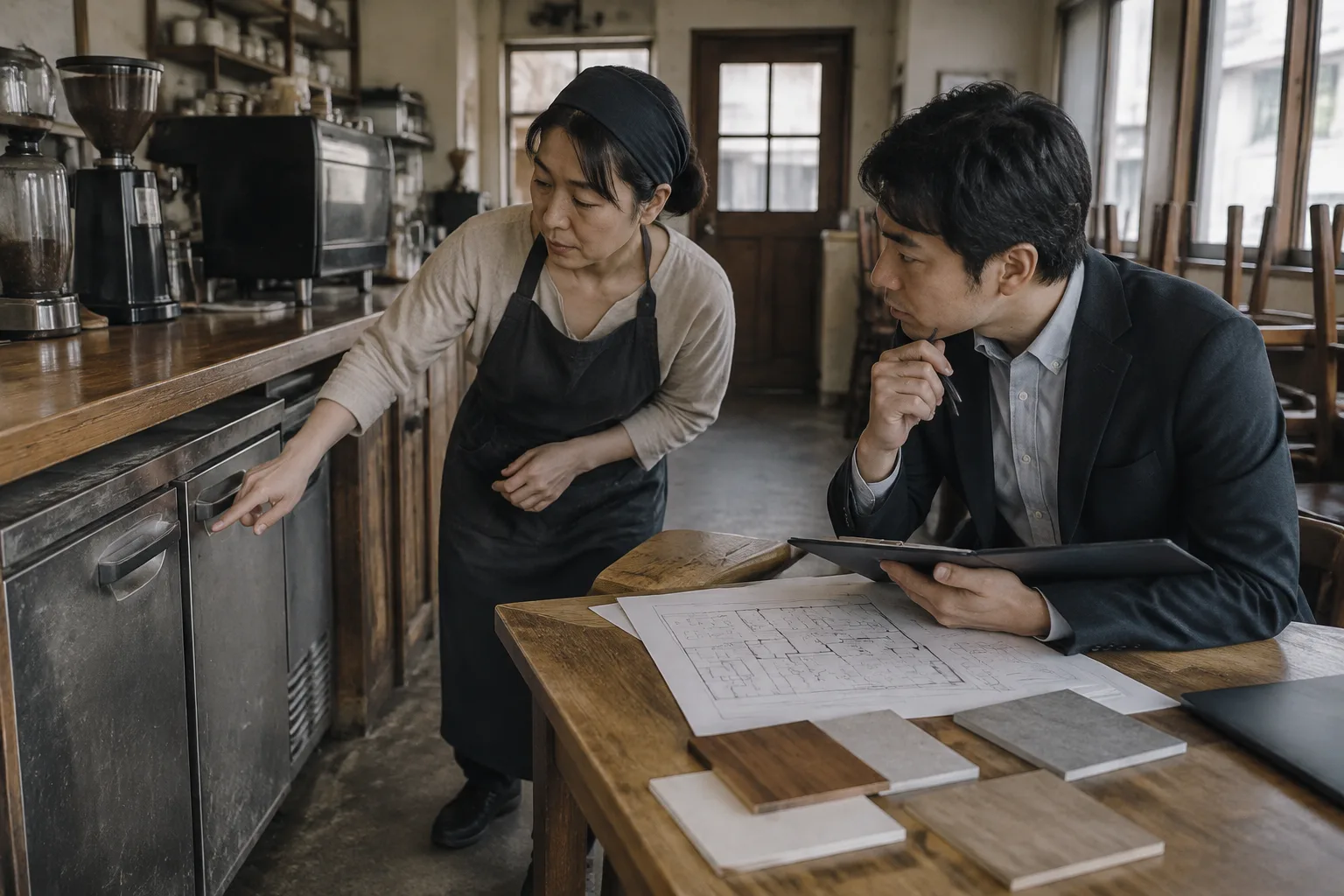
When turning an existing business into a franchise, it is easy to focus on the initial fit-out and equipment without planning for replacements several years later. Franchisees are businesses independent of the franchisor. To maintain consistency across the franchise network, define the circumstances in which refurbishment or equipment replacement will be required, and who will bear the costs, before you start recruiting franchisees.
1. Classify refurbishment and replacement work by purpose
Start by listing the building work and equipment replacements carried out at your company-owned outlets. A blanket rule such as ‘replace it when it gets old’ mixes necessary repairs with franchisor-led upgrades, making it difficult for franchisees to assess future spending. Separating work by purpose makes it easier to establish who decides and who pays.
- Work needed for safety and business continuity: Repairs or replacements to address breakdowns, damage, hygiene issues and similar problems.
- Work to maintain basic specifications: Refurbishment to maintain existing outlet standards, such as replacing faded signs or worn seating.
- Changes introduced by the franchisor: A new interior design concept, equipment for new services and similar initiatives.
- Improvements requested by the franchisee: Optional changes to suit local demand or the outlet’s circumstances.
For each category, list the grounds for requiring the work, the inspection method, who approves it and how the deadline will be set. Even with the same piece of equipment, a dangerous fault and a dated appearance call for different levels of urgency. Do not assume that a new replacement is always necessary: check whether repairs or replacing individual parts would achieve the objective.
Where refurbishment is intended to create a consistent appearance, specify exactly what needs to match. Distinguishing between a change of signage and a complete overhaul of the seating area can help avoid unnecessary investment.
2. Design obligations around Japan’s legal framework
Japan has neither a comprehensive franchise-specific law governing all franchises uniformly nor a general registration system for franchisors. However, under Article 11 of the Small and Medium-sized Retail Business Promotion Act, franchisors whose operations qualify as a ‘specified chain business’ must provide prospective franchisees with written disclosure of prescribed matters and explain them before the agreement is signed. Whether the Act applies depends on the substance of the business and its contracts, not simply on whether it is described as retail or food service.
Check which statutory disclosure requirements relate to refurbishment obligations in light of the specific terms proposed. Beyond that, obligations that could lead to substantial additional expenditure should be explained in advance as information needed to assess the franchise opportunity, rather than left to a vaguely worded clause in the agreement.
The Japan Fair Trade Commission’s guidelines on the application of the Antimonopoly Act to franchise systems also apply beyond retail and food service. They indicate that practices such as specifying suppliers of equipment or contractors for interior and exterior work do not, in themselves, present a problem if they remain within the scope necessary to maintain a consistent image.
However, using a superior bargaining position to impose an unjust disadvantage may raise issues under the Antimonopoly Act. Do not assume that including a clause in the agreement allows you to compel any upgrade. The Civil Code and other laws also affect contractual rights and obligations, so seek professional review covering the need for the work, its cost and its timing.
3. Make the full cost burden visible, not just the construction bill
Your cost schedule should cover not only equipment and building work, but also associated operating costs. Include easily overlooked items such as design, delivery, removal, disposal, temporary equipment, rent during closure and moving stock. For leased equipment, also check whether the owner’s consent is required and whether the existing lease needs to be settled.
For each item, identify separately who places the order, who pays and who approves additional costs. The franchisor arranging the work does not necessarily mean the franchisor pays for it. Be clear, too, about whether lost sales during closure will be compensated and on what terms.
Decide whether costs will fall to the franchisor, the franchisee or both, taking account of the purpose of the work and who benefits. For example, there is no need to treat a complete franchisor-led redesign in the same way as repairs caused by inadequate maintenance by a franchisee. Where the amount is not yet fixed, state the assumptions behind the estimate, the costs excluded and when the final amount will be confirmed.
The timing of the investment matters as well. Offer options such as deferral or partial works for outlets with little time left on their agreements, those recently refurbished or those subject to building constraints. Do not treat an increase in sales after the upgrade as certain: check whether cash flow will remain viable if the benefits fall short of expectations.
4. Test the process and the impact of closure at company-owned outlets
Before rolling changes out across franchised outlets, test them at company-owned outlets wherever possible. This is not just about how the finished premises look. Record the actual work and costs involved, from site surveys and quotations through to construction, acceptance checks and reopening.
Older buildings in particular may require additional work because of electrical capacity, pipework or other site conditions. Do not take a successful company-owned trial and assume its costs will be standard across the network. Instead, identify the conditions that need checking at each property. Also establish whom to contact if equipment deliveries are delayed or works overrun.
After the trial, incorporate the following into the refurbishment and replacement plan:
- Which works can be carried out while trading continues, and which stages require closure.
- Any differences between estimated and actual costs, and the reasons for them.
- Completion inspection items, the contact responsible for remedying defects and warranty terms.
- Training on the new equipment and checks required before reopening.
Consider whether the approach will also work for smaller outlets or those with different opening hours. A construction schedule that is efficient for the franchisor may not suit the franchisee. Check peak trading periods and local events, and allow time to agree adjustments.
5. Separate what belongs in the agreement from what belongs in the implementation notice
The franchise agreement should set out the purposes and scope of required refurbishment and equipment replacement, the principles for allocating costs, notification and consultation procedures, and how exceptions will be handled. You cannot settle every future specification in advance, but you can decide who will make decisions and what information they will use. The operations manual should cover routine procedures such as inspections, applications for approval and acceptance checks.
For each project, the implementation notice should identify the outlets affected, why the work is needed, its scope, the estimated cost, the planned timeframe, the impact on trading and the deadline for raising queries or discussing concerns. Also identify who will review any alternative proposal from a franchisee and how a response will be provided. If costs or scope change significantly, there should be a process for obtaining fresh confirmation rather than simply relying on the earlier approval.
Where a deferral or exemption is granted, record the reasons, such as the condition of the equipment, the remaining agreement term or property constraints. Handling exceptions against clear, explainable criteria is more likely to secure acceptance across the network than ruling out every exception.
Practical takeaway: Before recruiting franchisees, prepare a one-page summary for each anticipated refurbishment or equipment replacement, covering ‘need, decision-maker, cost allocation, timing and exceptions’. Being ready to explain future additional investment is the starting point for keeping outlets in good condition without imposing an unsustainable burden.