PPU Prepares Rules for Local Small Business Products in Franchise Retail Stores
Penajam Paser Utara’s district government is drafting rules requiring franchise retailers to stock local small business products, while preparing a separate sales channel through co-operatives.
Published
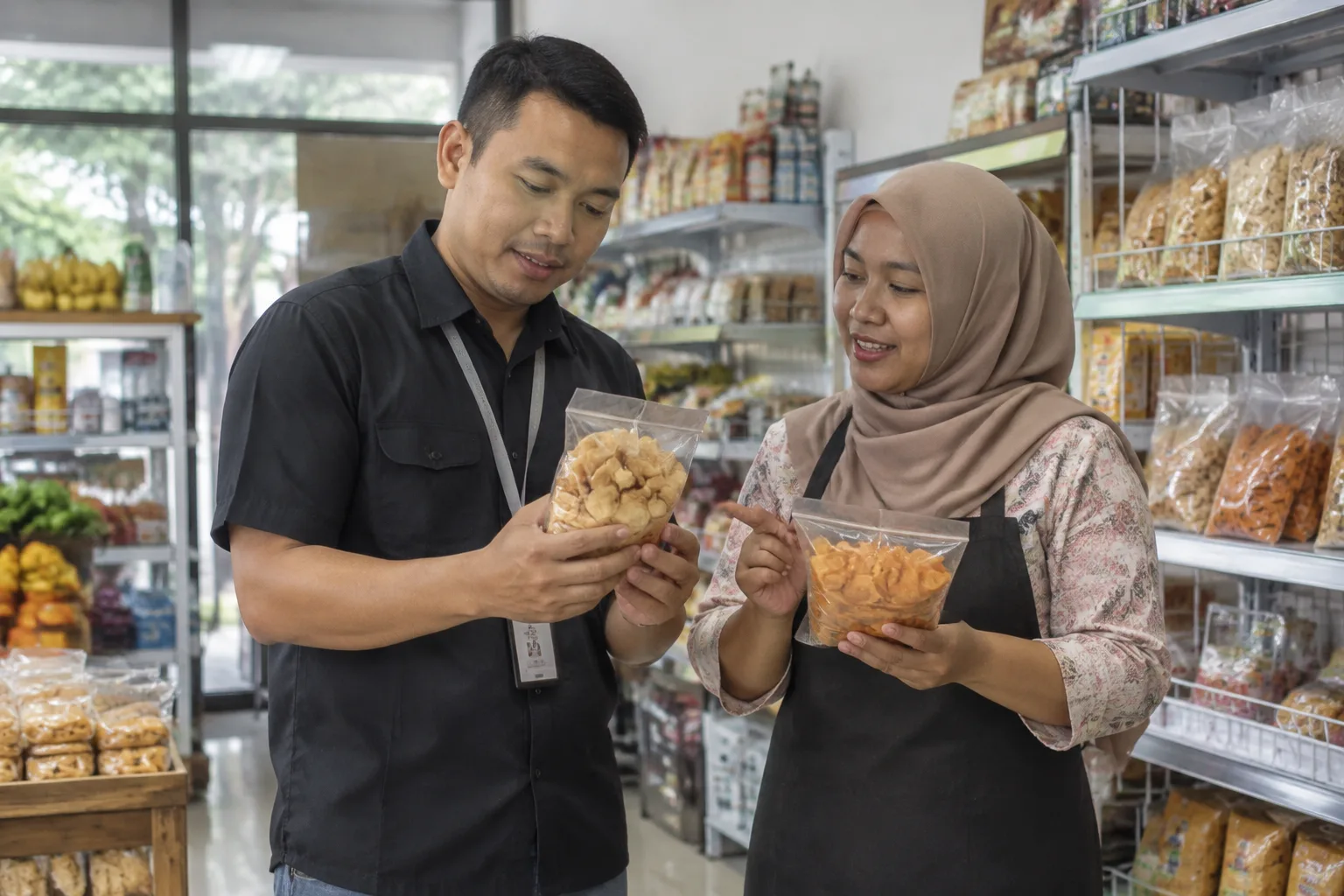
The district government of Penajam Paser Utara (PPU), East Kalimantan, Indonesia, is drafting a legal framework requiring franchised retailers or modern shops to stock products from local micro, small and medium-sized enterprises (MSMEs). The initiative runs alongside plans to market products through Merah Putih co-operatives, with the aim of widening market access for local businesses.
Retail requirements are still being drafted
According to an ANTARA report dated 28 September 2026, Muhammad Yusuf Basra, head of PPU’s Department of Co-operatives, Small and Medium Enterprises, Industry and Trade, said the district government was drafting regulations to strengthen market access for MSME products. One proposed route is to require franchised retailers or modern shops to stock these products.
The fact that the rules are still being drafted matters for the franchise sector. The available information does not indicate that the requirement is already in force. The report also provides no details on the form of the regulation, its implementation date, product placement requirements or arrangements between MSME suppliers and store operators.
The proposal should therefore be understood as a statement of local policy direction, rather than an operational requirement ready for uniform implementation. The report gives no details on which types of products stores would have to accept or how they would be selected.
For store operators and prospective suppliers, the distinction between proposed rules and enacted regulations is important. Preparations can begin, but decisions about each party’s obligations still require official documents and implementation guidance from the district government.
Around 25 modern shops provide the market context
ANTARA reported that around 25 retail outlets or modern shops were operating across parts of PPU. The chains named in the report were Indomaret and Alfamidi/Alfamart. This figure gives an indication of the presence of modern retail chains in the district; it is not a count of stores already participating in the MSME marketing programme envisaged under the proposed rules.
Meanwhile, PPU had at least 15,522 MSMEs, according to the latest data by business size from the Penajam Paser Utara One Data Portal, cited in the report. This illustrates the broad business base targeted by the district government’s market-access policy.
These two figures cannot be used directly to calculate how much local produce or merchandise modern shops could take on. The report does not specify how many MSMEs make goods suitable for retail sale, how many are ready to supply stores or how much stock each store could accommodate.
For the franchise sector, this makes supplier readiness and clear operating arrangements the next practical questions to address. Knowing the number of outlets and businesses is a starting point, but is not enough to assess the potential scope of partnerships.
Co-operatives are being prepared as another sales channel
Alongside the proposed rules for franchise retailers, the PPU district government is arranging a scheme to market MSME products through Merah Putih co-operatives. Yusuf Basra explained that efforts to develop MSMEs focused on expanding the market for their products.
Merah Putih co-operatives have been established in 54 villages and urban administrative wards in PPU through deliberations in each community. The district government sees these co-operatives as outlets for MSME products, making arrangements necessary to enable local goods to be marketed through the network.
According to Yusuf Basra, the hope is that the co-operatives will stock and market both traditional and modern MSME products. Their intended role is to help products move into the market from village and ward level. This expectation explains the programme’s aim, but does not mean that every co-operative is already marketing every product category.
The co-operative channel and the proposed requirement for modern shops share the same objective: widening market access. However, the report does not mention a joint distribution mechanism linking co-operatives and franchise chains. They should therefore be understood as two sales channels under preparation, rather than a single, already integrated supply system.
What the franchise sector should watch
PPU’s initiative shows the local government’s interest in creating opportunities for local products through existing retail networks. Yusuf Basra stated the district government’s commitment to protecting and developing MSMEs and expanding their market access to keep the local, small-business economy active.
In response to this policy direction, retail operators can begin identifying questions about supplier criteria, product requirements, payment arrangements and stock management. These are areas for preparation, not provisions already announced under PPU’s proposed policy. MSMEs can also prepare product information and details of their supply capacity to support discussions with prospective sales channels.
Practical takeaway: monitor the adoption of PPU’s official rules and further details of the co-operative scheme. Use the preparation period to identify potential partners and supply needs, without assuming that retail obligations or partnership arrangements are already in force.