Indonesia’s Trade Ministry Places Franchising at the Heart of Domestic Market Development
At the opening of IFBC 2026, Indonesia’s Deputy Minister of Trade linked franchise development to safeguarding the domestic market and encouraging new entrepreneurs.
Published
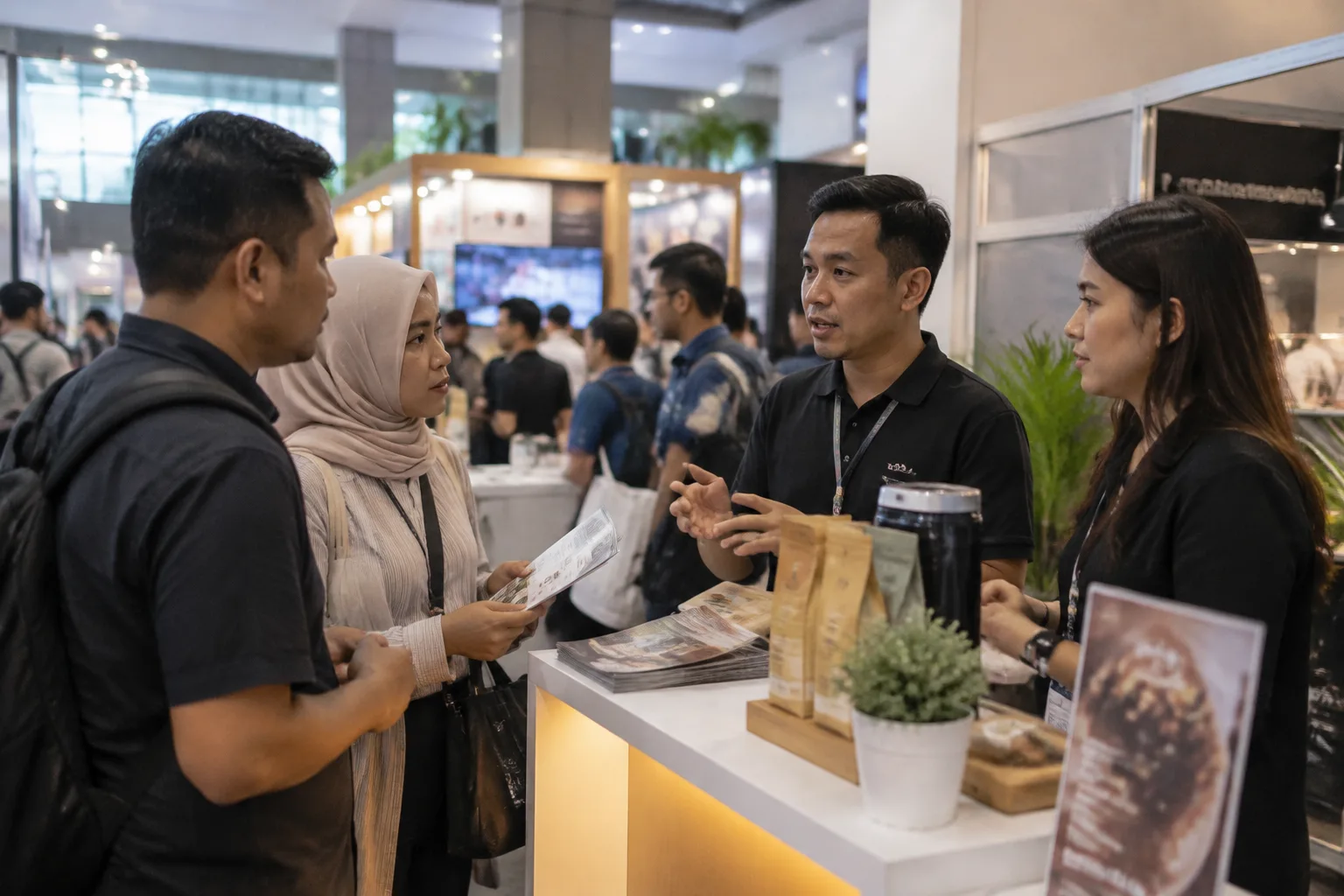
Indonesia’s Ministry of Trade has placed the development of the franchise sector within its agenda to strengthen the domestic market and widen business opportunities. Deputy Minister of Trade Dyah Roro Esti delivered this message at the opening of Info Franchise and Business Concept (IFBC) 2026 at ICE BSD in Tangerang on 13 February 2026.
Safeguarding the domestic market is a priority
According to an official Ministry of Trade statement, Roro outlined three ministerial priorities: safeguarding the domestic market, expanding export markets, and the “From Local to Global” programme. These provide the context for government support for Indonesian franchise development through IFBC 2026.
The inclusion of the domestic market among these priorities provides important context for Indonesia’s franchise sector. Business development is being discussed not only in terms of overseas opportunities, but also as an opportunity to build and strengthen businesses within Indonesia.
In her address, Roro described franchising as an effective business model for widening business opportunities and encouraging new entrepreneurs. Franchising is therefore seen not simply as a way to expand business networks, but also as a route into entrepreneurship for more people.
These remarks set out a policy direction at the exhibition’s opening. The central message concerned the links between franchise development, business opportunities and the competitiveness of Indonesian businesses. It was not an announcement of specific benefits automatically available to exhibitors or prospective partners.
IFBC as a platform for promotion and business development
IFBC 2026 was organised by the Indonesian Franchise Association (AFI). The Ministry of Trade described the event as a platform for promoting and developing Indonesian franchise businesses. Septo Soepriyatno, Director of Trade Business Development, also accompanied Roro at the opening.
Promotion and business development should be considered together. Promotion helps introduce business propositions, while business development requires more detailed discussions about how ready a concept is to be operated with partners. For the franchise sector, neither should stop at generating initial interest in a brand.
The Ministry of Trade expressed its hope that IFBC 2026 would provide momentum for stronger partnerships and new business opportunities. This places relationships between businesses among the exhibition’s key potential benefits, alongside introducing brands to visitors.
However, hopes for stronger partnerships should be distinguished from results already achieved. Statements made at the opening do not, in themselves, indicate how many agreements have been reached or how many new businesses are already operating. For prospective partners, a promising meeting still needs to be followed by scrutiny of the proposition and further discussions with the brand owner.
New entrepreneurs and competitive local brands
Roro said that IFBC 2026 was aligned with efforts to widen business opportunities, create jobs and foster competitive local franchisors. These three objectives show that the development of the franchise sector is seen as closely linked to entrepreneurship and employment opportunities.
There is a difference between opening doors for new entrepreneurs and ensuring that a business can survive. Statements about the effectiveness of the franchise model do not mean that every proposition is equally well developed or suitable for every prospective partner. Choosing a business still requires an assessment of the operator’s capabilities and the needs of the target market.
As a practical step, prospective partners can use the focus on strengthening the domestic market to frame more targeted questions. Who are the brand’s main customers? How does the brand owner support partners’ day-to-day operations? Does the concept suit the location under consideration? These questions form part of business due diligence; they are not new requirements announced by the government.
For local brand owners, meanwhile, the aim of fostering competitive franchisors is a reminder that network expansion should go hand in hand with readiness to support partners. The appeal of a proposition needs to be assessed alongside the ability to deliver the business concept consistently.
Following up the opening message with business due diligence
The Ministry of Trade also expressed its hope that IFBC 2026 would improve the competitiveness of Indonesian franchises in both domestic and international markets. In this context, the domestic market is not merely a starting point for overseas expansion: it remains a business development objective in its own right.
For the franchise sector, the opening message offers a basis for distinguishing general policy support from individual investment decisions. Support for entrepreneurship sets a direction, while decisions about brands, locations and partnership structures still require separate due diligence.
The practical next step is to use exhibition meetings to seek clarity on the business model, allocation of responsibilities, costs and operational support. Make suitability for the local market a central part of the assessment before taking partnership discussions further.