Indonesian Coffee Franchises Report Rp9.6 Billion in Potential Deals at TEI
Indonesian coffee franchises reported Rp9.6 billion in potential deals at TEI. The franchise sector needs to distinguish opportunities from completed business.
Published
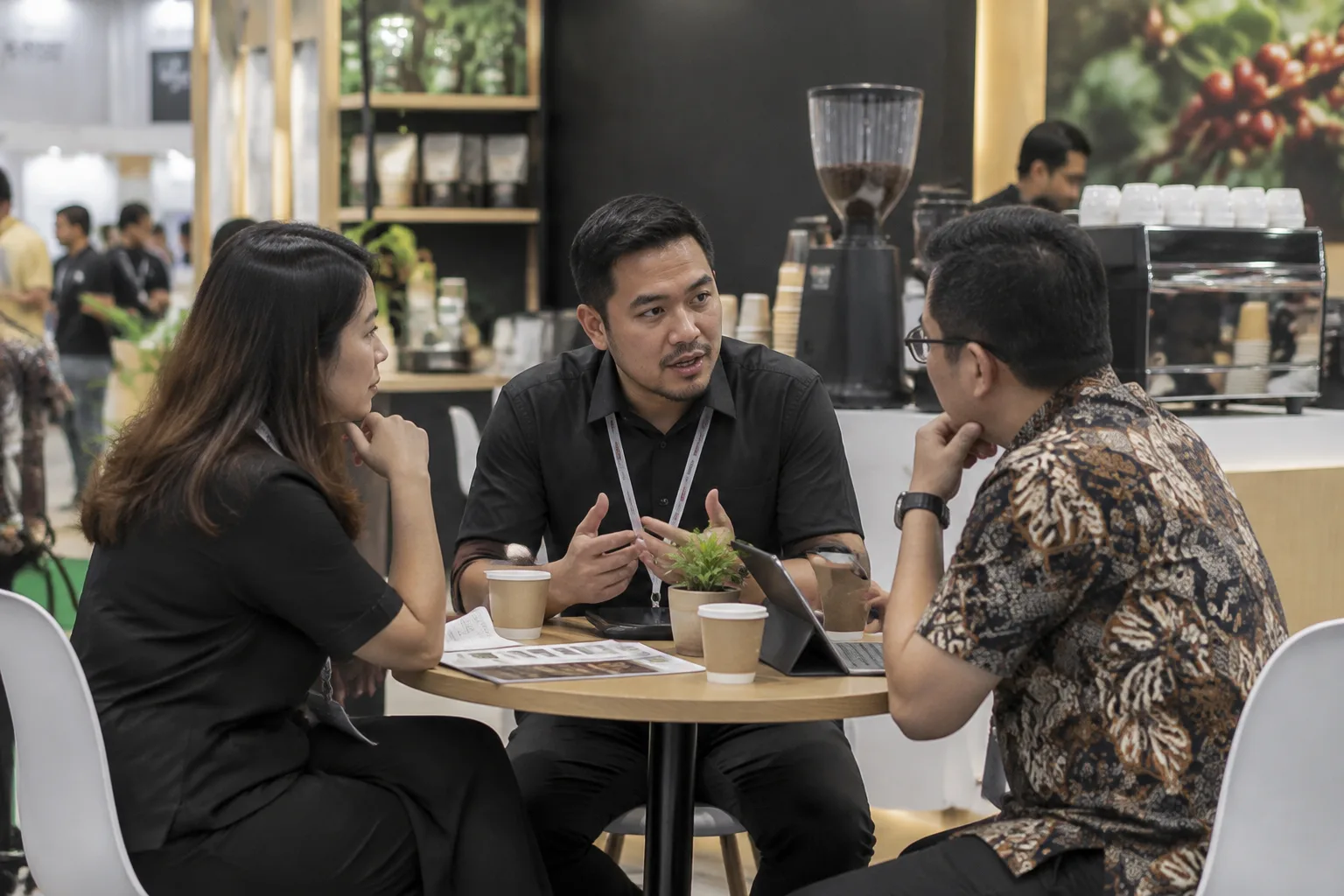
Indonesian coffee franchises reported potential deals worth Rp9.6 billion (9.6 billion Indonesian rupiah) at Trade Expo Indonesia (TEI), according to an ANTARA report dated 17 October 2025. The information, attributed to the Ministry of Trade through the Indonesian Economic and Trade Office (KDEI) in Taipei, is relevant to the franchise sector, particularly when assessing business opportunities without confusing them with revenue already received.
The Rp9.6 Billion Figure Still Represents Potential
The key word in this report is potential. ANTARA’s headline describes the Rp9.6 billion as potential deals for Indonesian coffee franchises at TEI, not completed sales or payments received. This distinction matters: readers should not draw conclusions beyond the information available.
The available research summary does not specify the participating brands, the number of prospective partners, the types of deal or the stage negotiations have reached. Nor does it state how much of that value subsequently became binding agreements. The figure therefore cannot yet be used to calculate the number of new outlets or the value of investment actually made.
The fact that KDEI Taipei is cited as the source does not, in itself, establish where all prospective partners are based or where outlets might be developed. Without further details, it would be wrong to assume that all these potential deals originate from a single market. The safest interpretation remains within the scope of the report: potential deals for Indonesian coffee franchises at TEI.
Assessing Opportunities Without Going Beyond the Data
For the franchise sector, this report offers a starting point for assessing opportunities generated by trade exhibitions. However, the value of potential deals alone does not establish whether those opportunities suit every brand owner or prospective franchisee. Assessing viability still requires information specific to each business plan.
As part of that assessment, brand owners can distinguish between prospective partners who have only requested information and those who have discussed the terms of a partnership. This is a suggested practical step, not a description of the process followed by the TEI participants in the report. Its purpose is to make the progress of each opportunity easier to track.
An aggregate figure is also insufficient to show how individual brands have performed. Without a breakdown by participant, readers cannot determine which brands attracted the most interest or which outlet formats were preferred. Equally, this report provides no basis for claiming that the entire coffee franchise sector is growing at any particular rate.
Key Questions for Prospective Partners
Prospective franchisees interested in this news should treat it as a prompt for due diligence, not as the sole reason to make a decision. The first question is what is actually being offered: the right to use a brand, the opening of an outlet or another form of partnership. These details are not explained in the available news summary.
Prospective partners can then ask about capital requirements, payment obligations, operational support and the division of responsibilities. All of these need to be checked against the specific brand’s offer. The Rp9.6 billion figure in the report is no substitute for detailed documentation and business-specific financial calculations.
Another worthwhile question concerns the basis of any business projections. Prospective partners should distinguish estimates from demonstrable operating results. If an offer includes a market development plan, ask about its assumptions and implementation stages. This is guidance on exercising due care, not an indication of problems with the participants mentioned in the report.
Follow-up Matters More Than the Initial Figure
To assess how this story develops, the most useful follow-up information would be any change in the status of the potential deals. Have discussions progressed, have agreements been signed and have the business plans ultimately been put into action? These questions help distinguish exploratory discussions from verifiable business results.
Brand owners can take a similar approach when preparing post-exhibition reports: record the value of opportunities separately from contracts and payments received. Clear presentation helps prospective partners understand achievements without having to guess what each figure means. It also keeps communication within the franchise sector in perspective.
Given the limited information available, the Rp9.6 billion in potential deals remains the central reportable fact, but it is not yet evidence of expansion taking place. The practical next step: use this news as a starting point to seek details of the offers and follow up on agreements; do not treat potential deal values as a substitute for assessing business viability.