Franchising a Hong Kong Business: How to Set Up Non-Food Product Stop-Sale and Recall Procedures
When a product safety issue arises, head office cannot rely on a group message telling franchisees to remove it from sale. Before launching a franchise network, define stop-sale authority, batch traceability, recall costs and conditions for resuming sales, then test the procedures through a pilot exercise.
Published
For an established retailer preparing to franchise, replicating sales methods is only part of the task. The business must also replicate its ability to handle product safety issues. Once goods from the same batch have been distributed across franchise outlets, head office’s ability to locate stock, stop sales and arrange a recall quickly has a direct bearing on customer safety and trust across the franchise network. This guide focuses on non-food consumer goods, helping businesses turn emergency procedures used in company-owned shops into workable arrangements with franchisees.
1. Clarify the law and who can order a stop-sale
Hong Kong currently has no legislation specifically regulating franchising. Nor does it have a generally applicable franchise registration system, statutory franchise disclosure document or mandatory franchise code. The relationship is governed mainly by contract and general law, but a franchise agreement cannot replace statutory product safety obligations.
For non-food consumer goods within its scope, the Consumer Goods Safety Ordinance (Cap. 456) sets out a general safety requirement. Manufacturers, importers and suppliers must ensure that the consumer goods they supply are reasonably safe. The Ordinance also provides for mechanisms such as prohibition and recall notices. Toys and children’s products, electrical products and other categories may be subject to separate legislation, so businesses should not assume that the same rules apply to every product. Sales may also give rise to obligations under the Sale of Goods Ordinance and common law liability, including negligence.
Head office should first check the legislation applicable to each product category, then specify in the franchise agreement who can issue a precautionary stop-sale instruction, whether franchisees may immediately quarantine goods they suspect are unsafe, and who is responsible for seeking guidance from the relevant authorities or making any required notifications. Waiting for supplier confirmation should not be a prerequisite for every action, and internal approvals must not delay compliance with statutory requirements.
2. Use a pilot to test whether batches are genuinely traceable
A product name and a total stock figure are usually not enough to determine the scope of a recall. Before launching the franchise network, check whether purchasing, goods receipt, inter-store transfer, sales and returns records can link the affected goods to the relevant supplier, model, batch or serial number. Where products have no manufacturer’s batch information, assess practical ways to identify incoming consignments, but do not make unsupported assumptions about which goods are unaffected.
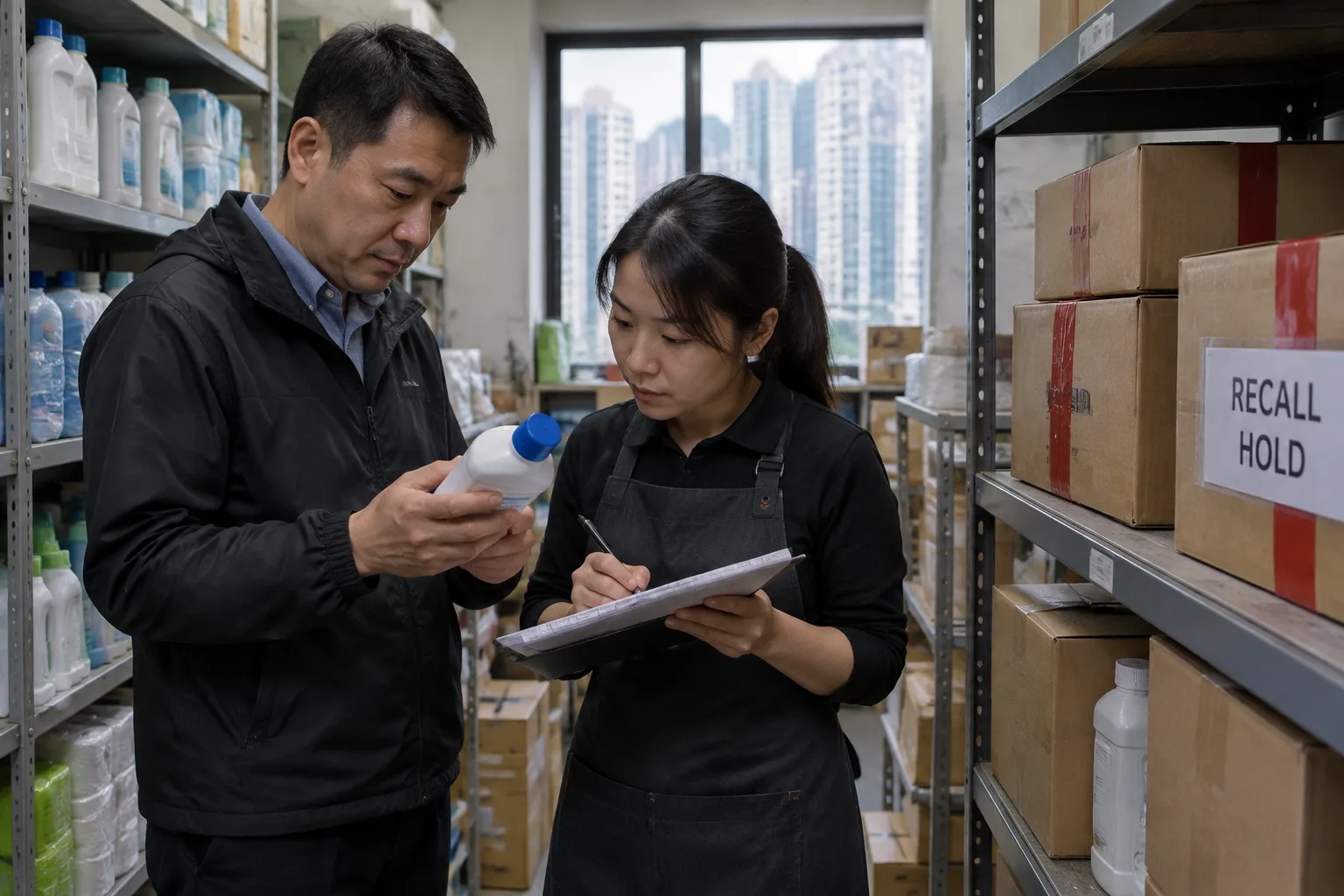
Choose one product at a company-owned pilot outlet, simulate a safety alert and ask staff to:
- Locate the relevant goods in the shop, stockroom, display areas and areas holding goods awaiting return.
- Stop in-store and online sales, and check orders awaiting dispatch.
- Label and quarantine stock, recording quantities and the staff member responsible.
- Report quantities sold, destinations of transferred stock and any information they cannot verify.
The test is not whether staff reply ‘received’, but whether they can provide evidence that sales have stopped and stock has been quarantined. If the till system cannot block a specific batch, decide in advance whether sales of the entire model should be suspended and how the same action will be applied across other sales channels.
3. Set out contractual responsibilities and operating procedures separately
The franchise agreement should address authority, duties to cooperate and principles for allocating costs. The operations manual should specify notification templates, quarantine methods, reporting fields and handover procedures. Significant arrangements involving payment obligations should not be tucked away solely in a manual that head office can update unilaterally.
The cost schedule should cover, at a minimum, recall transport, storage, testing, customer remedies, disposal and additional staffing. Allocation principles can reflect the source of the problem and each party’s conduct, such as a defect in supplied goods, improper storage by a franchisee or continued sales after a stop-sale notice. Where responsibility remains unclear, establish separate procedures for advancing funds, keeping records and settling costs later, so that disputes do not delay necessary action.
Head office should also review its upstream supply contracts to establish what traceability information suppliers must provide, how they must assist with testing and recalls, and whether related expenditure can be recovered from them. Do not promise franchisees that ‘the supplier will cover everything’ unless both the contract and the supplier’s practical ability to meet its obligations support that assurance.
Designated staff should coordinate external communications using verified model details, risk information and instructions on what to do. If customer contact details are needed, comply with the Personal Data (Privacy) Ordinance by restricting how the data is used, accessed and retained. A recall contact list must not simply be repurposed for marketing.
4. Set conditions for resuming sales: removing products from shelves is not the end
Stopping sales does not close the incident. The manual should require every outlet to reconcile quantities received, sold, quarantined and returned, along with goods sent elsewhere or otherwise dealt with. Any discrepancies should be flagged for investigation. Returned goods also need documented handovers to prevent them from being mixed back into saleable stock. Before goods are destroyed, confirm whether samples or other evidence must be retained.
A designated person should approve the resumption of sales on the basis of written evidence, such as confirmation that the affected batches have been removed, replacement goods have been verified and applicable requirements from the relevant authorities have been addressed. A supplier’s verbal assurance that ‘there is no problem’ should not automatically trigger a return to sale.
After every drill or actual incident, head office and franchisees should review traceability gaps, notification failures and cost disputes, then revise procedures and provide further training. This helps the franchise network improve collectively, rather than merely identifying which outlet was slowest to respond.
Practical takeaway: Before recruiting franchisees, run a complete ‘trace, stop sales, quarantine, recall and resume sales’ exercise with one product. Use the lessons to shape the agreement and manual, and have a Hong Kong lawyer review the legal responsibilities.