Suppliers when franchising in Guatemala: what to agree
Define mandatory purchases, approved suppliers and supply responsibilities before offering your first franchise in Guatemala.
Published
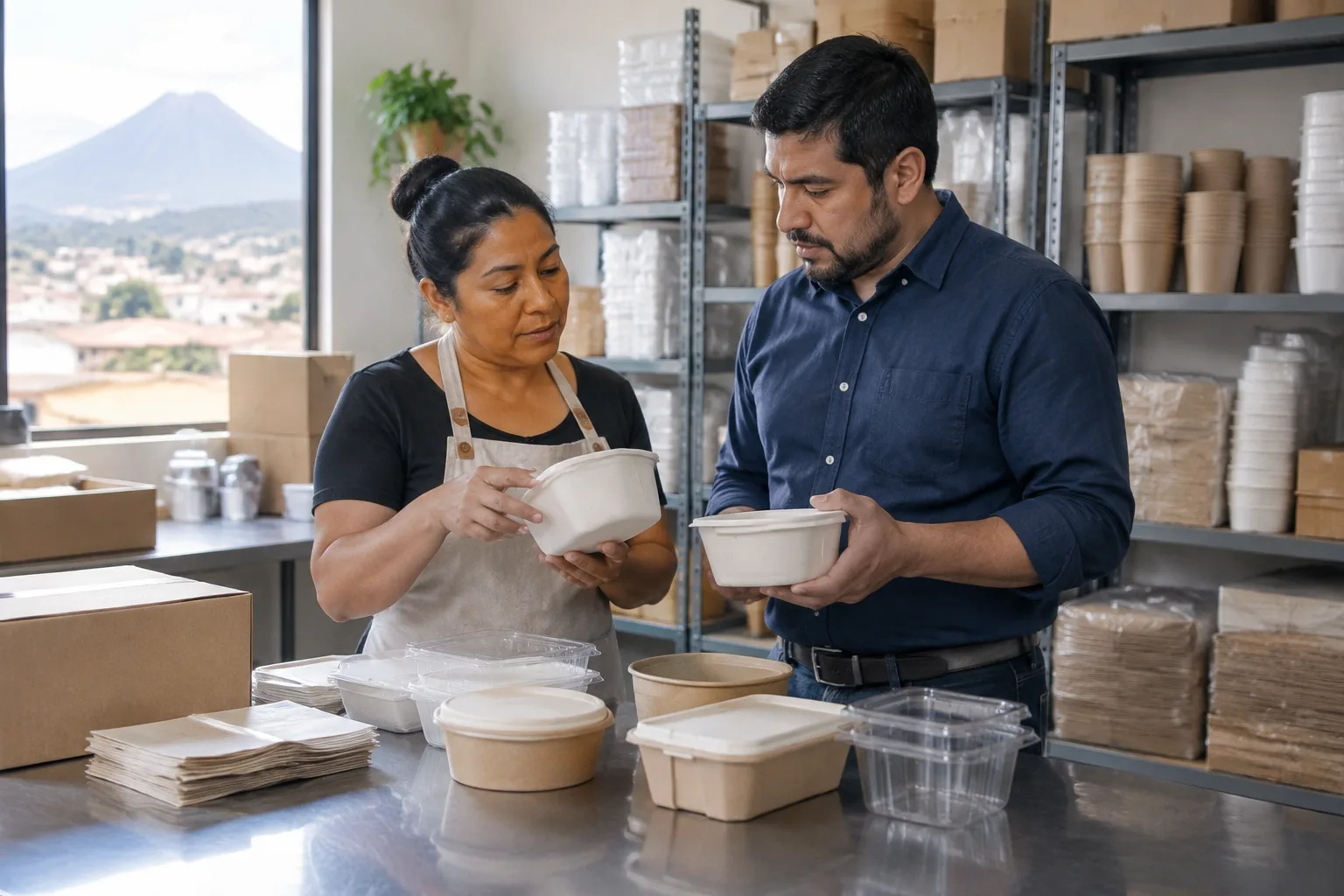
A business may run well when its owner handles purchasing personally, but that approach is not always replicable. Before franchising in Guatemala, you need to define how each outlet will obtain the supplies that underpin your offering. A clear procurement policy protects quality across the franchise network and helps franchisees understand their costs and obligations without relying on informal arrangements.
1. Distinguish essential requirements from flexible ones
Start by reviewing the supplies your business uses: ingredients, packaging, cleaning products, spare parts and customer service materials. Not everything needs to come from the same supplier. The key question is which product characteristics are essential to maintaining your brand’s distinctive customer experience.
Organise purchases into three groups:
- Exclusive supplies: proprietary formulas, blends or components that must come from a specified source.
- Supplies requiring approval: products that different suppliers can provide, as long as they meet verifiable specifications.
- Unrestricted purchases: items that franchisees can buy without approval, provided they meet basic operational and safety requirements.
For each group, record the specification, the reason for any restriction and who checks compliance. Avoid imposing exclusivity for administrative convenience when a technical specification would suffice.
For example, packaging may need to meet requirements for strength, dimensions and suitability for food contact without necessarily coming from a single company. A proprietary blend, by contrast, may need centralised supply to protect its composition and consistency.
2. Check that the supplier can serve additional outlets
A supplier’s ability to serve your current premises does not prove it can supply a network. Before recommending a supplier or making its use mandatory, request commercial terms for different locations and purchasing volumes.
At a minimum, review:
- Delivery coverage and frequency.
- Minimum orders and whether different products can be combined in one order.
- Order preparation and delivery lead times.
- Credit, payment and invoicing terms.
- Procedures for rejecting defective goods.
- The ability to trace batches and handle complaints.
Calculate the full cost of getting each product to each outlet, rather than looking only at its list price. Transport, storage, losses and minimum order requirements can make terms that seem economical at the original premises unviable elsewhere.
If you rely on imports, establish who will act as the importer and who will take responsibility for the formalities, costs and risks. For food products, check the health and import requirements applicable to the specific product. Do not assume that an authorisation or commercial arrangement covering the original business automatically extends to another operator.
3. Put obligations in the appropriate contract
Guatemala has no specific franchise law. Franchise agreements are treated as commercial contracts without a specifically defined statutory form, governed by the Commercial Code, Decree 2-70, with the Civil Code applying where needed to fill gaps. Good faith and the agreed terms are particularly important, but agreements must comply with applicable legislation.
The Industrial Property Law, Decree 57-2000, governs matters such as trade marks and their licensing; it does not replace the supply terms that the parties need to define. It is therefore advisable to have a local lawyer review both the franchise agreement and any related supply agreements.
Clarify who sells the goods and who is responsible for them. A franchisor that resells supplies plays a different role from one that merely approves an independent supplier. Specify where orders are placed, who receives payment and who handles returns or failures to fulfil obligations.
Also document the scope of mandatory purchases, the conditions for changing the approved supplier list and the procedure for requesting alternatives. An obligation imposed on a franchisee does not, by itself, require a supplier to maintain prices, stock levels or delivery times: those commitments must be agreed with the relevant party.
4. Be transparent about supply-related income
If selling supplies forms part of the franchisor’s income, include it in the financial assessment of the model. Franchisees need to assess royalties, mandatory purchases and other recurring costs together.
As good practice, explain whether the franchisor benefits from resale margins, commissions or volume discounts. Also clarify whether any discounts will be passed on to outlets and under what conditions. Do not present centralised purchasing as a guaranteed saving before you have verified its total cost.
Define how price changes will be communicated and what will happen to orders already accepted. Avoid promising fixed prices indefinitely when they depend on third parties.
5. Establish a process for approving alternatives
Franchisees should be able to propose a supplier without that proposal amounting to automatic approval. Create a simple application process covering technical specifications, samples, prices, delivery terms and relevant documentation.
Assign someone to assess proposals and agree a response deadline. Record each decision and the reasons behind it. If you approve a temporary substitution, specify the product, the outlets covered and the approval period, so that an exception does not become standard practice through habit.
Practical takeaway: before offering your franchise, prepare a purchasing matrix, verify suppliers’ capacity and document who takes on each obligation. Impose only restrictions that you can justify and uphold.
Sources
- Guatemala Franchise Market
- Guatemala - Franchising | export.gov
- Contrato de Franquicia en Guatemala 2026: qué es, cláusulas ...
- La importancia de las franquicias para hacer negocios en ...
- UNIVERSIDAD PANAMERICANA
- Franquicias Guatemaltecas | PDF
- El método que busca fomentar el auge de las microfranquicias de exportación
- Generalidad de las Franquicias en Guatemala