Equipment Planning for Franchising a Business in Guatemala
Define equipment requirements, acceptable alternatives and responsibilities before franchising your business in Guatemala, without burdening franchisees with unnecessary purchases.
Published

When franchising a business in Guatemala, copying the original outlet’s shopping list can pass on mistakes, unnecessary costs and dependencies that are difficult to resolve. The priority is to identify the equipment needed to deliver the same quality of service. Well-prepared technical specifications help build a consistent franchise network without requiring every outlet to buy exactly the same items.
1. Define functions before specifying brands
Start by linking each piece of equipment to a specific task: storing products, preparing orders, taking payments, cleaning or serving customers. Then establish which features are essential to perform that task in line with your business model.
Do not confuse the founder’s preferences with operational requirements. A machine may be in the original business because it was available when the outlet opened, rather than because it is the best option for a new location.
Divide equipment into three categories:
- Essential: without it, the outlet cannot provide the service or maintain quality and safety standards.
- Site-dependent: requirements depend on the space, utilities and expected demand.
- Optional: improves convenience or productivity but is not needed to get started.
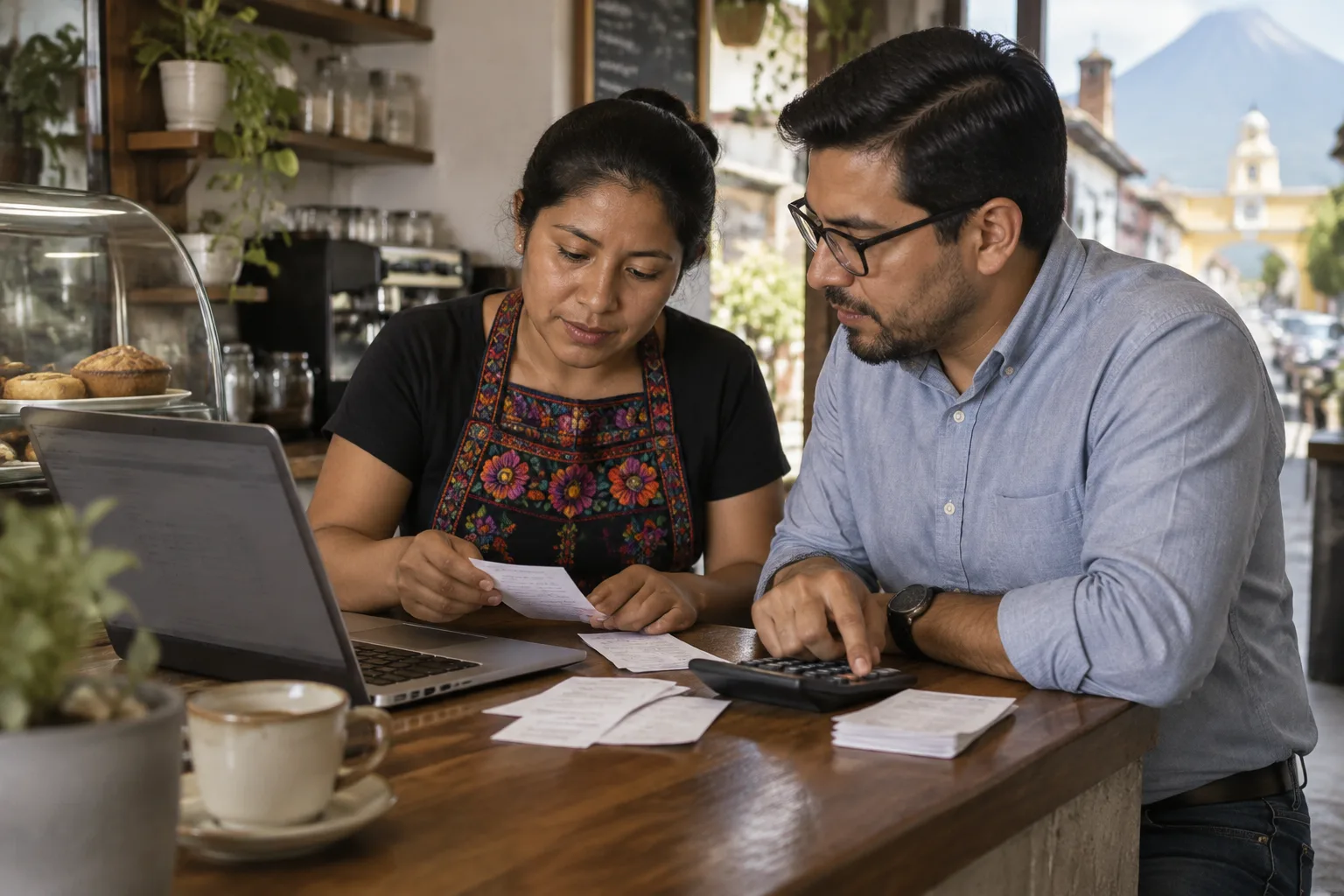
For example, in a coffee shop, it is important to specify the machine’s operating capacity and installation requirements, rather than simply naming a brand. If a particular model is essential, document the technical reason and check that maintenance support is available in Guatemala.
This classification prevents an investment needed only by higher-capacity outlets from being presented as compulsory for everyone.
2. Turn the list into comparable technical specifications
A list of names and prices is not enough for a franchisee to obtain like-for-like quotations. Prepare a specification sheet for each essential piece of equipment, with enough information to compare alternatives without lowering standards.
Include, at a minimum:
- Function and required capacity.
- Dimensions and space needed for operation and cleaning.
- Electrical, plumbing, ventilation and any other applicable requirements.
- Included accessories and required consumables.
- Warranty terms and availability of spare parts.
- Installation and maintenance requirements.
- The test it must pass before entering service.
Distinguish the purchase price from the cost of bringing the equipment into operation. Transport, installation, site modifications, accessories and maintenance can substantially alter the comparison. Request itemised quotations and clarify whether they include taxes.
For imported equipment, check delivery lead times, local support and spare parts availability before making it a requirement. Do not promise an opening date based solely on the availability advertised by the seller.
Also define a procedure for approving equivalent alternatives: who receives the alternative equipment’s specification sheet, who assesses it and how the decision is communicated. Approval should be based on verifiable requirements, not personal preferences.
3. Allocate responsibilities within Guatemala’s legal framework
Guatemala has no specific franchise law or general obligation to provide a franchise offering circular under a dedicated franchise regime. A franchise agreement is treated as a commercial contract without a specifically defined statutory form: the Commercial Code, Decree 2-70, applies, supplemented by the Civil Code, Decree-Law 106. For trade marks and other industrial property rights, the Industrial Property Law, Decree 57-2000, should also be considered.
The absence of a dedicated law does not remove general legal obligations or justify leaving responsibilities unclear. With local legal advice, include an equipment annex that is consistent with the agreement and operating standards.
Clarify who buys the equipment, who will own it and who is responsible for transport, installation, maintenance and replacement. If the franchisor sells equipment to the franchisee, identify that transaction and its terms separately; do not confuse it with the grant of the franchise.
Also distinguish the manufacturer’s warranty from the support provided by the franchisor. Approving a model does not, in itself, mean guaranteeing all repairs.
The QFA Code of Conduct promotes clear contractual obligations and delivery of the support promised. It is a standard of conduct for its community, not national law or a compulsory public register.
4. Test performance and plan for breakdowns
Before accepting installed equipment, check that it performs its intended task under real working conditions. Record the model, serial number, accessories, warranty documents and test results. A delivery photograph does not demonstrate that the equipment works correctly.
For each critical piece of equipment, establish who receives breakdown reports and what alternative operating arrangements are permitted while repairs are carried out. Do not authorise temporary solutions that compromise safety or quality.
Keep a dated version of the annex and a record of approved alternatives. This will allow you to distinguish an authorised replacement from a purchase that was never assessed.
Practical conclusion: before offering your franchise, turn your inventory into verifiable specifications. Every mandatory piece of equipment should have a justified function, a clearly assigned responsible party and a clear way to check its performance.
Sources
- franquicia.docx
- notarioguatemala.com › contratos › mercantilContrato de Franquicia Comercial — Modelo Guatemala (Word ...
- Código de Conducta para Franquicias en Guatemala
- Modelo Word y lo que Dice la Ley (Licencia de Marca, RPI, ISR)
- La importancia de las franquicias para hacer negocios en Guatemala - BLP Legal
- Guatemala - Franchising | Privacy Shield
- Guatemala Franchise Market
- The importance of franchises to do business in Guatemala - BLP Legal