Franchising in Guatemala: check who is signing for the brand
Verify the franchisor’s identity and its representative’s authority before signing or transferring money.
Published
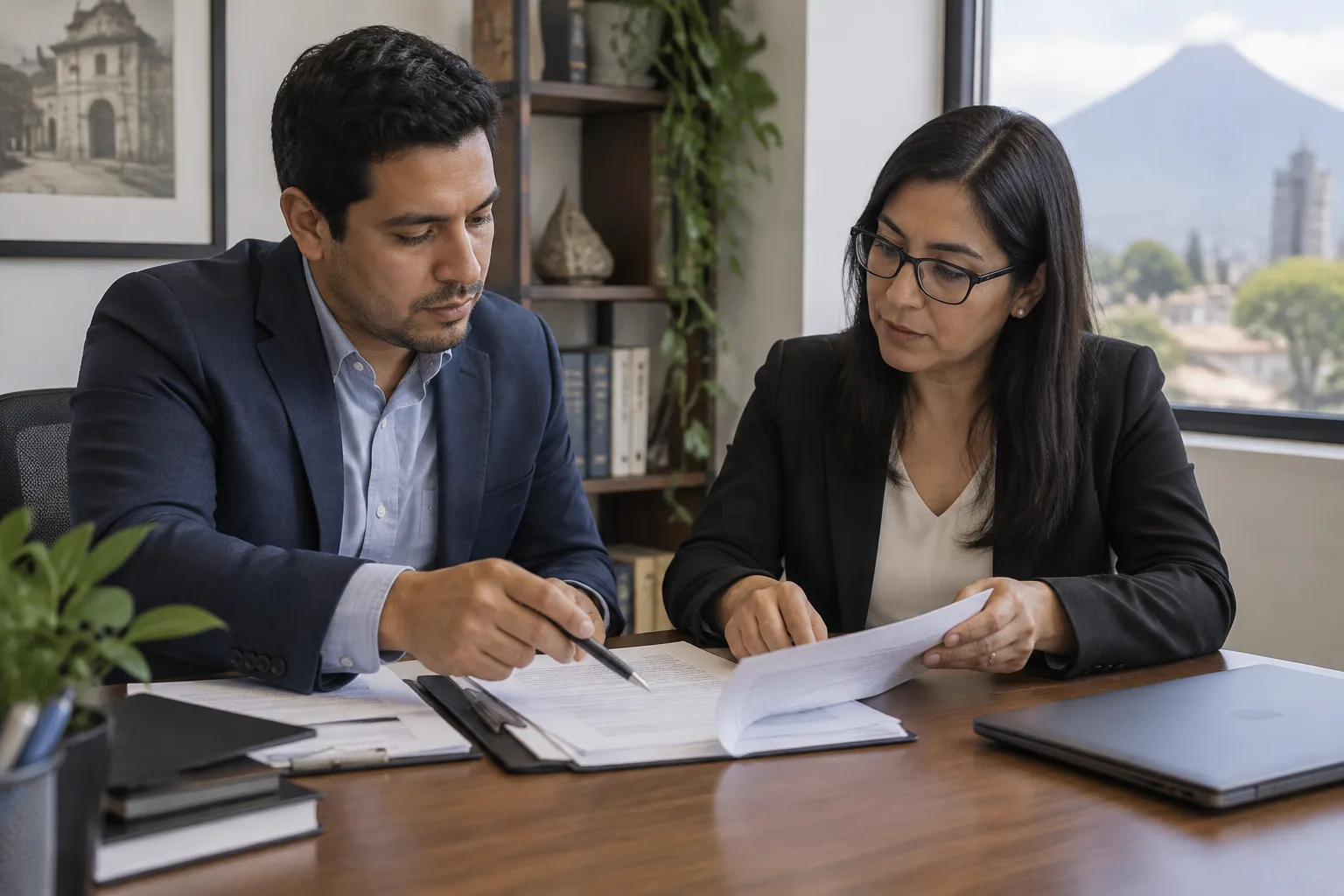
Before buying a franchise in Guatemala, check who will actually be responsible for fulfilling the brand’s obligations. The person presenting the business, the company sending the contract and the party receiving the money may all be different. In franchising, a clear commercial relationship starts with identifying each party and checking that whoever signs has the authority to bind the relevant entity.
1. Identify your counterparty, not just the trading name
The name displayed on the premises does not necessarily match the franchisor’s registered company name. Nor does a corporate email address, on its own, prove that someone has the authority to enter into the contract.
Ask for identification details for the entity granting you the franchise. These should allow you to verify, as applicable:
- Its full legal name and country of incorporation.
- Its registered address and tax identification details.
- Its commercial registration details.
- The name and position of the person who will sign.
- The capacity in which that person is acting: legal representative, authorised agent or another legally recognised role.
Compare this information with the draft contract, the financial proposal and the payment instructions. If different companies appear, ask for a written explanation of each one’s role.
Belonging to the same corporate group does not make several companies a single counterparty. If one entity collects payment and another promises to provide services, clarify which is accountable to you and how this will be documented.
2. Check authority under Guatemalan law
Guatemala has no specific law comprehensively governing franchising, nor a special mandatory pre-contractual disclosure regime for franchise sales. Do not assume you will receive a standardised set of documents establishing the authority of the franchisor’s representative.
The relationship falls within the framework of the Commercial Code, Decree 2-70, supplemented by the Civil Code, Decree-Law 106. The Industrial Property Law, Decree 57-2000, governs matters such as trade marks and their licensing, but evidence of rights to a trade mark is no substitute for checking the signatory’s authority.
Ask a Guatemalan lawyer to determine which documents are needed to verify the entity’s existence and the representative’s claimed authority. Depending on the circumstances, the review may include corporate documents, appointments, powers of attorney and the relevant registrations.
The checks should answer specific questions: is the representative’s authority still valid? Does it cover entering into this contract? Are there any limits or internal approvals required? Must anyone else be involved?
If the counterparty is a foreign entity, seek advice on the formalities its documents must satisfy for use in Guatemala, including authentication or translation where required. Do not assume that a copy sent by email meets all these requirements.
3. Link promises to the entity responsible for fulfilling them
Sales executives, advisers and regional managers may be involved in negotiations. Their involvement does not automatically mean they can change terms or make commitments on the franchisor’s behalf.
Draw up a short list of the promises that are decisive to your purchase: included services, fee waivers, deliverables and agreed deadlines. For each one, identify which entity must fulfil it and where it will be recorded.
For example, if an executive offers additional support during the opening, do not simply keep their message. Ask for the commitment to be included in the contract or an annex accepted by those with sufficient authority.
It is also worth checking who can sign subsequent amendments. The person authorised to coordinate operations does not necessarily have the authority to change the contract. Making this distinction helps you avoid relying on informal agreements whose enforceability may later be disputed.
If the final document contradicts an earlier offer, resolve the discrepancy before signing; do not rely solely on both parties knowing what was discussed.
4. Complete your checks before transferring funds
Before making a payment, put together a file containing your counterparty’s identification details, the documents establishing representative authority that have been reviewed, and the final version of the contract and its annexes.
Check that the bank account beneficiary matches the entity entitled to receive payment. If you are asked to transfer money to a third party, insist on documented instructions and a legal review of how that payment will be recognised by the franchisor. A commercial explanation alone is not enough to address the risk.
Confirm any change of bank account or signatory through a previously verified channel. If the representative changes at the end of negotiations, check the new representative’s authority afresh; do not simply rely on the checks carried out for their predecessor.
Practical conclusion: before paying, make sure you can demonstrate who is granting you the franchise, who has the authority to bind that entity and why the recipient of the money is authorised to collect it.
Sources
- Franchises in Guatemala: choosing the purchasing company
- Franquicias en Guatemala: elige la sociedad compradora
- Franquicias en Guatemala: verifica los permisos de apertura
- Franchising in Guatemala: align your premises lease with your franchise agreement
- Franchising in Guatemala: check the permits you need to open
- Franchises in Guatemala: assess the intermediary
- Franquicias en Guatemala: evalúa al intermediario
- SUPSRIHTEWOCHCIA &E AlOMlWSTRACIOH TRIBUTARIA