Herbergier plans care franchise in Recklinghausen, Germany
Dutch care concept Herbergier plans to open its first German home in mid-2028. Couples will run the shared living communities and live on site.
Published
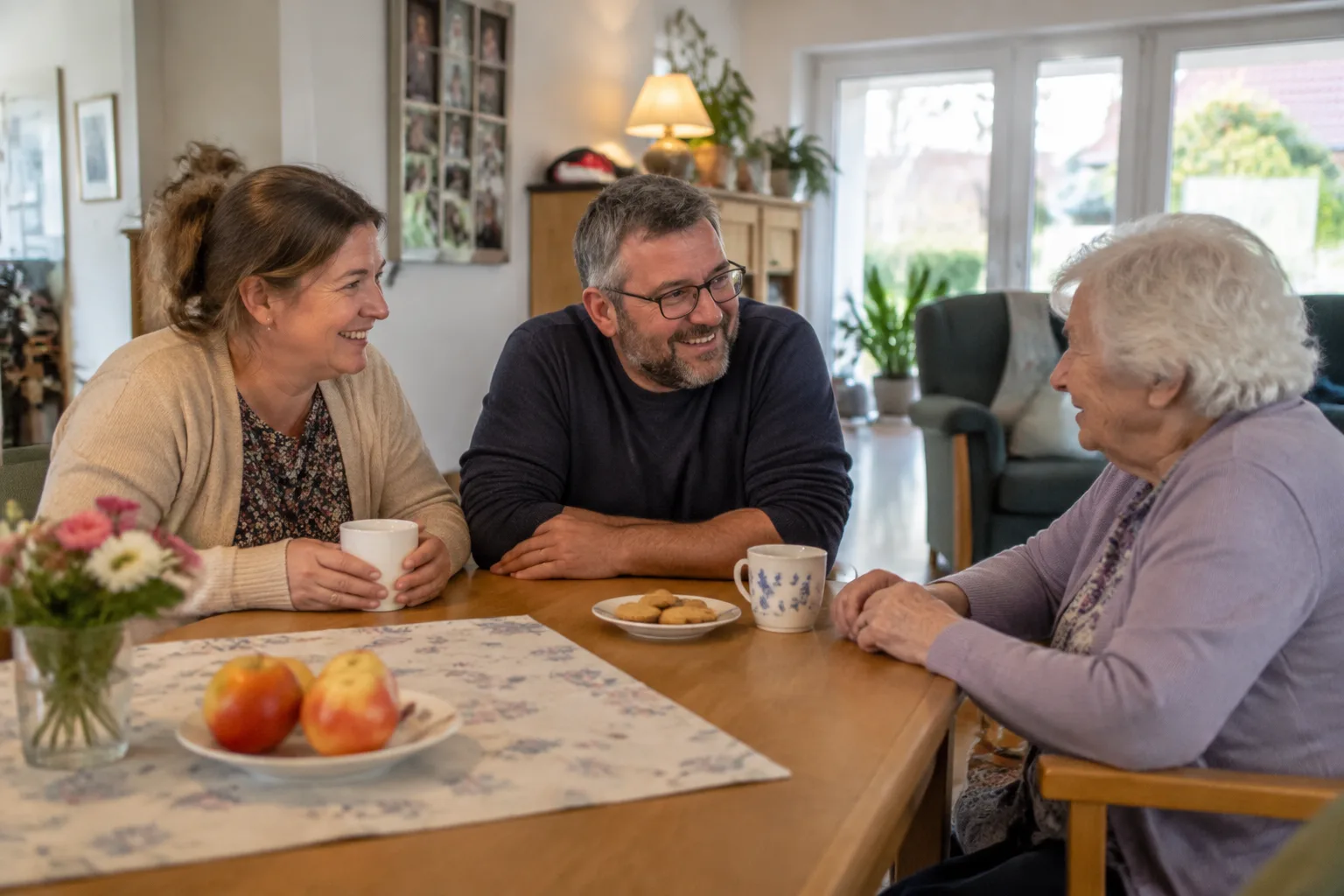
Dutch care concept Herbergier is set to expand into Germany, with its first location planned for Recklinghausen in mid-2028. Dr Sabine Becker-Klunder, the country manager responsible for the launch, announced the plans in an interview with Care Rockets published on 26 October 2026. The business is seeking entrepreneurial couples to run shared living communities for people with dementia while living in the same property themselves.
First home planned, with further locations under discussion
Herbergier aims to bring a Dutch residential care concept to Germany’s franchise sector. Its focus is on small-scale shared living for people with dementia. Each home is run by a host couple, who take responsibility for day-to-day life and operations as independent business owners.
Recklinghausen is currently the most concrete prospect for a German location. Becker-Klunder gives mid-2028 as the planned opening date. This is therefore a project in development, rather than an existing German care operation. That timeline matters for prospective franchisees: the concept has yet to enter the German market, while recruiting committed host couples is already part of the launch process.
The country manager also reports discussions with Duisburg, a potential location in the Aachen city region and another south of Wuppertal. These are at different stages of planning from the announced first home. The discussions and potential sites should not yet be taken as confirmed future openings.
Host couples live and work in the same property
Herbergier combines independent business ownership with a residential model in which the operators live on site. According to Becker-Klunder, the couple occupy a separate flat in the same property as the residents. They run the home together with their staff.
In Germany, Becker-Klunder places the concept within the category of provider-managed shared living communities. She identifies the in-house organisation of care as a key difference from arrangements involving an external care service: the host couple register a care service based within the Herbergier home itself. The shared living community and care service are therefore not presented as independent offerings.
This creates a distinctive set of requirements for prospective franchise partners. The role involves more than managing a business. The model also requires a decision to move into the property and take on the hosting role together as a couple. The separate flat provides a private living space, but physical proximity to the business remains an integral part of the concept.
This combination sets the opportunity apart from business models in which owners are only on site during working hours. Anyone considering Herbergier should therefore weigh up both the business responsibilities and the implications for their life together.
Selection, training and ongoing support planned
Prospective partners are expected to go through a three-stage selection process. According to Becker-Klunder, this gives aspiring business owners the opportunity to meet the people behind the concept. A training programme is then planned to prepare the hosts for running their own business.
The future businesses are also expected to receive support throughout the process. DDN International is behind the franchise. As country manager, Becker-Klunder is the contact for the German launch and for people interested in running their own Herbergier. At the time of the interview, she says she is solely responsible for Germany, with DDN providing another point of contact.
She describes the existing organisation as having around 30 employees in Amsterdam supporting approximately 185 homes, including 60 Herbergier homes. These figures reflect the organisation’s established infrastructure. They should not be confused with a German network: in Germany, the immediate focus is the planned opening in Recklinghausen.
Rental model intended to limit financial risk
The host couples are expected to rent the properties. Becker-Klunder therefore describes their financial risk as limited. She says DDN International handles the security arrangements for investors. Property arrangements are thus a distinct part of the division of responsibilities between hosts, franchisor and investors.
The statement about limited risk should be understood as the country manager’s assessment, not a promise of risk-free business ownership. Before making a decision, prospective partners should clarify in particular the obligations arising from the tenancy, the franchise agreement and the operation of the care service. The precise scope of the proposed training and support is equally important.
Practical takeaway: Herbergier is aimed at couples who want to combine care, business management and living in the same place. Before applying, both partners should consider together whether the hosting role fits their plans for their lives, and request clear details of the selection process, responsibilities and financial commitments.