Safe franchising takes centre stage at Helsinki’s Franchise News Day
Franchise News Day brought franchise network executives together in Helsinki on 24 September 2026, with safe franchising as its theme.
Published
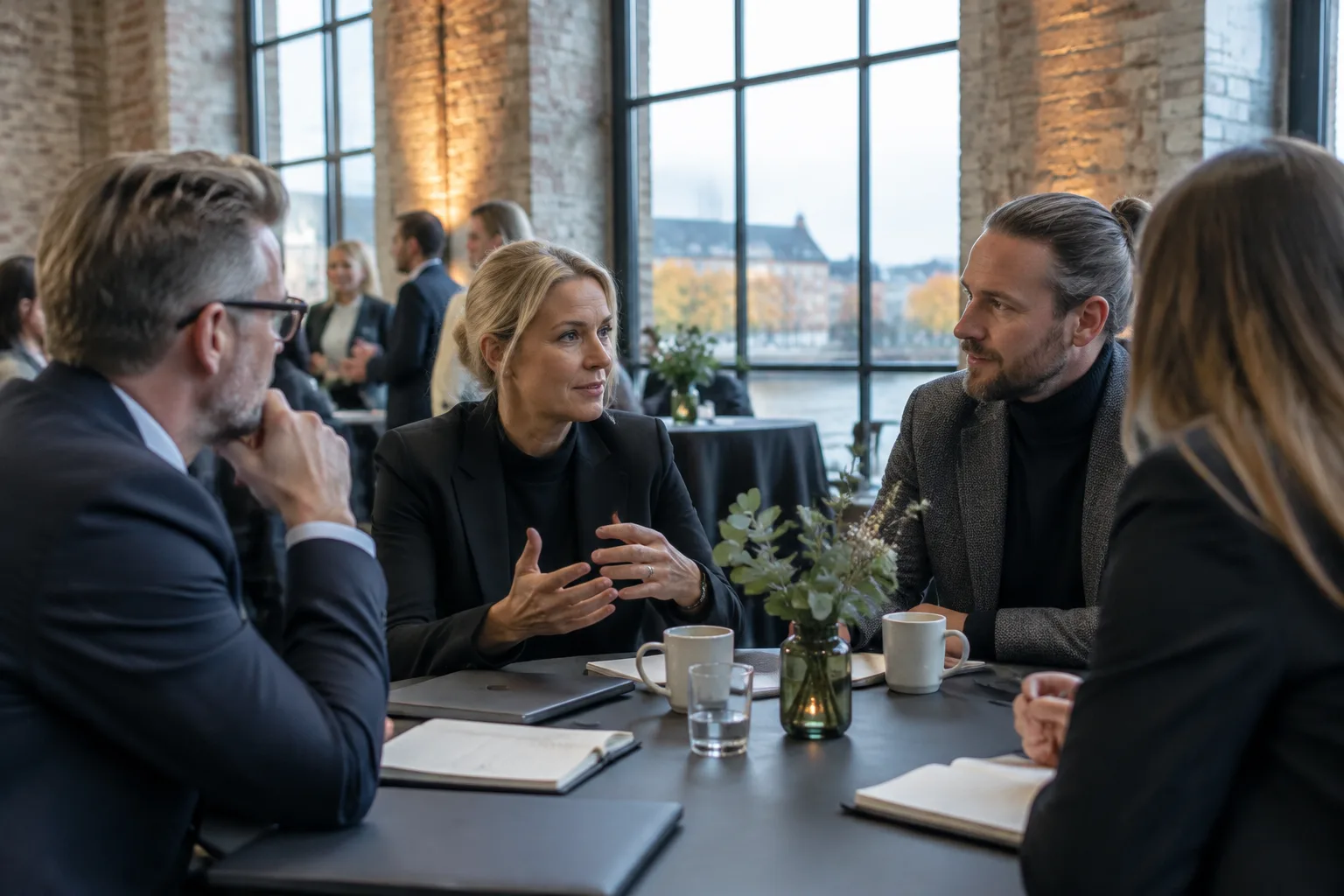
Safe franchising was the focus of Franchise News Day, an event for franchise network executives held in Helsinki on Thursday 24 September 2026. The venue was Tapahtumatila Tähti in the Vallila Konepaja district. The theme raises a practical question for Finland’s franchising community: how can safety and security be made tangible in the relationship between a franchise network and its franchisees?
An executive event built around safe franchising
According to an event report published by Franchise News on 26 September, the day’s programme was built around the theme of safe franchising. The report described the event as a success. Its stated audience was franchise network executives, making it a gathering specifically for those responsible for managing franchise networks.
The available event description gives the date, venue, target audience and main theme. It does not detail the presentations, attendance figures or any recommendations that may have been made during the day. The event therefore provides no basis for conclusions about specific safeguards introduced by franchise networks or changes participants intend to make.
The report does, however, send a clear message about the theme’s prominence: safe franchising was not simply a side topic, but the thread running through the entire programme. At an event for franchise network executives, this provides a natural framework for examining safety and security through the lens of management and collaboration.
The practical perspectives below are editorial reflections on what the theme could mean for the franchising community. They are neither summaries of presentations nor conclusions endorsed at the event.
What could safe franchising mean in day-to-day practice?
Safety and security are worth considering as a broader issue than preventing individual problems. When examining the relationship between a franchise network and a franchisee, useful questions include whether responsibilities are clear, whether information is accessible and how uncertainties are handled. These questions can turn a broad theme into specific points to check.
For someone considering becoming a franchisee, the first question might be what the relationship requires in practice. Which tasks are the franchisee’s responsibility, what support does the network provide, and where can agreed arrangements be checked? It is worth seeking answers that are precise enough to assess before making a decision.
For franchise network management, the same exercise can begin with the clarity of its own procedures. Is guidance easy to find? Does the franchisee know whom to ask for help? What happens when the standard guidance does not cover a situation? These questions do not in themselves indicate shortcomings, but they help focus the discussion.
Nor should safety be interpreted as a promise of risk-free business ownership. A more practical aim is to identify what each party knows, what they need to agree on and when further clarification is required. This is a framework for assessment, not a claim about the current state of franchise networks drawn from the event report.
A shared theme needs clear questions
Franchise News Day’s target audience makes its theme particularly relevant to management. Since the event was aimed at franchise network executives, it is reasonable to consider the theme in terms of the issues that belong on management’s own agenda. The available report does not, however, explain how this connection was explored in the day’s programme.
One possible starting point is to compare documented procedures with franchisees’ day-to-day experience. A network could, for example, ask franchisees to describe how they would seek support in an unclear situation. The aim need not be a wide-ranging assessment exercise, but simply to establish whether the different parties understand the agreed procedure in the same way.
Another starting point is communication. What are franchisees told at the outset, what are they told later, and how are changes communicated? If different materials describe the same matter differently, it is worth establishing which version is current. This can be used as a check without assuming that inconsistencies exist.
A shared discussion within the franchising community can also begin by clarifying terminology. Safety and security may mean different things to different people. At the start of any practical discussion, it is therefore worth specifying whether the subject is, for example, the terms of the relationship, day-to-day procedures or access to help when problems arise.
From a broad theme to a focused practical check
The confirmed news from Helsinki concerns an event that took place and its theme. It is not an announcement of new obligations, shared standards or decisions made by franchise networks. This distinction matters: the significance of the event should not be confused with changes that the available material does not report.
Nevertheless, the theme gives franchise networks a useful reason to review one aspect of their relationship with franchisees. A focused check could look, for example, at whether support contact details are up to date and whether franchisees can find them when needed. Someone can be assigned responsibility for the check, with an agreed date to revisit the findings.
Franchisees and prospective franchisees, meanwhile, should distinguish between a general description of a network’s support and a precise answer to their own question. If a responsibility, procedure or form of support remains unclear, it is reasonable to ask for more information. The event’s safety theme provides a starting point for that conversation, not an answer on behalf of any individual network.
Practical takeaway: choose one situation involving the relationship between a franchise network and a franchisee, and check whether both parties know their responsibilities, their points of contact and the next step. This makes safety and security a practical issue that can be assessed, rather than simply a broad aspiration.