Buying a Franchise in Colombia: Validating Local Demand
Check whether there are customers for a franchise in your chosen location before investing: assess buying habits, competition and evidence of demand.
Published
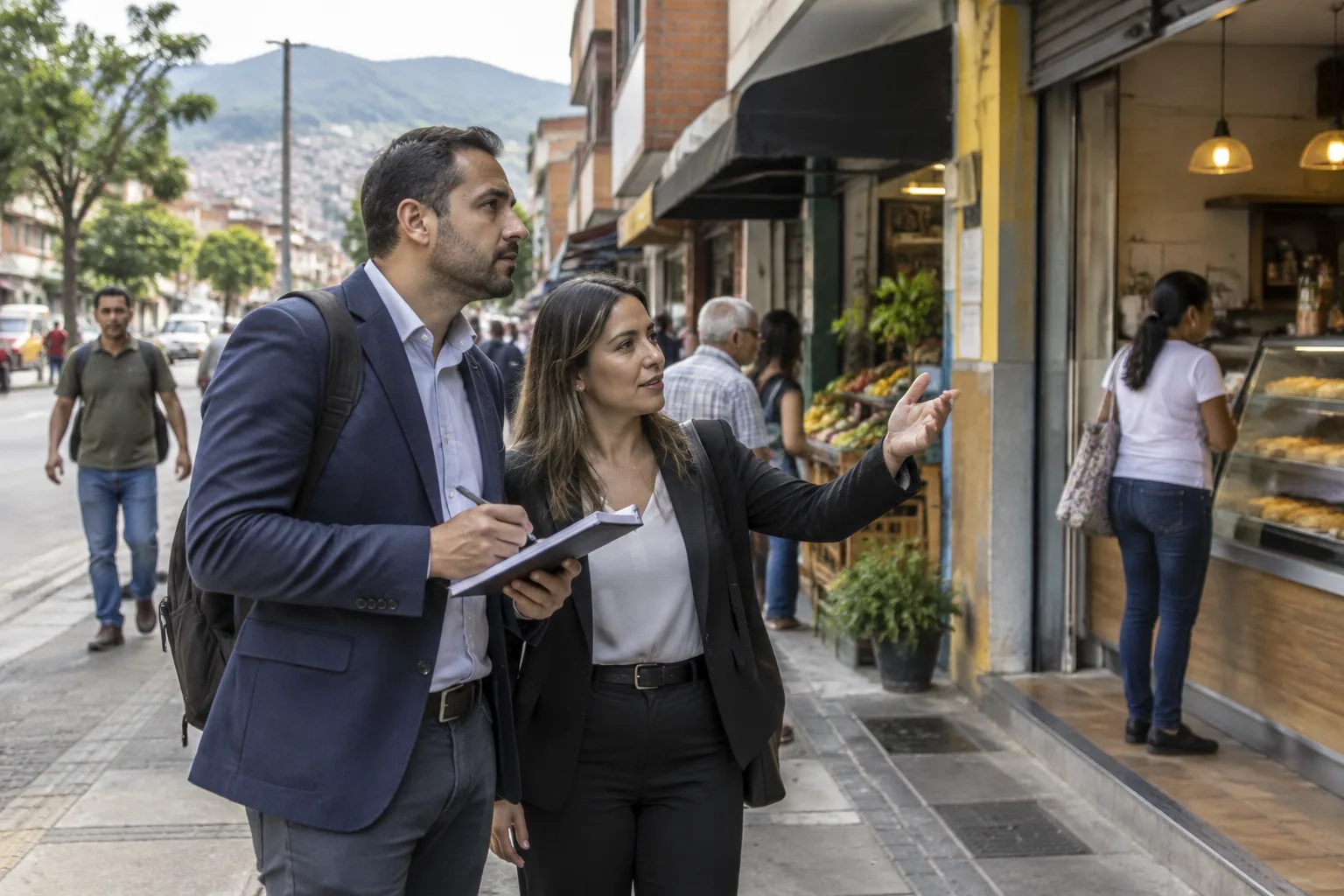
A recognised brand does not guarantee that its offering will attract enough buyers in every location. Before buying a franchise in Colombia, check whether people nearby need the product, can afford it and have reasons to choose it. In franchising, a proven business model is a starting point: local demand still needs to be verified.
1. Define your target customer and buying occasion
Do not start by asking how many people walk past a premises. First, describe who would buy, why and when. A café serving office workers at breakfast relies on different habits from a venue catering for family gatherings, even if both sell food and drinks.
Prepare a checklist with these questions:
- Main customer: do they live, work, study or visit the area?
- Specific need: are they looking for speed, convenience, specialist expertise or an experience?
- Buying occasion: do they buy during the working week, in the evening or at weekends?
- Expected frequency: is this a regular, occasional or seasonal purchase?
- Total price: how much would they pay, including extras, transport or delivery?
Ask the franchisor to explain which features of the local area help its concept succeed. Then compare that description with the location you are considering. The claim that it ‘works in commercial areas’ is too broad to support an investment decision.
The result should be a testable hypothesis: for example, that nearby workers need a quick option during their lunch break. Do not confuse that hypothesis with a conclusion.
2. Observe the area and the actual alternatives
Visit the area on different days and at different times. Record the date, conditions during your visit, activity at local businesses and any barriers to access. An event, heavy rain or a holiday period can affect what you see; make a note of these factors so you do not generalise from an unusual situation.
Distinguish between footfall and relevant potential customers. Many people may walk along a street without having the time, budget or interest to buy. Also check whether the premises are on the side people normally pass, whether they are visible and whether reaching them requires an awkward detour.
Map out the alternatives, including:
- Businesses offering similar products or services.
- Substitutes that meet the same need in a different way.
- Home delivery or online purchasing options.
- In-house alternatives, such as staff canteens or services included within a building.
Compare total prices, opening hours, service times and reasons for choosing each option. A lack of competitors does not prove there is an opportunity: it may also reflect low demand. Equally, a cluster of similar businesses may indicate an active customer base, but you will need to identify a point of difference those customers genuinely value.
3. Test interest without mistaking it for an intention to buy
Brief conversations with potential customers can help you understand habits, but they do not provide statistical certainty. Speak to people with different profiles and at different times; relying only on people you know tends to produce an overly positive picture.
Ask about recent behaviour: what they bought, where, how much they paid and what they found inconvenient. Learning about their last purchase is more useful than asking, ‘Would you like this brand to open here?’ A polite response is not a sale.
Then present the offering with its actual price and terms. If their choice depends on a permanent promotion or a service the franchise does not allow you to offer, the demand you have identified may not fit the available business model.
Where feasible, agree an authorised trial with the franchisor, such as a demonstration or a temporary event with the necessary permissions. Decide in advance what you will measure: relevant enquiries, requests for quotes, actual purchases or repeat purchases. Do not use the brand or take advance payments without authorisation and clear terms.
4. Turn your findings into a documented decision
Prepare a worksheet separating observed facts, assumptions and outstanding questions. For each significant assumption, state what evidence could confirm or disprove it. Avoid automatically applying results from another city or a location with different habits.
Colombia has no specific franchise law or general mandatory pre-contractual disclosure regime for franchise agreements. A franchise agreement is an ‘atypical contract’, meaning it is not governed by a dedicated statutory framework: valid agreements between the parties apply, alongside the general provisions of the Commercial Code and, where relevant, the Civil Code, including the duty of good faith. This lack of specific regulation does not remove general legal obligations.
Therefore, if the franchisor offers a location study, record its scope, assumptions and who will carry it out in writing. The franchisor’s approval of the site should not automatically be interpreted as a guarantee of demand or profitability. Seek legal advice to clarify any commitments relating to that assessment.
Practical conclusion: before investing, establish who would buy, which alternative they currently use and why they would switch. If those answers still rely on guesswork, carry out further validation before committing money.
Sources
- ¿Cómo se elabora un contrato de franquicia?
- Aspectos a tener en cuenta antes de comprar una franquicia
- Franquicias en Colombia 2026: precios, marcas y cómo elegir
- [PDF] Cómo comprar una franquicia Quince (15) tips - Biblioteca Digital CCB
- Destaparon cómo puede meterse en negocio (de los grandes) que toma fuerza en Colombia
- www.rankia.co › blog › mejores-cdtsFranquicias en Colombia: tipos, cuánto cuestan y ejemplos
- Inicio | MINCIT - Ministerio de Comercio, Industria y Turismo
- Cómo comercializar la franquicia