Tim Hortons: 65 projects in Quebec under C$400 million plan
Tim Hortons and its franchisees plan 14 openings and 51 refurbishments in Quebec in 2026 as part of a C$400 million Canadian programme.
Published
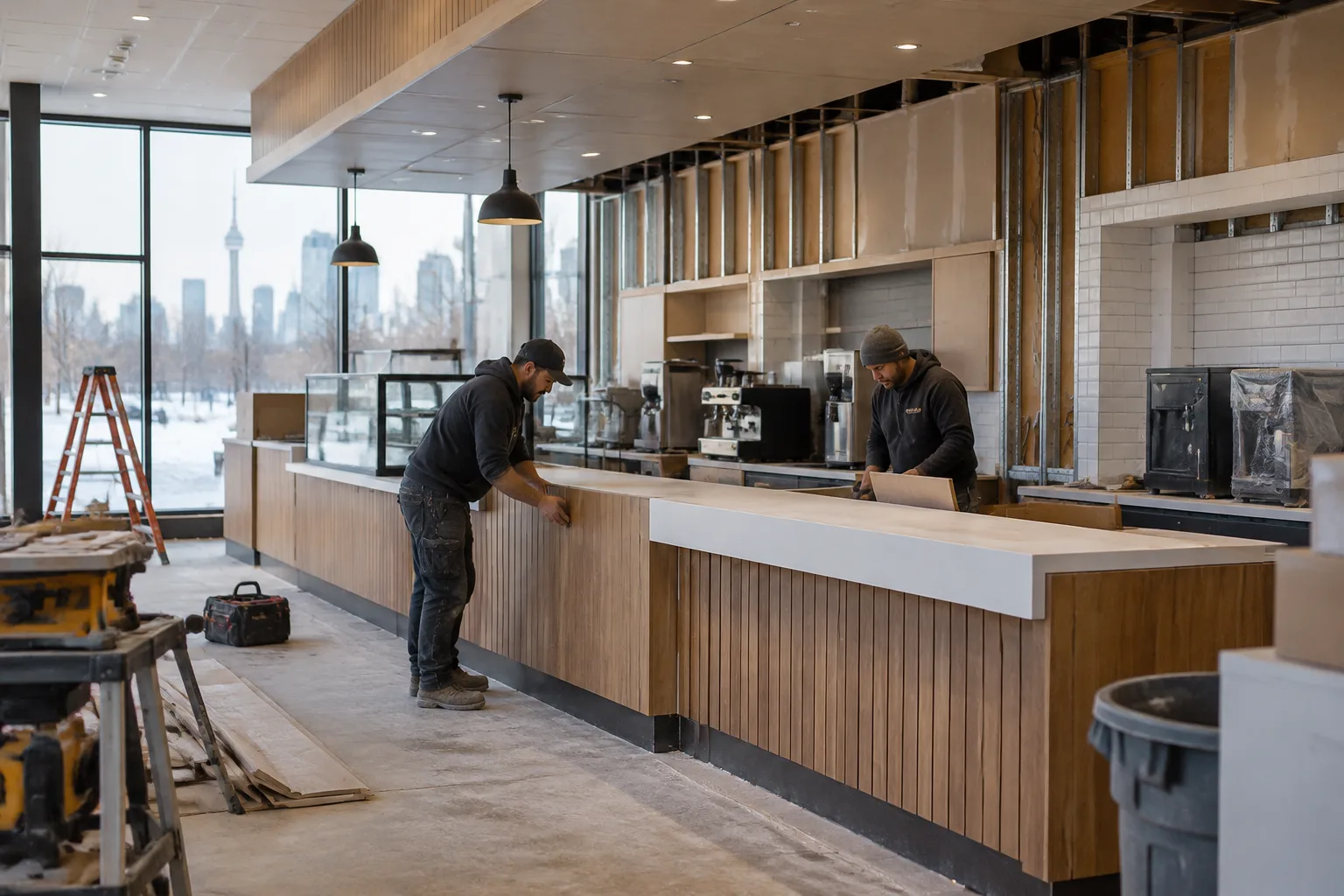
Tim Hortons and its Canadian franchisees are committing C$400 million to a programme targeting 80 new restaurants and the refurbishment of 400 existing outlets by the end of 2026. In Quebec, the schedule includes 14 openings and 51 refurbishments, making 65 projects in total. For the franchising sector, the programme highlights two aspects of network development: adding locations and reinvesting in existing ones.
Quebec accounts for 65 of the 480 announced projects
The Canadian programme comprises 480 projects, combining new restaurant construction and refurbishments. The 65 projects planned in Quebec therefore represent around 13.5% of the total. This proportion is calculated from the number of projects, rather than their share of the funding.
The distinction matters: the C$400 million represents the nationwide commitment from Tim Hortons and its franchisees. It is not a budget for Quebec and does not, on its own, indicate how much will be invested in each of the 14 openings or 51 refurbishments planned in the province.
Quebec accounts for 17.5% of the 80 new locations targeted across Canada. Its share of refurbishments is 12.75%, with 51 of the 400 outlets covered nationwide. These two proportions describe the province’s role in each part of the programme, without indicating the respective value of the work.
Refurbishments dominate the schedule
In Quebec, refurbishments account for just over 78% of planned projects. In other words, the provincial programme includes roughly three and a half refurbishments for every opening. Across Canada, the ratio is five refurbishments for every new location.
Most of the scheduled work therefore focuses on the existing network, although new locations remain part of the plan. This puts into perspective any assessment of development based solely on the number of additional restaurants. Under this programme, property activity and building work are not confined to geographical expansion.
For the franchising sector, this breakdown offers a useful benchmark: tracking openings alone is not enough to understand a brand’s announced investment effort. A refurbishment involves an existing outlet, whereas an opening adds a location. Combining the two measures the number of projects, but not the network’s net growth.
A joint commitment, with no meaningful average cost
The C$400 million funding commitment brings together Tim Hortons and its Canadian franchisees. It should be understood as an overall commitment covering both categories of announced work, rather than a sum attributable exclusively to either the franchisor or the operators.
It would also be misleading simply to divide this funding by the 480 projects to derive the expected cost of a restaurant. Such a calculation would produce an arithmetic average combining openings and refurbishments. It would reveal neither the budget for a specific new location nor the cost of upgrading an existing outlet.
Prospective franchisees should therefore distinguish the scale of the national programme from the financial requirements of their own project. The announced figures provide a measure of the collective investment, but they are not a quotation, a profitability forecast or an indication of the individual contribution required from a franchisee.
A target to track through to the end of 2026
The announced deadline is the end of 2026. The 80 openings and 400 refurbishments are the Canadian programme’s targets; the 14 openings and 51 refurbishments make up the Quebec component planned for that year. These targets should not be presented as a record of work already completed.
Assessing the plan’s progress will require a distinction between restaurants that have actually opened and refurbishments that have been completed. This will make it possible to track both the addition of locations and work on existing outlets, without conflating the two outcomes.
Key takeaway: franchisees and prospective franchisees should ask for the schedule, budget and financial responsibilities specific to the outlet they are considering. The national funding commitment provides the context; local terms and conditions determine the project.