MediaMarkt plans franchise model, Belgian launch not confirmed
MediaMarkt plans to open its first franchise stores in Germany in mid-2027. A Belgian launch has not yet been confirmed.
Published
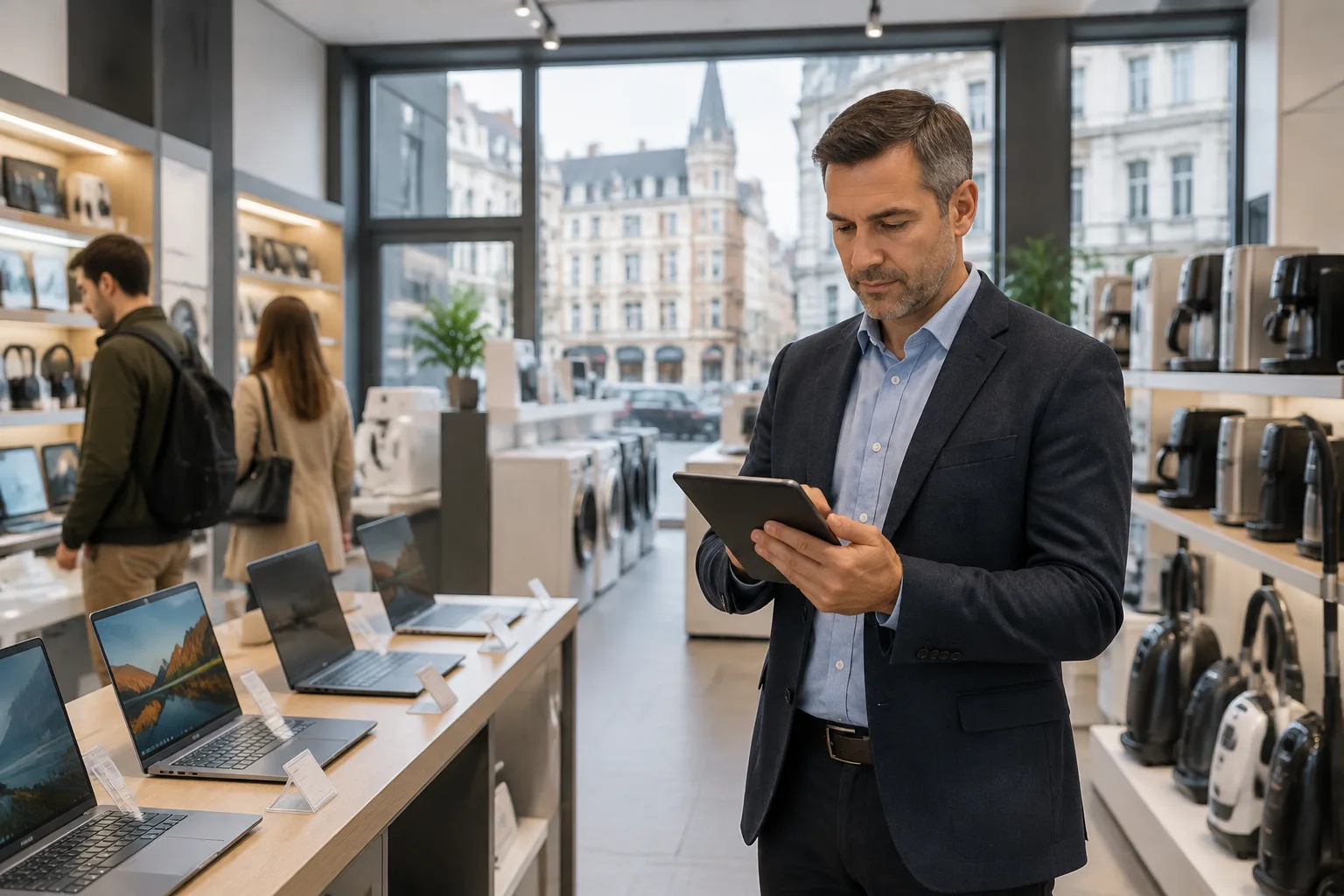
MediaMarkt is preparing a new franchise model under which independent business owners will take responsibility for the day-to-day running of stores. The first outlets are planned for mid-2027 in Germany, followed by an international rollout. For those interested in Belgium’s franchise market, this is a development worth watching, but not yet an announced opportunity to join the network: a Belgian launch has not been confirmed.
Germany first, then international expansion
Start Franchising reported on MediaMarkt’s new partner model on 25 October 2026. The electronics retailer wants to expand its store network through local retailers operating outlets as independent business owners. This gives local entrepreneurship a role within a business model whose commercial operations remain firmly under central control.
The timing matters for prospective franchisees in Belgium. The first stores using the new model are due to open in Germany in mid-2027. An international rollout will only follow after that. This sequence does not mean that entrepreneurs in Belgium will be able to open a MediaMarkt franchise from mid-2027.
International ambitions are also not the same as concrete plans for Belgian outlets. Anyone interested in the model should therefore distinguish between the announced German launch and any potential later availability in Belgium. For now, the news is primarily relevant as the announcement of a new partnership model at a well-known retail chain.
Independent operation, central commercial management
According to Marcus Tengler, Vice President of Real Estate and Store Concepts at MediaMarkt, the chain will provide the store and brands, handle purchasing and determine the product range. The independent partner will take responsibility for the day-to-day running of the outlet.
This division of responsibilities is a fundamental part of the proposal. MediaMarkt will retain ownership of the stock, record sales revenue itself and manage the central commercial systems. Franchisees will therefore not have the freedom to choose their own product range. In this model, independent business ownership primarily means responsibility for running the store within the chain’s commercial framework.
Prospective franchisees should pay particular attention to this distinction. Running a store under a familiar name says little in itself about how much decision-making freedom the operator has. Under this model, several key commercial functions explicitly remain with MediaMarkt. The partner’s role should therefore be assessed against the specific responsibilities involved in day-to-day operations, rather than assumptions based on a traditional independent electronics shop.
What questions should prospective franchisees ask?
For anyone considering a business in Belgium, the first question is straightforward: will the model actually be made available there? Until this is confirmed, the announcement provides no basis for setting a specific opening date or planning a local investment.
If a Belgian opportunity becomes available later, the financial and operational terms will be particularly important. How will the operator be paid when the chain records the sales revenue itself? Which costs will the independent partner bear? Which decisions can they make locally, and which will require the chain’s approval? These are questions to ask when assessing a future offer, not established features of a Belgian contract.
The same applies to the required personal capital, any initial franchise fees and royalties. Prospective franchisees should avoid estimating these amounts based on the brand’s profile or size. Only specific terms can clarify the investment and business risk involved in joining the network.
Preparing for Belgium requires separate attention
If a Belgian franchise agreement becomes available, pre-contractual preparation will also remain important. Book X of Belgium’s Code of Economic Law requires prospective franchisees to receive the pre-contractual disclosure document and draft agreement at least one month before signing. This preparation is separate from the German launch schedule.
In the meantime, prospective franchisees can familiarise themselves with the requirements for setting up an independent business, such as obtaining an enterprise number in Belgium’s Crossroads Bank for Enterprises (KBO) and a VAT number. This is general preparation, not an indication that MediaMarkt is already recruiting partners in Belgium.
Practical takeaway: look out for explicit confirmation of a Belgian launch. Then assess not only the brand name, but also the operator’s remuneration, the allocation of costs and the scope for local decision-making.