Regional franchise brands seek partners to develop networks
Brands from Brazil and Peru are targeting local partners with the operational capacity to develop networks, rather than simply open a single outlet.
Published

Regional brands adding Argentina to their expansion plans are looking for more than investors to open a single outlet. Casa do Construtor, Lavateria and Rustica illustrate different ways of partnering with local operators: from managing several outlets in one area to developing a brand through a master franchise. The common thread is combining capital with the ability to deliver.
Local partners take a bigger role in expansion
According to a Yahoo Noticias article published on 27 October 2026, Brazilian brands Casa do Construtor and Lavateria have already begun entering Argentina, while Peru’s Rustica is seeking an operator to enter the market. Their offerings span tool hire, self-service launderettes and dining with entertainment.
Despite these differences, all three strategies rely on partners who can contribute market knowledge, financial resources and operational experience. They are seeking both developers capable of opening multiple outlets and strategic partners who can provide contacts, technology, logistics or access to suppliers.
For anyone considering Argentina’s franchise market, these cases highlight an important distinction: buying a single outlet is not the same as taking responsibility for developing a network. The investment required, responsibilities and project timescale all differ. Nor does every plan involve opening numerous outlets immediately; establishing a local operating structure is presented as a prerequisite for gradual growth.
Multiple outlets within one territory
Casa do Construtor proposes a territory-based expansion model built around franchisees able to manage multiple outlets. The Brazilian company, which hires out machinery and tools for construction, renovation, maintenance and gardening, envisages groups of four to six outlets per partner within a defined area.
Its stated aim is to achieve economies of scale and establish a strong operation within each territory. In the longer term, the company plans to reach 100 outlets in Argentina by 2035, with a network of 15 to 20 franchisees. These are expansion targets, not outlets already open or necessarily deals already signed.
The reported investment ranges from US$50,000 to US$200,000, depending on the format. For a standard traditional outlet, the estimate is around US$130,000–US$140,000, with approximately 70% allocated to machinery and tools. This breakdown highlights the importance of equipment in the model and helps distinguish it from concepts where investment is focused mainly on fitting out premises.
Automation and brand development: two different scales
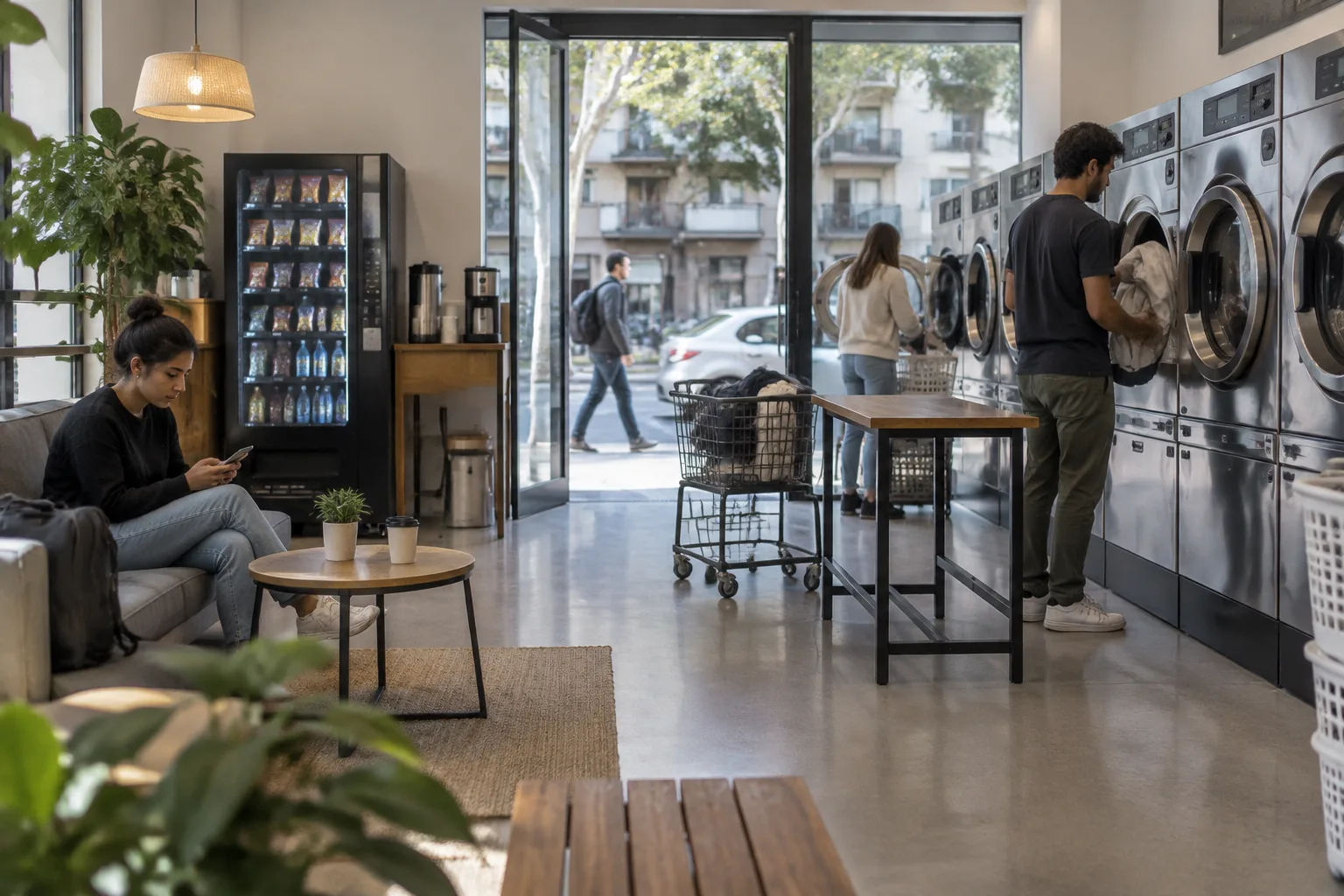
Lavateria offers a different operating model. The chain, which has more than 600 outlets in Brazil, began its Argentine expansion in 2026 and already has a presence in Buenos Aires. Its format is fully automated, with no on-site staff.
The stated investment is around US$54,000 per franchise. The company estimates a payback period of roughly 15 months and aims to exceed 100 franchises in Argentina in 2027, expanding into cities beyond Buenos Aires. Both the payback period and planned expansion are company estimates, not guaranteed outcomes.
Rustica, by contrast, is seeking a master franchisee to lead its entry into the country. The Peruvian chain, which has been operating for 33 years, envisages up to 30 restaurants over ten years. Buenos Aires is the initial target, with possible subsequent expansion into Mendoza, Rosario and Córdoba.
In this case, each restaurant would require an investment of US$300,000–US$500,000. On top of this, a central production facility would cost US$100,000–US$150,000, alongside a US$150,000 fee for a 20-year master franchise agreement. The scope to expand by granting further franchises will depend on the contractual terms.
What to compare before committing to network development
These figures do not represent equivalent commitments. Investing in one outlet, developing a group of outlets within a territory and taking on a master franchise all have different scopes. In particular, the budget for a single restaurant does not, on its own, represent the total investment needed to develop Rustica’s operation.
The practical takeaway for anyone assessing these opportunities is to decide first what role they want to take on: operating one outlet, managing several or developing a brand. They should then compare their available capital and experience with the specific contractual obligations, without mistaking growth projections for guaranteed results.