Megaroller targets franchise expansion from Córdoba across Argentina
The Córdoba-based blinds and awnings manufacturer is prioritising locations beyond the provincial capital as it seeks to expand its network through a model distinct from distribution.
Published
Megaroller, the blinds and awnings manufacturer founded by Guillermo Serra in Córdoba, Argentina, is looking to expand its franchise network to support a production-led strategy. Locations outside the provincial capital are its immediate priority, while a nationwide presence remains a longer-term growth ambition.
From a garage to a factory of almost 3,000 square metres
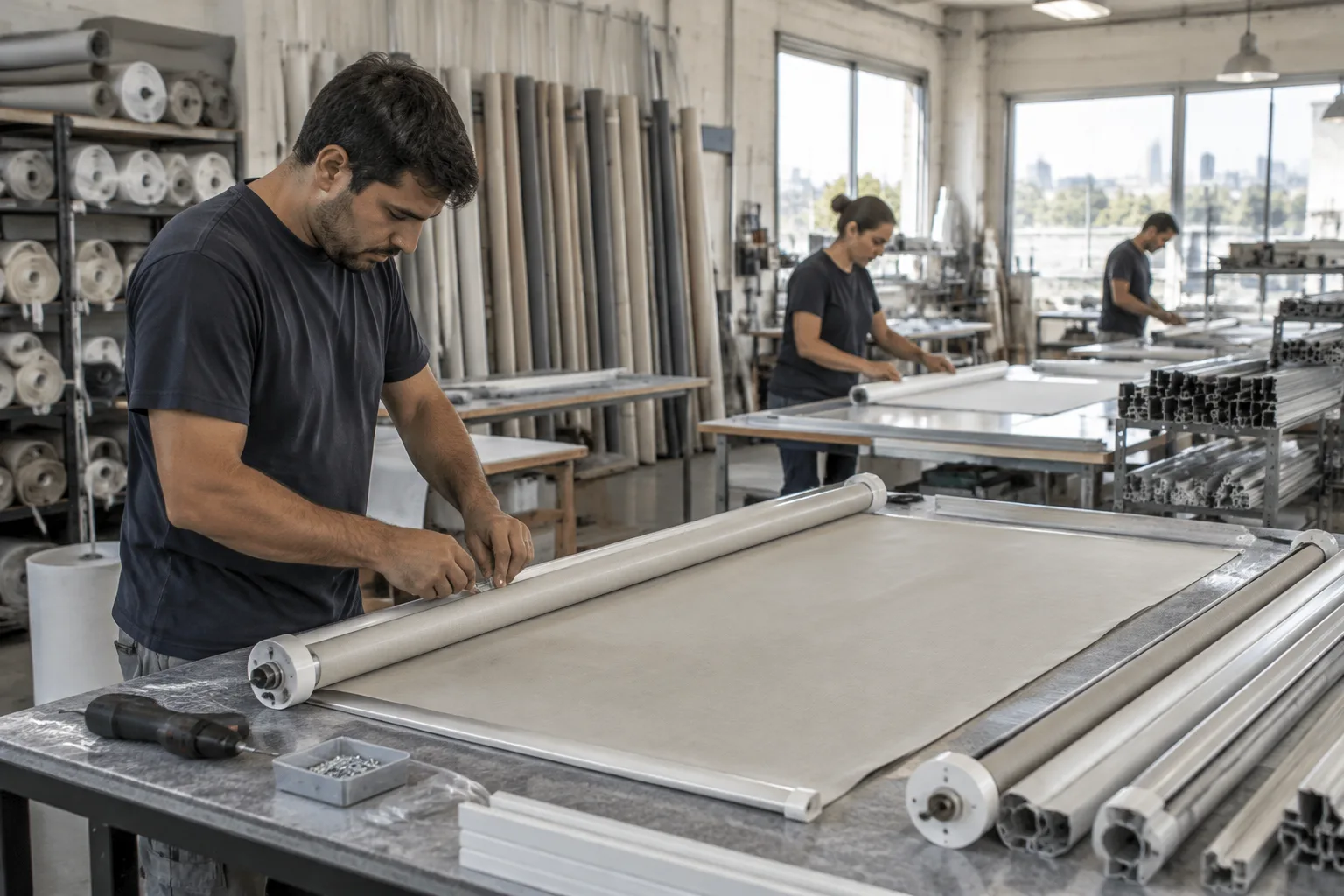
The company began in the garage of Serra’s father’s home, where the entrepreneur started making roller blinds. From those beginnings, it has grown into a business with a factory covering almost 3,000 square metres, Serra told Cadena 3 in an interview published on 26 October.
That journey provides context for the next stage of commercial development: Serra wants to focus on production and expand primarily through franchising. The proposition therefore combines a manufacturing base in Córdoba with the aim of extending the brand’s retail presence through that model.
For Argentina’s franchise sector, the news signals the growth ambitions of a home furnishings brand. In this case, expansion is being driven by a blinds and awnings manufacturer that already operates both company-owned outlets and franchises.
Locations beyond Córdoba’s provincial capital come first
Megaroller’s company-owned outlets and franchises currently operate within Córdoba province. Expanding beyond the provincial capital is the first priority, ahead of the nationwide coverage Serra hopes to achieve.
That geographical sequence matters when interpreting the announcement. The company is setting out a direction for growth: strengthening its reach within Córdoba province and, in the longer term, establishing a national presence. That ambition should not be mistaken for an existing franchise network spanning several provinces.
The strategy also gives franchising a central role in commercial expansion. The founder’s stated aim is to concentrate on production while the network extends the reach of the product range. The factory and sales outlets therefore play complementary roles in the plan.
For anyone considering an approach to the brand, its geographical priorities provide a useful starting point for discussions. Whether a particular location is available and fits the planned expansion should be confirmed directly before taking a proposal further.
Franchises and distributors: two different models
Megaroller has also added distributors outside Córdoba. Serra explained that around two months before the interview, two established furniture retailers in Santa Fe and La Rioja joined its distribution network. These businesses added the company’s products, particularly blinds, to their ranges.
Serra explicitly distinguished these accounts from franchises. While distributors add products to existing businesses, franchises carry the brand’s full range. This distinction avoids confusing sales in other provinces with the opening of new franchised outlets.
The availability of products in Santa Fe and La Rioja should therefore be understood as expansion through distribution. It represents commercial progress beyond the company’s home province, but under a different model from the one it intends to prioritise when expanding its network.
For prospective partners, the distinction also changes what needs to be assessed: adding selected products to a furniture shop is not the same proposition as taking on a franchise covering Megaroller’s entire range.
What to check before taking the next step
Serra’s account identifies three elements of the project: an in-house manufacturing base, a sales network currently concentrated in Córdoba province, and an intention to grow primarily through franchising. It also makes clear that distributors operate alongside franchises, without treating the two formats as equivalent.
As a practical next step, anyone considering the opportunity should request the commercial and contractual terms, confirm which territory is on offer and clarify the responsibilities involved in carrying the full range. The key is to assess the franchise as a distinct proposition, rather than simply an extension of the distribution model.