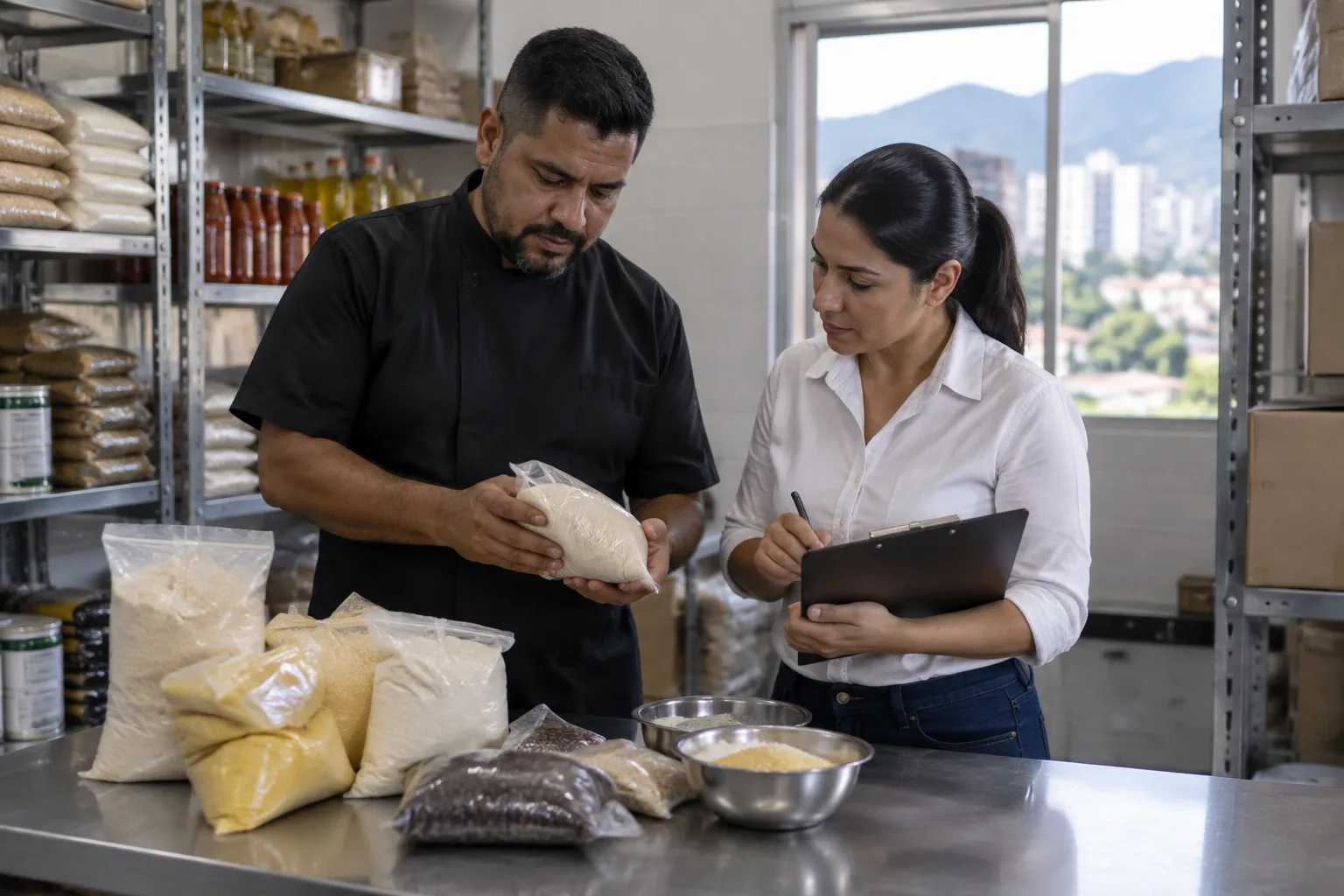
Initial Training for Franchising in Venezuela
Turn your business know-how into training with measurable outcomes before opening new units in your franchise network.
Published

A business can perform well yet still depend too heavily on its founder. Before franchising it in Venezuela, you need to demonstrate that someone else can learn to run it to consistent standards. Initial training turns that experience into verifiable skills. Its purpose is not simply to provide information, but to prepare the franchisee and their team to act correctly without relying on the original owner to make every decision.
1. Define what each person must be able to do
Start with roles, not presentations. The franchisee, the premises manager and customer-facing staff have different responsibilities, so they do not need exactly the same learning pathway.
For each role, prepare a record covering four elements:
- Task: what the person must do.
- Standard: what a correct outcome looks like.
- Practice: the setting in which they will learn to perform the task.
- Evidence: how you will check that they can repeat it without help.
For example, “understand how to cash up” is too vague. An assessable outcome would be to reconcile payments across payment methods, identify discrepancies, document them and report the issue to the appropriate person.
Also distinguish between critical tasks and tasks where performance can be improved over time. An error that compromises customer safety, hygiene or financial controls requires a different response from a hesitant sales presentation. This classification helps focus learning on areas where mistakes would have the greatest consequences.
2. Organise training that builds independence
Structure the programme as a sequence: a brief explanation, a demonstration, supervised practice and independent performance. Watching the founder for several days does not guarantee that a participant understands the reasoning behind their decisions.
Combine three learning settings:
- Advance preparation: business concepts, responsibilities and reference materials.
- Practice at an operating unit: real tasks under supervision, without compromising service or safety.
- A trial run at the new premises: checks on equipment, work allocation and coordination among the opening team.
Use routine situations and foreseeable exceptions: a return, an inventory discrepancy, a connectivity failure or the absence of a key team member. For each case, teach operators which decisions they can make themselves and when they must seek advice.
Do not set the duration solely for commercial convenience. Estimate it according to the skills required, participants’ previous experience and the actual opportunities to practise. If an activity only takes place at closing time, the programme must allow participants to practise it, rather than merely explaining it in the morning.
Appoint a lead trainer and a deputy. A franchise network should not depend on the founder always being available to train new operators.
3. Assess competence before authorising opening
Attendance proves presence, not competence. Define the assessments each participant must pass from the outset and explain them before training begins.
You can combine questions about common decisions, direct observation and simulations. Use a checklist of specific actions: checking, recording, carrying out tasks and communicating. Avoid vague judgements such as “has a good attitude” when deciding whether someone has passed a technical task.
Set three possible outcomes: passed, further practice required or awaiting reassessment. Critical failures must be corrected before the person undertakes the task without supervision.
Keep a simple record of participants, content, dates, assessors, results and follow-up support. An internal training certificate records what has been completed within your programme; it is not an officially recognised qualification and does not replace any legally required licences or authorisations.
Also separate passing the training from receiving authorisation to open. A trained team cannot compensate for missing permits, unsafe premises or equipment that does not work.
4. Agree responsibilities and review Venezuela’s legal framework
Venezuela does not have a general law specifically governing franchising. This does not mean that franchise relationships fall outside the law: the Civil Code (Código Civil) governs obligations and contracts, while the Commercial Code (Código de Comercio) provides the applicable commercial framework. Training terms should be included in the contract or in an appendix consistent with it.
Record in writing who must attend, where training will take place, what the initial fee covers and who pays for travel, accommodation, materials and repeat training. Also define what happens if a participant does not achieve the required competence or if the manager changes before opening.
The Organic Law on Labour and Workers (Ley Orgánica del Trabajo, los Trabajadores y las Trabajadoras) is relevant to the employment relationships involved. Identify each participant’s employer and review working hours, pay and health and safety responsibilities; calling an activity “training” does not remove potential employment obligations.
Training materials may be protected by the Copyright Law (Ley sobre el Derecho de Autor). Clarify their permitted uses and check the rights to any third-party content. Seek local legal advice before finalising these agreements.
Practical conclusion: before selling your first franchise, prepare a skills matrix, a practice schedule and a documented assessment. If someone can pass simply by attending, you are not yet checking whether they can run the business.
Sources
- Elementos esenciales para la constitución y protección de ...
- Cómo crear y gestionar una franquicia rentable en ...
- Franquicias en Venezuela: Cómo Crear o Comprar una ...
- Ricardo Antequera: La columna vertebral de las franquicias está directamente relacionada con la propiedad intelectual - Universidad Monteávila
- Franquicias en Venezuela: Guía Legal y Claves | PDF
- Marco jurídico de las franquicias en Venezuela - Blog Banesco
- Los 10 mejores Abogados de Franquicias en Venezuela (2025)
- ithy.com › article › comercial-expansion-venezuela-wgyikaaxExpansión Comercial en Venezuela: Agencias, Sucursales y...