How to organise franchise support in Venezuela
Define responsibilities, training and issue-handling procedures before franchising your business in Venezuela, without promising more than you can deliver.
Published
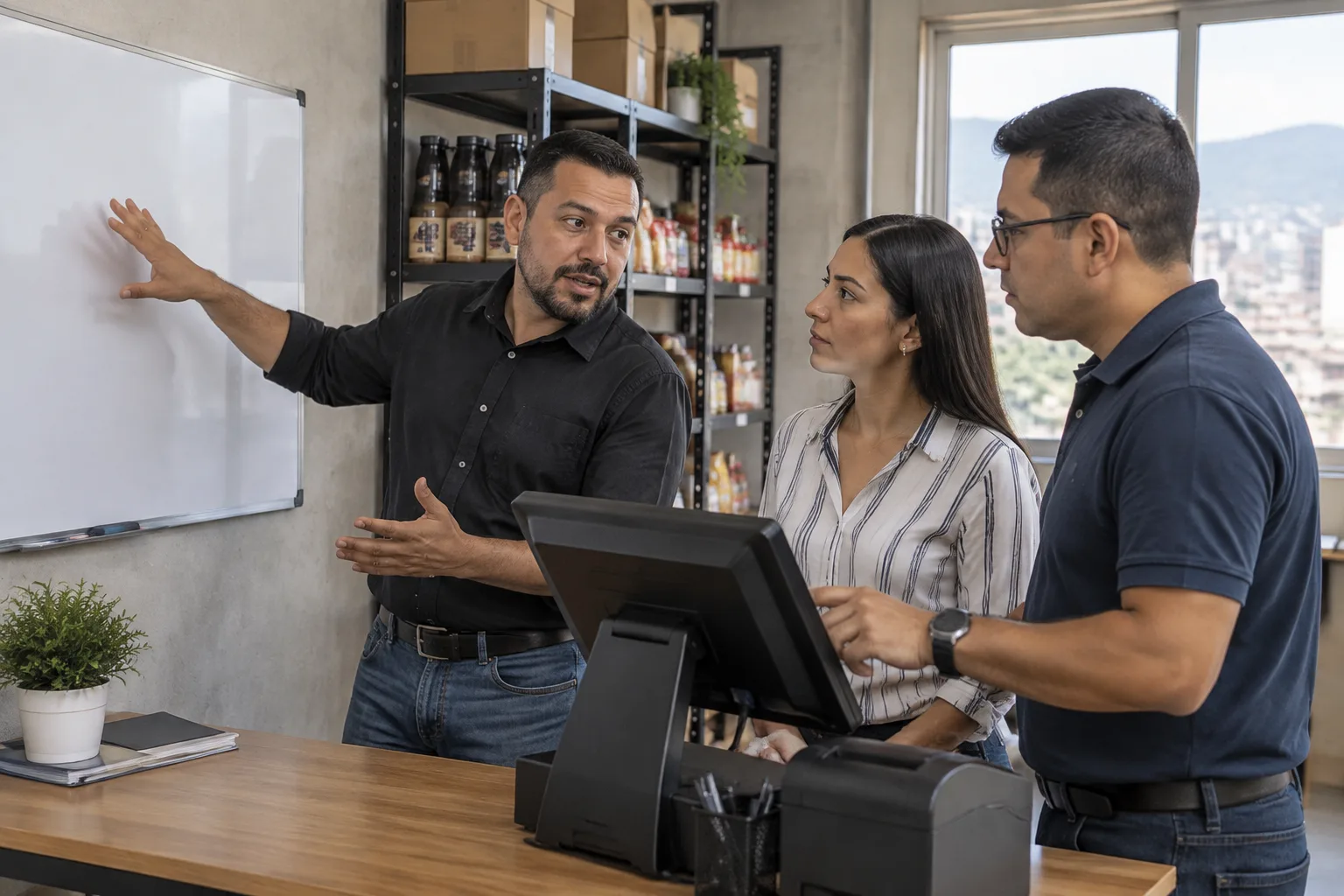
A business may run well with its founder at the helm yet still be unprepared to support other operators. Before franchising in Venezuela, you need to turn the help you provide day to day into an organised, measurable and sustainable service. This guide explains how to prepare franchisee support: an essential capability for growing a franchise network without relying permanently on the owner.
1. Define the assistance you can provide
Start by recording the enquiries you currently handle yourself: equipment failures, stock queries, customer complaints or problems with the sales system. This list reveals the work your support team will take on once there are outlets run by other operators.
Group these needs into three stages:
- Before opening: guidance on fitting out the premises, initial purchases, setting up tools and preparing the team.
- During opening: operational support, checks on critical tasks and resolution of initial issues.
- After opening: handling enquiries, refresher training, monitoring performance indicators and corrective action.
For each service, state what you will deliver, who will receive it and what is excluded. For example, advising on staff requirements does not mean recruiting employees on the franchisee’s behalf. Recommending a supplier does not mean guaranteeing its deliveries either.
Setting these boundaries prevents phrases such as ‘comprehensive support’ from creating expectations you cannot meet. A franchise network needs clear commitments, not unlimited promises.
2. Design training that tests practical skills
Initial training should enable franchisees and their teams to carry out essential tasks, rather than simply listen to explanations. Organise learning by role: outlet manager, customer service, production or service delivery, as appropriate.
For each role, define an observable skill, a supervised practical exercise and evidence of competence. Rather than recording that someone ‘received stock management training’, record whether they can receive goods, identify discrepancies and document a return correctly.
Prepare a simple form with these fields:
- Role and participant’s name.
- Task they must be able to complete unaided.
- Person responsible for assessment.
- Outcome and outstanding areas to address.
- Further training required and reassessment.
Also establish how replacements will be trained when staff change. Make clear whether this training is included or charged separately, and who pays for travel or accommodation where needed.
If someone cannot demonstrate a critical skill, there should be a planned response: repeat the practical exercise, increase supervision or postpone an activity. Attending a course does not, on its own, demonstrate readiness.
3. Assess capacity and organise issue handling
Before committing to further openings, estimate the hours each outlet will need during preparation and ongoing operations. Include training sessions, travel, information reviews and follow-up: support takes time even when no visits are involved.
Compare this workload with the team’s actual availability, allowing for their responsibilities in the original business. If every enquiry ends up with the founder, you still have a bottleneck to resolve.
Assign a lead and a deputy for each area. Then establish a contact channel that keeps a record of requests. Messages scattered across personal phones make it difficult to know what was requested, who responded and what remains outstanding.
Distinguish between safety-critical incidents, problems that prevent operations and routine enquiries. For each category, define support hours, a target time for the first response and an escalation route. Responding is not the same as resolving: a repair may depend on a third party, so avoid guaranteeing a timescale you cannot control.
In Venezuela, plan alternatives for connectivity or power outages: backup contacts, essential materials available offline and criteria for suspending unsafe activities.
4. Turn support into verifiable commitments
Venezuela does not have a comprehensive law specifically governing franchises. That does not mean franchise contracts sit outside the law: relevant legislation includes the Civil Code, the Commercial Code and, depending on the issue, the Industrial Property Law, the Copyright Law, and employment and competition legislation.
There are also specific earlier instruments, such as Procompetencia’s 2000 Guidelines for the Evaluation of Franchise Agreements, which focus on competition assessment. These should not be confused with a comprehensive franchise law; seek legal advice on their application under the current legal framework.
For support, set out the included services, delivery methods, responsibilities, additional costs and procedure for changing the assistance provided in the contract or an annex. Avoid presenting internal estimates as contractual guarantees of results.
Regularly review recurring enquiries, response times, reopened issues and further training needs. Share useful findings with the franchise network without disclosing individual operators’ confidential information.
Practical conclusion: before offering another outlet, check that every promised service has a designated person responsible, available capacity, a written scope and evidence of delivery. If any of these is missing, organise your support before taking on further commitments.
Sources
- Elementos esenciales para la constitución y protección de ...
- Cómo crear y gestionar una franquicia rentable en ...
- Franquicias en Venezuela: Cómo Crear o Comprar una ...
- Franquicias en Venezuela: Guía Legal y Claves | PDF
- Marco jurídico de las franquicias en Venezuela - Blog Banesco
- Los 10 mejores Abogados de Franquicias en Venezuela (2025)
- ithy.com › article › comercial-expansion-venezuela-wgyikaaxExpansión Comercial en Venezuela: Agencias, Sucursales y...
- Marco legal de las franquicias en Venezuela