Buying a Franchise in Venezuela: Interviewing Franchisees
How to speak with current and former franchisees to assess their relationship with the brand and decide whether its network is right for you.
Published
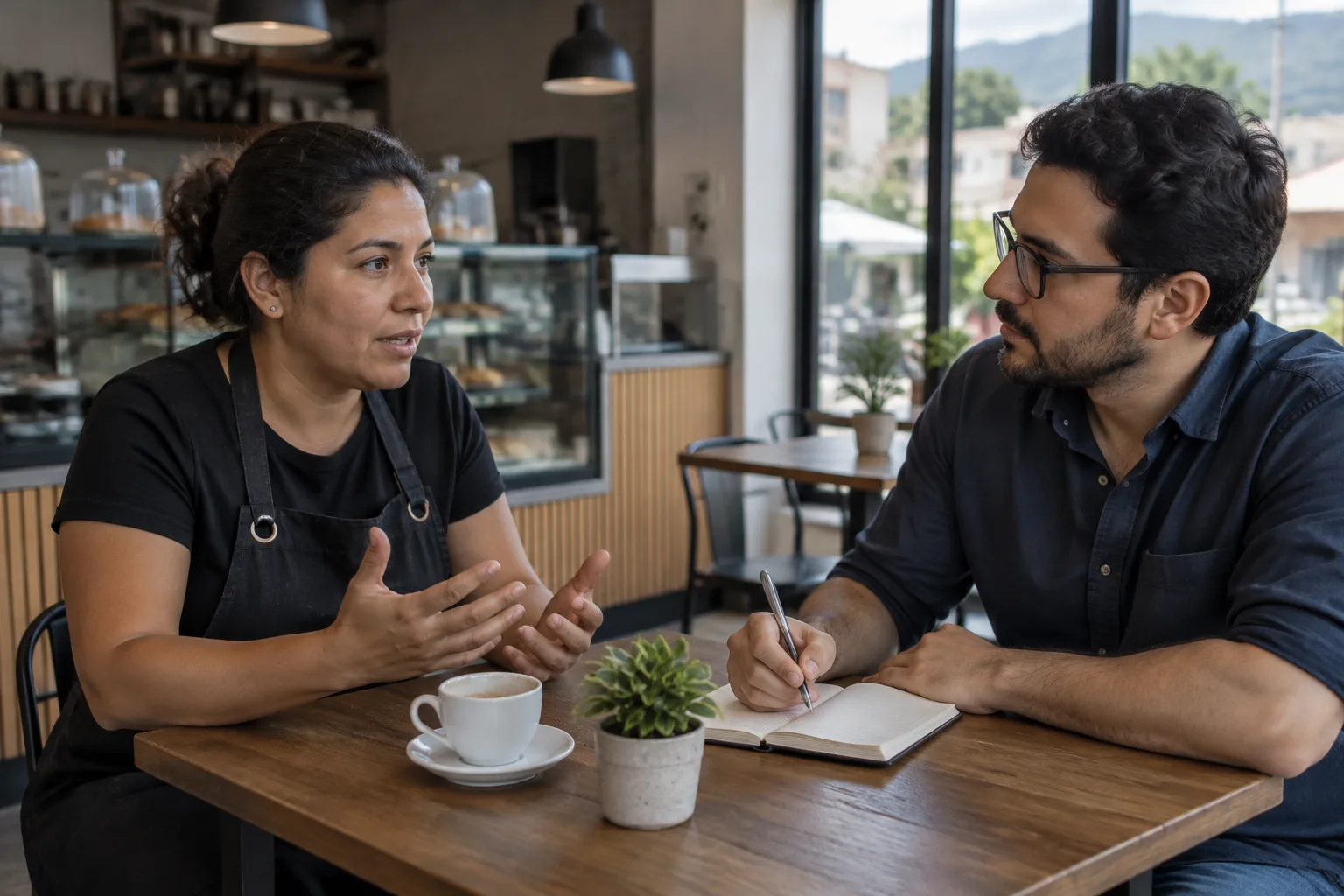
Before buying a franchise in Venezuela, speak with people who already operate within the brand. A sales presentation explains the model; franchisees can show you what the day-to-day relationship is really like. The aim is not to collect praise or complaints, but to check whether the approach to management, communication and resolving problems suits you. This guide sets out a structured interview to help you assess that fit.
1. Choose people with different experiences
Ask the franchisor to put you in touch with several operators, with their permission. Do not limit yourself to the most successful outlet or someone who regularly takes part in promotional activities. A varied sample helps you distinguish features of the franchise network from circumstances specific to one outlet.
Try to include the following:
- A recent joiner: they will have a clear memory of the gap between their initial expectations and the reality.
- An established franchisee: they can explain how the relationship with the brand has evolved.
- An operator in circumstances comparable to yours: in terms of location, format, the owner's level of involvement or team size.
- A former franchisee, if you can reach one: they can provide context on why they left, without assuming that every departure involves a dispute.
Ask whether the person you are interviewing has any additional relationship with the franchisor, such as a shareholding or a franchisee recruitment role. This does not invalidate their account, but it helps you put it into perspective.
If you can only speak with one contact selected by the brand, note that limitation. It does not, in itself, indicate a problem, but it makes your conclusions less robust.
2. Ask about situations, not overall satisfaction
Arrange a short conversation and explain that you are considering joining the network. Respect confidentiality: do not ask for manuals, employees' personal information or documents the person is not authorised to share. Ask permission before recording; taking notes is usually enough.
Use the same core questions in every interview so that you can compare answers:
- What aspects of your daily work were different from what you expected? Look for specific tasks and how much hands-on involvement the business requires.
- What decisions can you make without consulting the franchisor? Ask for a recent example to understand how much autonomy there is in practice.
- What happened the last time you raised a problem? Explore who responded, how they communicated and what the outcome was.
- How are franchisees' suggestions received? Distinguish between having a channel for feedback and having a meaningful say.
- What type of owner is best suited to this brand? Compare the answer with your experience and the time you can commit.
- What do you wish you had understood better before joining? This question often reveals mismatched expectations.
When you hear statements such as ‘communication is excellent’ or ‘they never listen’, ask for an incident that illustrates the point. An account of a specific event is more useful than a sweeping judgement.
3. Compare patterns without treating opinions as proof
After each conversation, separate reported facts, opinions and outstanding questions in your notes. Add context: how long the operator has been in the network, the outlet's format and the owner's day-to-day involvement.
One person spending long hours at their outlet does not mean everyone has to do so. Their working arrangements, an unfilled vacancy or a temporary difficulty may be contributing factors. However, if several comparable operators say that daily attendance is essential, you should question any sales pitch presenting the business as a passive investment.
Look for recurring themes in how the working relationship functions: clear instructions, scope to express disagreement, respectful treatment and consistency between what is promised and what is required. Also identify positive experiences and the conditions that made them possible.
Raise discrepancies with the franchisor without unnecessarily identifying the people you have spoken to. For example: ‘I have heard different accounts of the owner's involvement. What time commitment does this format require, and where is that set out?’ Assess both the explanation and the franchisor's willingness to clarify it.
4. Use your findings to inform your decision and the contract
Venezuela has no comprehensive franchise-specific law or general pre-contractual disclosure regime equivalent to a mandatory franchise offering circular. The relationship is governed primarily by the contract, subject to the Civil Code, the Commercial Code and other applicable rules, including those on industrial property and competition. It is not a relationship outside the law.
Interviews are a voluntary due diligence tool: they do not replace legal review or turn an established practice into a contractual right. If your decision depends on a condition mentioned by other operators, ask the franchisor to confirm it and have a lawyer review how it should be incorporated into the agreement where appropriate.
Practical conclusion: compare a range of accounts, ask for examples and clarify contradictions before committing. The best network for you is not the one that attracts the most praise, but the one whose requirements and ways of working you understand and can accommodate.
Sources
- Guías y recursos sobre franquicias en Venezuela | QFA
- www.cavedro.com › 2023 › 09lineamientos_sobre_contratos_de_franquicias
- Cómo crear y gestionar una franquicia rentable en ...
- Elementos esenciales para la constitución y protección de ...
- Franquicias en Venezuela: Guía Legal y Claves | PDF
- [PDF] Guía de Inversion en Venezuela 2026
- Miscelaneas - EL CONTRATO VERBAL DE FRANQUICIA
- Cómo Crear una Franquicia en Venezuela | PDF