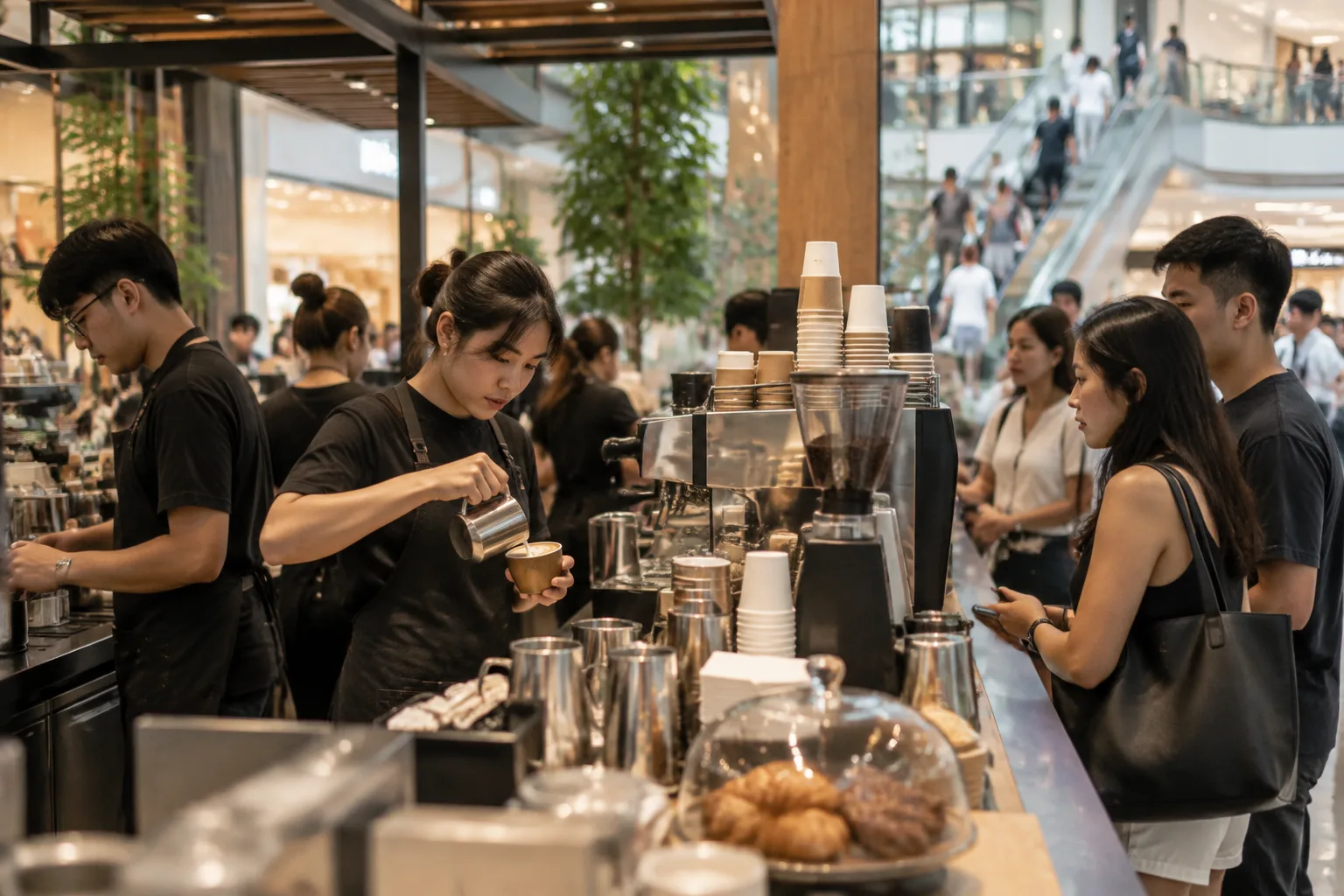
Luckin’s Singapore Network Nears 70% of Starbucks’ Footprint
Luckin’s Singapore network is roughly 70% of Starbucks’ estimated footprint, offering a benchmark—not a verdict—for franchise planning.
Published
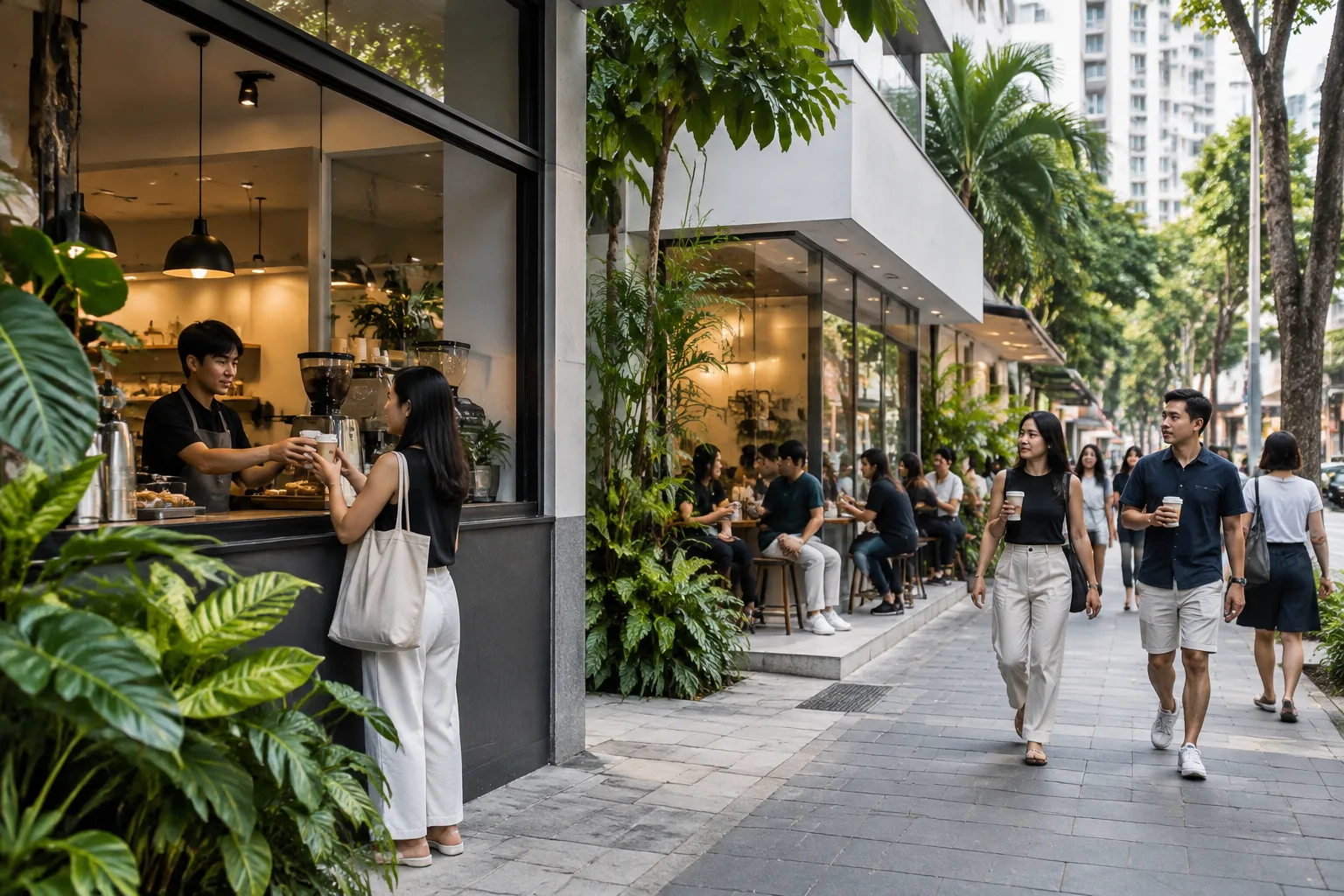
Luckin Coffee’s Singapore store network has reached roughly 70% of Starbucks’ estimated local footprint, according to a FranchiseTv report published on 29 September 2026. For Singapore’s franchise community, the comparison offers a useful measure of relative retail scale, but it should not be confused with evidence of market share, profitability or franchise availability.
A narrower gap in physical presence
FranchiseTv reported that Luckin had opened its 100th Singapore store, three years after entering the market. It compared that network with an estimated 140 Starbucks stores in the city-state, placing Luckin at roughly 70% of its rival’s footprint by outlet count.
The comparison is significant because it puts Luckin’s expansion into a local competitive context. Rather than viewing its store total in isolation, prospective operators can see how its physical presence compares with that of another coffee chain in Singapore.
There is an important qualification: the Starbucks figure is an estimate. The resulting comparison is therefore an approximate benchmark, not a precise measurement of the two brands’ relative positions. It also measures stores, rather than sales, customers or the geographical reach of individual locations.
For readers assessing opportunities in the coffee market, that distinction is central. A network comparison can help frame further research; it cannot, on its own, establish which business performs better.
Store count is not market share
The reported figures support a clear conclusion: Luckin has built a substantial Singapore network within three years of market entry. They do not establish that its revenue, transaction volume or customer base amounts to roughly 70% of Starbucks’ corresponding measures.
The supplied report provides no comparable Singapore sales figures, outlet-level financial results or profitability data for either chain. Nor does it provide a breakdown of store sizes, locations or formats. Without those details, the relative commercial weight of the two networks remains outside the evidence available.
This matters when interpreting expansion news. A headline comparison of 100 stores against an estimated 140 can appear to offer a straightforward competitive ranking. In practice, the evidence here supports a ranking by reported network size only.
For franchise investment decisions, the next questions should therefore concern the economics beneath the footprint: what financial information is available, how representative it is and whether it relates to the specific opportunity being considered. None of those questions is answered by the store totals in this report.
What the comparison means for franchise planning
For Singapore’s franchise community, the news is best treated as a prompt to examine the competitive setting of a proposed coffee business, rather than as an endorsement of any particular brand or format.
A prospective franchisee could use the reported network sizes as starting points for local research. Useful next steps would include checking nearby competing outlets, reviewing the proposed catchment area and asking how a business plan accounts for established coffee brands. Those are due-diligence recommendations, not findings from the FranchiseTv report.
The same discipline should apply to assumptions about expansion speed. Luckin’s reported growth over three years does not demonstrate that another operator could reproduce its pace or results. Any investment proposal would need its own evidence, rather than relying on a comparison with a separate chain.
Importantly, the report does not state that Luckin’s Singapore stores are franchised, or that franchise opportunities are available. Its relevance to the franchise community lies in the market context it provides, not in an announced route to ownership.
Read the benchmark within its limits
The clearest development is the relative scale of Luckin’s Singapore presence: 100 stores against an estimated Starbucks network of 140, as reported in September 2026. That offers a concrete reference point for tracking coffee retail competition, while leaving commercial performance and ownership arrangements unresolved.
Practical takeaway: Use the footprint comparison to guide competitor research. Before committing to a coffee franchise, verify the opportunity’s availability and ownership structure, and request location-specific financial evidence rather than treating network size as proof of returns.