Partnership to Expand Asian Fruit Supply in Saudi Arabia
Onedayone Group and Francaise Food are working together to expand the availability of Asian fruit and Chinese mushrooms in Saudi Arabia, a development worth watching for franchise businesses reviewing their supply options.
Published
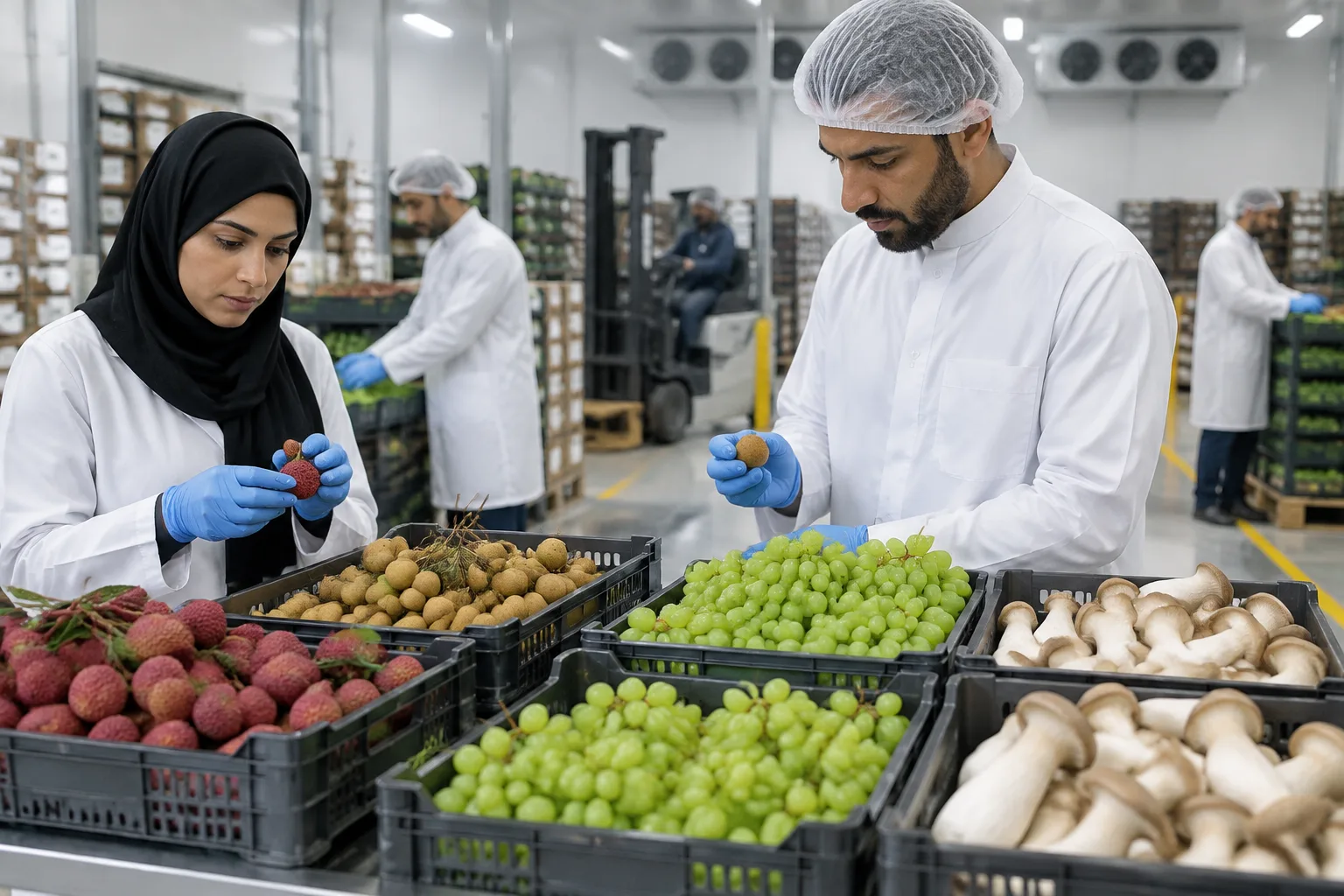
Onedayone Group and Francaise Food have announced a partnership to expand the range of speciality Asian fruit and premium Chinese mushrooms available through Saudi retail outlets, according to a report published by FreshPlaza on 30 September 2026. The news is relevant to food-related franchise businesses monitoring supply options. However, the announcement concerns supply and distribution, not franchise agreements, which the report does not discuss.
Linking international sourcing with local distribution
Onedayone Group specialises in international fruit and vegetable supply chains, while Francaise Food imports and distributes these products within Saudi Arabia, drawing on more than 40 years of experience in the local market. The partnership aims to expand the availability of Asian fruit sourced from China and other countries in the region, alongside premium Chinese mushrooms.
Francaise Food handles imports, customs clearance and cold-chain distribution from its facilities in Jeddah and Riyadh. According to the report, the company supplies major food retailers and hospitality groups in the Kingdom, illustrating the scope of its existing operations before the new partnership was announced.
The significance of the partnership lies in connecting international sourcing with an established local import and distribution network. However, the published report does not specify expected supply volumes, the value of the partnership or the number of outlets that will stock the products. The announcement therefore provides no basis for quantifying the expansion or estimating its share of Saudi sales.
A range beyond traditional fruit staples
The report highlights varieties including lychees, longan, Shine Muscat grapes, passion fruit and jujubes. It presents these as a way for retailers to diversify their ranges alongside familiar staples such as apples, oranges and bananas. The partnership also aims to strengthen the presence of premium Chinese mushrooms in the Saudi market.
The source describes speciality Asian fruit as an important growth area for retailers, offering opportunities to broaden their ranges and respond to changing consumer tastes. However, it provides no figures on sales of these varieties in the Kingdom or growth in demand. This remains a trend identified by the report rather than a numerical measure of local consumer interest.
For food franchise brands, the announcement is a development worth monitoring when considering product and ingredient options. It does not mean that any franchise brand has already adopted these varieties, or that the partnership includes direct supply to franchise businesses. The report names no franchise customers and announces no product ranges tailored to them.
Continuity and freshness at the heart of the plan
By coordinating seasonal production across multiple sources, the partnership seeks to improve year-round product availability. Its stated aims also include shortening the time between harvest and arrival on retail shelves, and delivering fresher produce to consumers. These are supply management objectives, not operational results demonstrated in the published report.
This distinction matters because the announcement is not simply about adding new varieties to fruit ranges; it also addresses how their arrival will be organised. Using multiple production sources and coordinating their seasons is the partnership's proposed approach to improving continuity of supply, while Francaise Food handles imports, customs clearance and refrigerated distribution within the Kingdom.
The report quotes Fares Al-Zahrawi, president and founder of Francaise Food, as saying that the company has been importing fruit and vegetables into Saudi Arabia since 1985, and that the market has changed more in recent years than it did during the previous two decades. This reflects his assessment of the market's development, but the report provides no statistical breakdown of the nature or scale of those changes.
What does this mean for franchise businesses?
This is supply-chain news, not an announcement of a new franchise brand entering the market or opening outlets. Its relevance to franchise businesses lies in the importance of monitoring suppliers and the products available to food operators, while recognising the limits of the information: the report includes no prices, contract terms or detailed launch dates for particular outlets.
In practice, a franchisee or procurement team can use the announcement as a starting point for enquiries, rather than as sufficient grounds for a purchasing decision. Useful questions include: which varieties are actually available? What are their supply seasons and specifications? What areas are covered by delivery, and what storage conditions are required? These are suggested due-diligence questions, not details announced by the two companies.
Practical takeaway: Monitor the partnership as a development in Saudi Arabia's food supply options, then confirm availability, specifications and supply terms directly before adding any variety to a retail range or product line.