Four Saudi brands offer breakfast and tea franchises on differing terms
Franchise offers from four Saudi brands reveal differences in investment, fees and contract lengths, helping investors compare traditional breakfast and tea concepts before choosing an opportunity.
Published
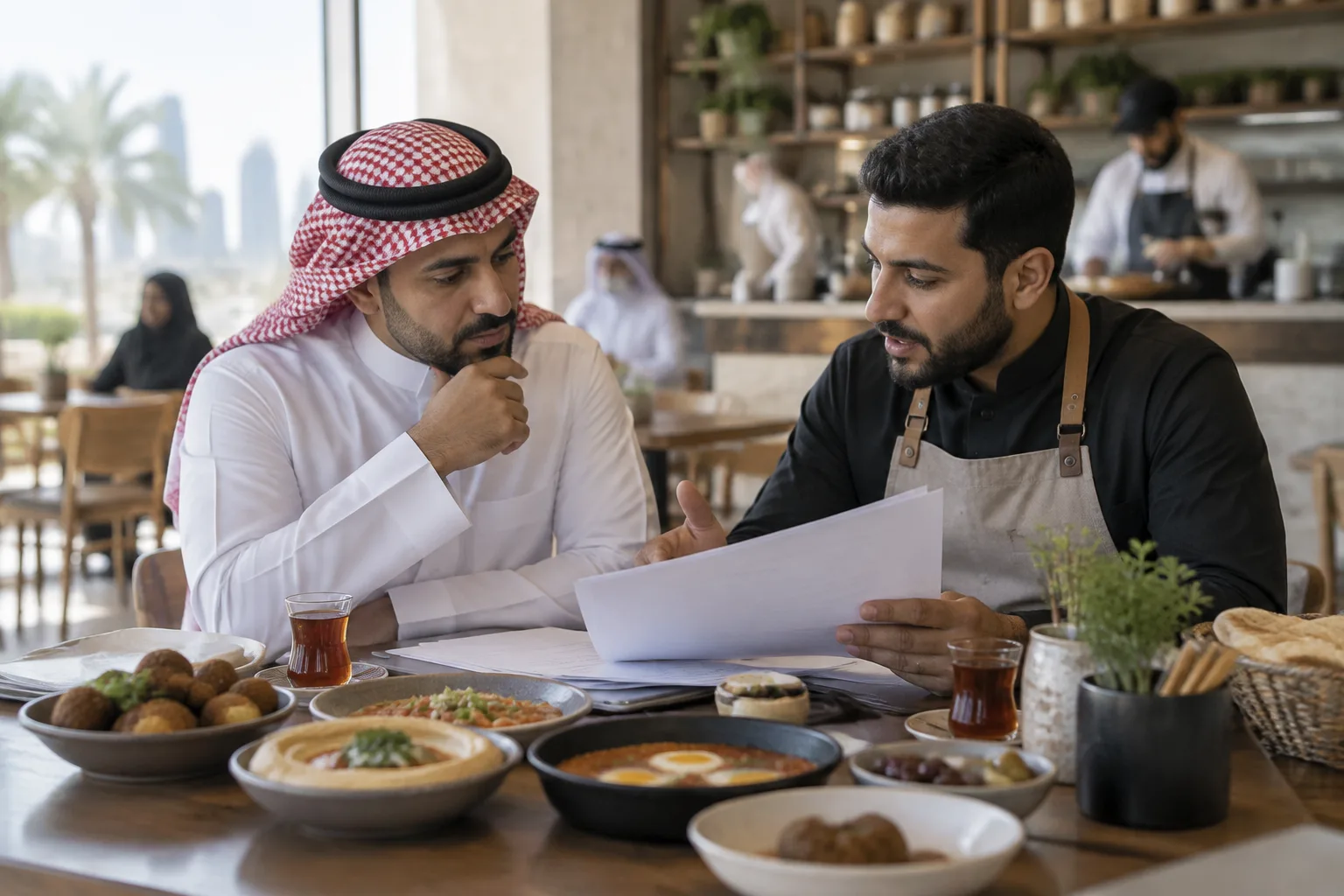
A report published by 7Grounds on 26 October 2026 highlighted advertised franchise opportunities from four Saudi brands specialising in traditional breakfast food, tea and baked goods, originating in Riyadh, Jeddah, Medina and Al Zulfi. The figures for Falafel Thimar, Areekat Al Deerah, Mishraq and Wijar reveal differences in investment requirements, fees and branch networks. They give prospective franchise investors a basis for comparison, but the figures alone do not mean the opportunities are equivalent or guarantee results.
Four local concepts with different expansion paths
Riyadh-based Falafel Thimar offers a traditional falafel concept. Its franchise listing records 40 company-owned outlets and 13 franchised outlets. Its model therefore combines direct operation with expansion through franchisees, although company-owned outlets make up the larger share of the network reported.
Areekat Al Deerah has served Hijazi breakfast food, from western Saudi Arabia, in Jeddah since 1997. It lists a network of seven company-owned outlets and three franchised outlets. This gives investors a different food concept to consider alongside falafel, although both brands serve traditional local dishes.
Mishraq was established in Medina in 2017 as a breakfast restaurant. Its listing includes four company-owned outlets and ten franchised outlets, meaning franchises outnumber company-owned sites in the published figures. This is a clear contrast with the network structures of Falafel Thimar and Areekat Al Deerah, but it is not enough on its own to judge any brand’s performance.
Wijar originates in Al Zulfi and offers a tea and bakery café concept dating back to 2014. Its figures list seven company-owned outlets, alongside the terms for acquiring a franchise. The listing does not give a number for existing franchised outlets, so the availability of a franchise opportunity should be distinguished from the size of the franchise network documented in the published data.
Investment and franchise fees: figures to assess separately
Falafel Thimar sets its franchise fee at SAR 60,000 and lists an investment requirement of SAR 800,000. Areekat Al Deerah’s franchise fee is SAR 150,000, against a stated investment of SAR 750,000.
Mishraq also lists a franchise fee of SAR 150,000, while its stated investment is SAR 1 million. Wijar sets its franchise fee at SAR 75,000, with investment starting from SAR 250,000. That wording indicates a starting point rather than a fixed amount for every potential project.
The comparison shows that the lowest franchise fee in this group does not come with the lowest stated investment. Falafel Thimar’s fee is lower than Wijar’s, but its listed investment is higher than Wijar’s advertised starting figure. Franchise fees alone therefore cannot be used to rank opportunities by the funding required.
The published table does not clarify whether franchise fees are included in the investment figures or charged in addition. The two amounts cannot therefore simply be added together and presented as a final cost. In practice, investors need to request a written cost breakdown explaining what each item covers before preparing a budget or comparing offers.
Ongoing fees and contract lengths
Falafel Thimar, Areekat Al Deerah and Wijar list identical rates: an ongoing fee of 5% and a marketing fee of 2%. Each advertises a five-year contract, according to the data compiled in the report.
Mishraq lists an ongoing fee of 6% and a marketing fee of 1%, with a seven-year contract. Although the two percentages add up to the same total as those of the other three brands, the allocation differs. That equal total does not establish that the services or contractual obligations are equivalent.
The table also provides insufficient detail on the basis used to calculate these percentages or on renewal terms. These points warrant direct clarification. Comparing a five-year contract with a seven-year contract is not simply a matter of duration: investors need to examine the associated rights and obligations without assuming any undisclosed terms.
How can these offers inform an investment decision?
The group illustrates the variety within local food and drink concepts, from falafel and Hijazi breakfast food to breakfast restaurants and tea cafés. It also shows that Saudi franchise offers are not concentrated in a single city: this comparison covers four different home markets, with varying network sizes and proportions of company-owned and franchised outlets.
However, the published outlet counts and fees are a starting point for due diligence, not evidence of branch profitability or investment payback periods. The table gives no revenue or profit figures for these brands, so it cannot be used to rank them by expected return or describe any one as the strongest financial option.
Practical takeaway: Start by comparing the concept and investment requirement, then ask each franchisor for a cost breakdown, the basis for calculating fees and the contract terms. Always distinguish between the franchise fee, the stated investment and actual outlet performance before making your decision.