Handling Complaints and Refunds Before Franchising Your Business
Clarify who will handle complaints, decide on remedies and cover the costs before awarding your first franchise.
Published
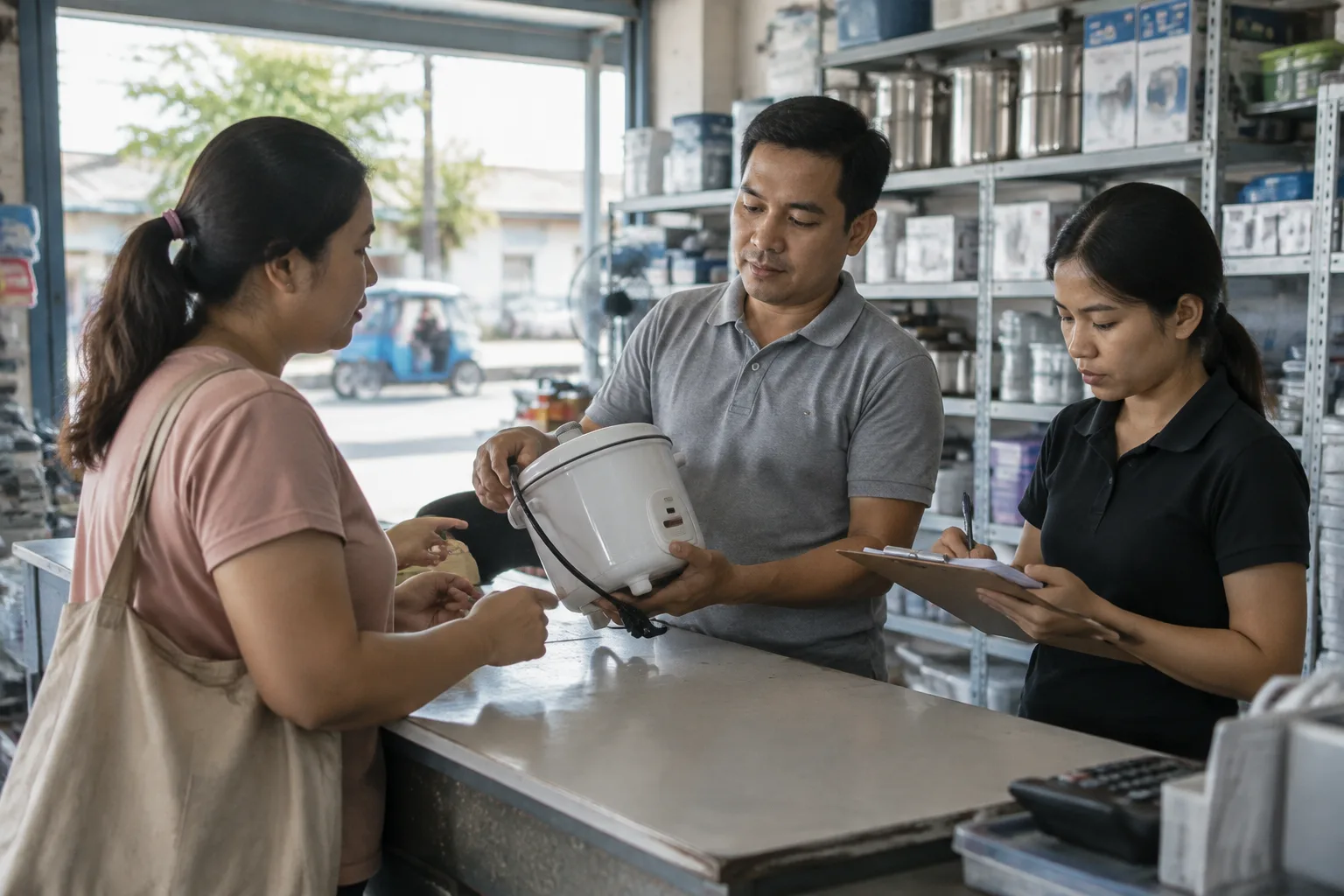
When several outlets share a brand, a complaint left unresolved by one shop can affect the entire franchise network. Before franchising your business, establish a clear process for complaints, replacements, repairs and refunds. Simply saying “that is up to the outlet owner” is not enough: customers need to know where to turn, and each partner needs to understand their responsibilities.
1. Distinguish consumer rights from goodwill policies
There is a difference between a remedy for a defective product and a discretionary exchange because a customer has simply changed their mind. Under Republic Act No. 7394, the Consumer Act of the Philippines, consumers have protections against defective products, deceptive practices and breaches of warranty obligations. Depending on the circumstances, appropriate remedies may include a repair, replacement or refund.
A blanket “no exchanges or refunds” policy cannot override statutory rights. Equally, a customer does not automatically have a right to a refund simply because they have changed their mind, where there is no defect or other legal basis.
Draw up separate policies for:
- Defects or failures: an incorrect product, faulty equipment or a service not delivered as agreed.
- Goodwill exchanges: exchanges based on colour, size or personal preference, where the business allows them.
- Immediate risks: complaints involving possible injury, contamination or health risks.
Have a lawyer review the conditions, particularly for perishable food, partially used services and products covered by warranties. Do not set internal deadlines that invalidate consumers’ statutory rights.
2. Assign responsibility for receiving complaints and making decisions
Make it clear who receives complaints in the first instance: the outlet, a central customer service team or both. Even where complaints are handled centrally, you still need to identify which outlet made the sale and who can provide the remedy.
Prepare a simple record covering the date, outlet, product or service, proof of purchase, description of the problem, remedy requested and response given. Ask only for the information needed. Restrict access to personal data and protect it in accordance with Republic Act No. 10173, the Data Privacy Act of the Philippines.
Also define decision-making authority. For example, a manager could be authorised to replace an incorrectly supplied product, while a complaint involving injury or a substantial claim should be escalated immediately to a designated officer. These are suggested arrangements, not legally prescribed levels of authority.
Set separate target times for acknowledging a complaint and reaching a decision. If further investigation is needed, tell the customer when to expect another update. Do not promise that the matter is resolved before it has been properly assessed.
3. Specify in the agreement who will cover the costs
Providing a remedy to the customer and allocating costs between business partners are two separate matters. Customers should not be passed from one party to another while the brand owner, supplier and outlet owner argue over responsibility.
The franchise agreement should clarify:
- Who can authorise and actually issue refunds.
- Who bears the cost when the error occurs at the outlet, during central preparation or during delivery.
- What documents an outlet needs to recover the amount it has paid out.
- How to handle a complaint received at an outlet other than the one where the purchase was made.
- How cost disputes will be resolved without delaying the appropriate response to the customer.
In the Philippines, specific rules apply to franchise agreements covered by Executive Order No. 169, series of 2022. It sets minimum terms for agreements with micro, small and medium-sized enterprise franchisees, and provides for registration of agreements with the Department of Trade and Industry (DTI). It does not replace consumer protection law or the general rules on contracts under the Civil Code.
Internal cost-sharing arrangements do not automatically remove any liability that the law may impose on a party.
4. Test the process using realistic scenarios
Before awarding the first franchise, run training exercises involving an incorrect order, a faulty product, a duplicate charge and a complaint made at a different outlet. Check whether staff can follow the process without constantly calling the brand owner.
Assess whether the response to the customer is clear, the records are complete and someone remains responsible until the matter is resolved. Use recurring complaints to identify improvements needed in products or service delivery, rather than simply counting refunds.
Practical takeaway: Before offering a franchise, put your remedies policy, decision-making limits and cost-sharing arrangements in place. A franchise network is stronger when responsibilities are clear and customers are not caught in the middle.
Sources
- How To Start a Franchise Business in the Philippines: A ...
- Turn Your Business in the Philippines Into a Franchise in 5 Steps
- How to Legally Start a Franchise Business in the Philippines
- How do I Franchise my Business? - Blog
- Doing Business in the Philippines as a Franchise in 2026
- How to Start a Franchise Business in Philippines
- Franchise Registration in the Philippines (Quick Guide)
- How to Start a Franchise Business: A Step-by-Step Guide