Which Products and Services to Authorise When Franchising in Mexico
Define what each franchise can sell and what is excluded, using clear criteria for quality, profitability and contractual clarity.
Published

Before franchising your business in Mexico, you need to resolve a question that often falls between the contract and day-to-day operations: exactly what will each outlet be allowed to sell? An overly broad offering makes delivery more complicated; an overly rigid one may overlook genuine differences between locations. Defining an authorised catalogue helps maintain a shared identity across the franchise network without turning each outlet into a different business.
1. Separate the core offering from optional additions
Not everything your current business sells needs to be included in the franchise. Some products may depend on a specialist, some services may attract only occasional demand, and some preparation processes may require facilities that are difficult to replicate.
Review each product or service and classify it into one of three groups:
- Core offering: what defines the business and must be available at every outlet operating in the relevant format.
- Authorised optional offering: what may be sold only when an outlet meets specific requirements for space, capacity or staff training.
- Excluded offering: what may not be sold under the brand, even if it appears complementary.
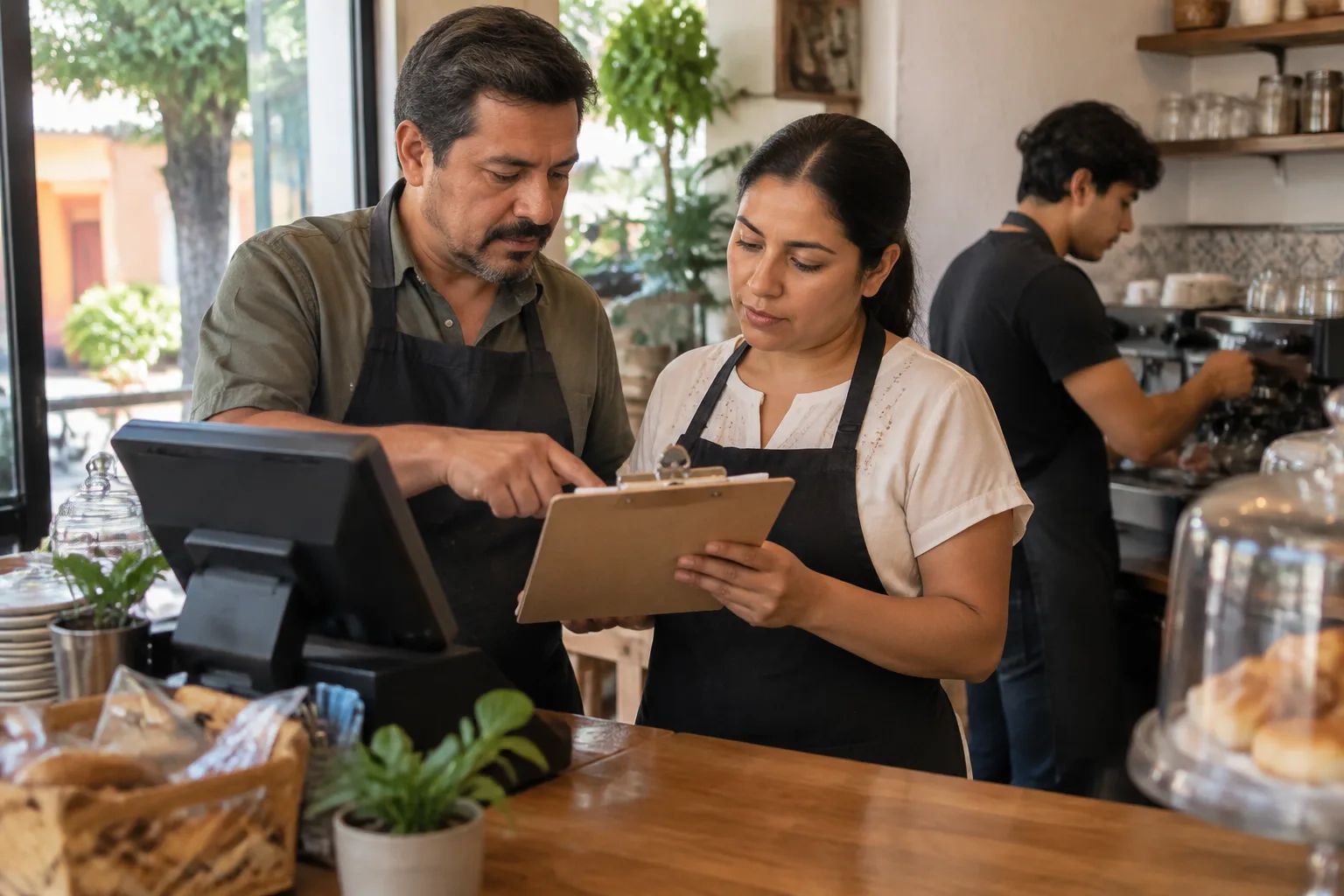
For example, a café could make drinks and basic food items its core offering, while reserving event catering for outlets with suitable preparation and transport capacity. Generating sales is not enough: the service must be deliverable without compromising normal customer service.
Record a verifiable reason for each decision. Replace “it does not fit the brand” with specific criteria: preparation times, storage requirements, expertise needed or incompatibility with the customer experience you promise.
2. Check that every item can be replicated
The catalogue should not simply copy your existing menu, price list or range of services. Before including an item, check that someone else can deliver it consistently.
Prepare a brief specification sheet for each product or service covering:
- Its name and a precise description of what the customer receives.
- Quality specifications and acceptance criteria.
- Materials, tools and skills required.
- Delivery or preparation time and the capacity it uses.
- The full cost of providing or producing it.
- Relevant restrictions, such as storage, safety or professional requirements.
Include costs that are often overlooked: consumables, packaging, waste and additional labour. A product that is profitable at your own premises may no longer be profitable if it requires special deliveries or creates surplus stock at a lower-volume outlet.
For services, define the scope particularly carefully. A “basic inspection”, for example, should specify which checks are included and which must be commissioned separately. This prevents different outlets from promising different services under the same name.
Authorising an offering does not guarantee its profitability. The assessment should establish the conditions under which it can be delivered, rather than promise commercial results.
3. Link the catalogue to the Mexican franchise agreement
Mexico has specific franchise legislation. Article 245 of the Federal Law on the Protection of Industrial Property (Ley Federal de Protección a la Propiedad Industrial, or LFPPI) defines franchising by linking a written trade mark licence with the transfer of technical knowledge or provision of technical assistance to produce goods, sell products or provide services consistently, while preserving quality, reputation and image.
Article 246 also requires the agreement to be in writing and to include, among other things, inventory, marketing and advertising policies, supply provisions where applicable, and criteria for assessing performance and quality.
The law does not require a document called an “authorised catalogue”. This is a practical tool for giving those obligations concrete form. Ask your legal adviser how to incorporate it as a clearly identified schedule to the agreement and define its relationship with the manuals.
The agreement should make clear which offerings are mandatory, which require authorisation and which activities fall outside the permitted use of the brand. Do not allow an informal sales list to contradict the agreed terms. Nor should you confuse product authorisation with the freedom to impose any commercial condition: restrictions must be reviewed against applicable rules, including competition law.
4. Make authorisation verifiable
Each outlet should know which catalogue applies to it. Identify its format, the applicable version and any expressly authorised options; retain evidence of receipt and acceptance as required by the agreement.
Also check that what is offered at the counter, in quotations and through digital channels matches that authorisation. An additional service advertised on a platform can create expectations that the outlet is not equipped to meet.
Practical application: before offering your first franchise, classify your current offering, complete the specification sheets and remove any ambiguities. The result should enable any future franchisee to understand what they can sell, under what conditions and within what scope.
Sources
- Franchising 2026 - Mexico | Global Practice Guides
- Preguntas y Respuestas Sobre el Contrato de Franquicia
- ¿Vas a adquirir una franquicia?
- Franquicias, licencias y cesión de derechos - impi.gob.mx
- Mexico - Franchising | export.gov
- Franchising 2026 Comparisons
- “ESTUDIO JURÍDICO DE LAS FRANQUICIAS EN MÉXICO”
- Unidad 3. Aspectos legales de las franquicias