Puebla franchises consider price adjustments as input costs rise
Rising raw material costs are putting pressure on franchises in Puebla, Mexico, prompting them to consider price adjustments before the end of 2026.
Published
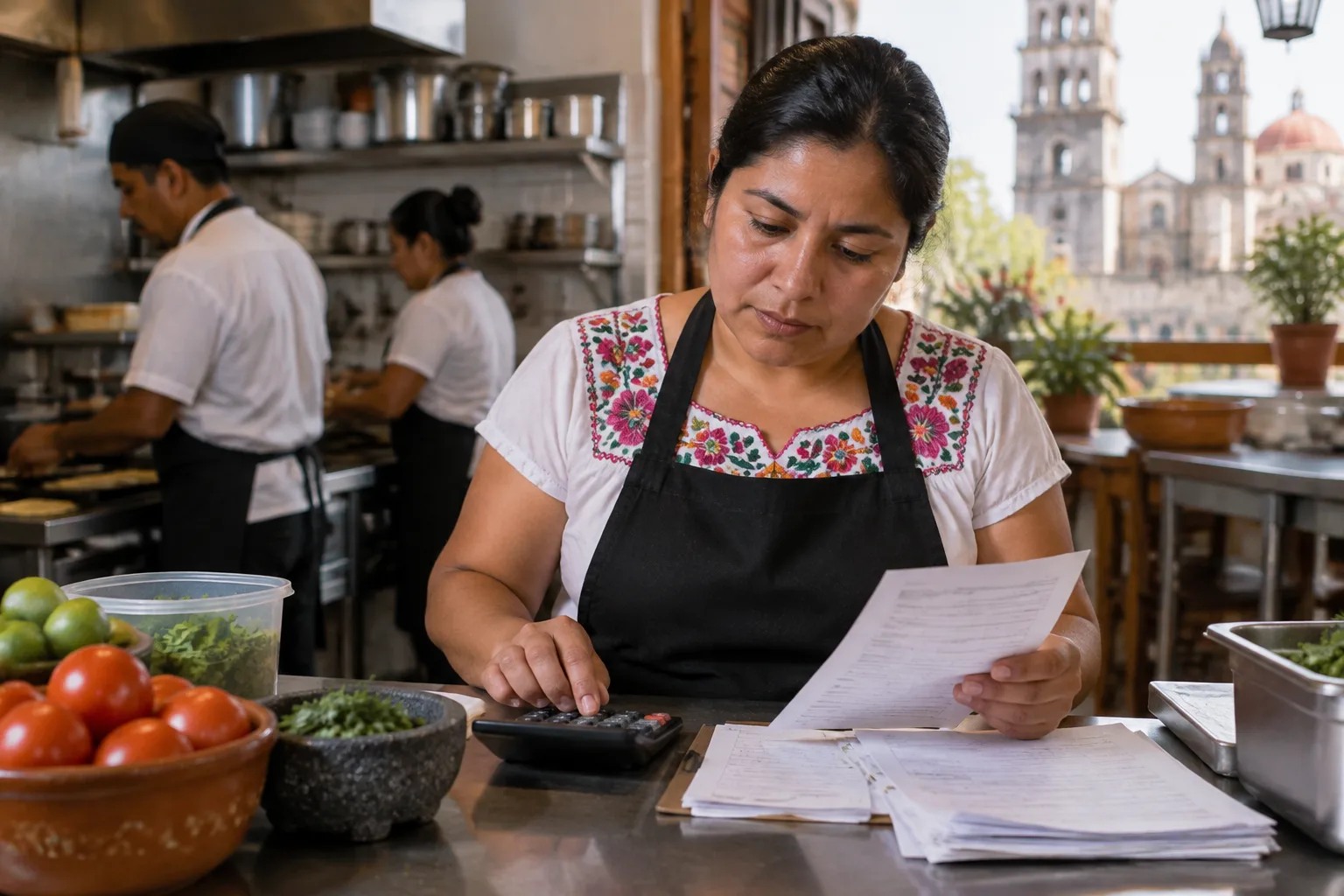
Franchises represented by the Mexican Franchise Network (Red Mexicana de Franquicias) in Puebla are considering adjusting their prices before the end of 2026 following a 15%–20% rise in raw material costs. Francisco Lobato Galindo, the organisation’s vice-president, warned that owners have absorbed these increases but face growing pressure on their operations and profits.
Rising costs prompt a review of prices
According to information published on 1 October, Lobato Galindo said the businesses he represents need to make a decision soon to avoid further effects on their income and jobs. The proposed review comes in response to rising input costs and sales that, he explained, have not grown as strongly as expected during the year.
A price review should not be confused with a confirmed increase. The available information does not specify a percentage adjustment for customers, an implementation date or a list of brands that have decided to change their prices. The 15%–20% range refers to the reported rise in raw material costs, not an announced increase in final prices.
“If input costs rise, we will have to take action (…) many products now cost more than we were paying before. We are being very cautious so that we do not hurt our own businesses either,” he said.
For Puebla’s franchise community, this situation raises the question of how much more businesses can absorb without passing some of the additional cost on to customers. Lobato said owners have continued to shoulder these increases, but argued that they cannot do so indefinitely.
Spring sales recovery does not ease the pressure
The vice-president of the Mexican Franchise Network explained that sales began to pick up in the second quarter of 2026. He attributed that recovery to long holiday weekends and celebrations such as Children’s Day, Mother’s Day and Teachers’ Day, as well as the Puebla Fair.
However, that boost has not prevented rising prices from squeezing profits. His assessment distinguishes between two factors: stronger sales around busy dates and higher costs that make it harder to turn those sales into profit.
Lobato expected a less positive end to the year than initially anticipated, although he clarified that this does not mean the businesses he represents are operating at a loss. His warning is therefore not an announcement of widespread losses: it describes profitability under pressure and what he sees as a need for adjustments.
No numerical sales forecast was provided for the final months of the year. The available assessment reflects the representative’s view of conditions facing member businesses, rather than a projection for all franchises in Mexico.
Intermediaries and supply arrangements under scrutiny
In explaining the rising costs, Lobato Galindo pointed to intermediaries as one of the persistent problems in the supply chain. In his view, it is often intermediaries, rather than farmers, who drive up product prices.
He added that producers can end up having to forgo their harvests because of hoarding or difficulty finding buyers willing to pay a fair price. This is the diagnosis offered by the executive; the information does not include a breakdown by raw material or a comparison of suppliers’ prices.
That distinction matters when interpreting the scope of the report: the stated increase does not establish how much each product has risen in price or how much of the increase is attributable to each stage of the supply chain.
No redundancies planned, but no scope to recruit
On staffing, Lobato ruled out redundancies, although he said conditions would not support further recruitment for the rest of the year. His position combines an intention to retain employees with limited scope to expand workforces.
He also reported ongoing staff turnover, with resignations occurring every three months. Reasons he cited included seeking better pay, wanting to devote time to other activities and deciding to start a business.
Practical takeaway: before changing prices, review each outlet’s costs, margins and staffing needs. Rising input costs are a reason to update budgets, not a percentage increase to pass on automatically to customers.