Fitting Out a Franchise Outlet in Lebanon: Managing Plans and Costs
How do you turn your business design into a clear fit-out package for franchisees, with agreed plans, costs and responsibilities before work begins?
Published
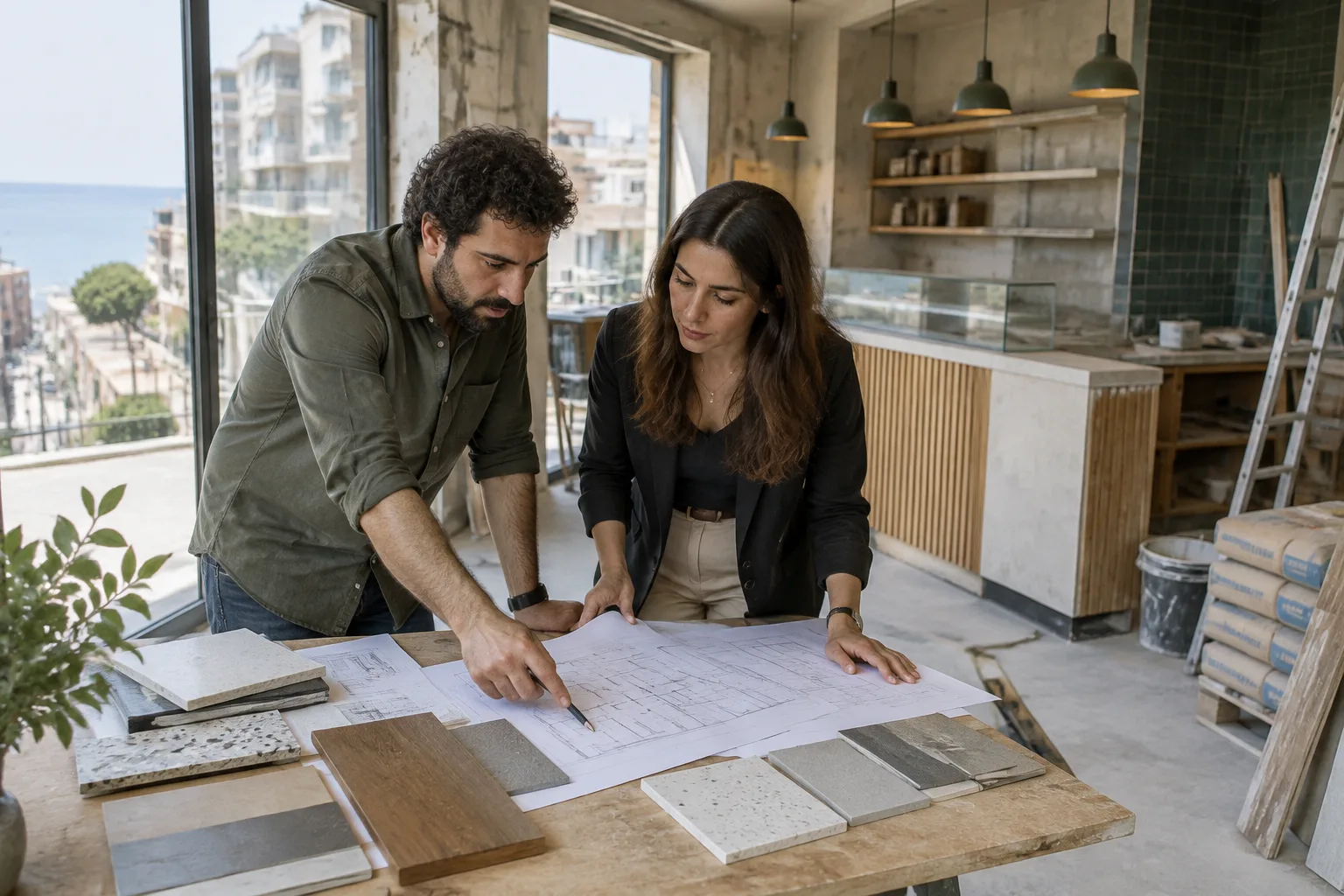
When you decide to franchise your existing business in Lebanon, photographs of your successful outlet are not enough for a partner to build a comparable one. A new design may retain your colours yet disrupt staff workflows or require equipment the operation does not need. A balanced franchise relationship starts with a clear distinction between what the franchisor specifies to protect its concept, what specialists design, and what the franchisee is responsible for. Prepare a design and fit-out package before allowing work to begin, rather than after the first dispute with the contractor.
1. Turn your business identity into practical requirements
Start by describing how the premises need to function, not just how they should look. Define the customer journey, service points, storage areas, staff circulation and equipment requirements. For a restaurant, for example, the layout for preparation and order handover matters more than copying the original outlet’s frontage exactly. In a service business, privacy and sound insulation may be central to the experience.
Divide fit-out requirements into three clear categories:
- Fixed elements: Features essential to operations or brand recognition, with an explanation of why they are mandatory.
- Adaptable elements: Solutions that can vary according to the size and layout of the premises, provided they fulfil the required function.
- Optional elements: Aesthetic or commercial additions that must not later be presented as mandatory requirements that were never agreed.
Create a brief specification sheet for each element, covering its specification, purpose, acceptable alternatives and who is authorised to approve an alternative. Do not tie an essential requirement to a single named product if it can be defined by performance, dimensions and durability. If an exclusive choice is necessary, explain why and what happens if it is unavailable.
Above all, distinguish between a concept drawing that conveys the identity of the space and a detailed construction drawing suitable for building work. Delivering the former does not mean you have supplied the latter, and this distinction should be explicit.
2. Allocate design and approval responsibilities in writing
Lebanon has no comprehensive franchise-specific law, nor a mandatory franchise disclosure regime comparable to those in some other countries. The relationship is governed primarily by the Code of Obligations and Contracts and other relevant general rules. Fit-out work is also subject to rules on construction, planning, permits, safety and professional liability, depending on the premises and the business activity. The absence of franchise-specific legislation does not exempt anyone from these rules.
The franchisor’s obligations to be defined in the contract should include supplying the franchisee with fit-out details and plans for the outlet. However, the scope needs to be precise: will the franchisor supply a standard concept, appoint a designer to adapt it, or provide a complete set of construction drawings? Who pays the professional fees at each stage?
Draw up a responsibility matrix identifying who surveys the premises, who designs the fit-out, who reviews the technical requirements and who approves compliance with the brand identity. Also distinguish between the decision-maker and the person coordinating correspondence: not every employee who comments on a drawing is authorised to give final approval.
You can clarify that the franchisor’s approval relates to its commercial and operational standards and does not replace review by the relevant qualified engineer or approval from the competent authorities. However, that wording does not remove liability that may arise from the franchisor’s own errors. Ask a Lebanese lawyer to align the allocation of responsibilities with each party’s actual role, rather than relying on a blanket disclaimer of liability.
3. Base cost estimates on stated specifications and assumptions
Do not present the cost of fitting out your original outlet as a guaranteed price for the new one. The condition of the premises, electrical capacity, ventilation and work needed before equipment installation may differ. In the estimate, separate the core building works, equipment, furniture and professional fees, and identify anything excluded from the total.
Include the date the estimate was prepared, the sources of its prices and its underlying assumptions. Explain whether taxes, delivery, installation and testing are included, and identify items awaiting a technical inspection or quotation. This allows the prospective franchisee to see what is known and what may still change, without turning preliminary figures into a misleading contractual promise.
Before requesting quotations, standardise the bill of quantities and specifications so that contractors’ bids can be compared on a like-for-like basis. Do not accept the cheapest bid without checking its exclusions: it may leave out work that a competitor has included in the price.
Put a written variation procedure in place as well. Each request should explain the reason for the change, its impact on cost and timing, the available alternatives and the approval required from the authorised party before implementation. If the franchisor requests a change after the plans have been approved, determine who bears the cost according to the contract and the reason for the change, rather than automatically assuming the franchisee always pays.
4. Use staged approvals and handover to avoid surprises
Divide the process into concept approval, construction drawing approval, approval of samples and equipment, and inspection of completed work. For each stage, specify the required documents, review deadline and method for recording comments. Do not treat a party’s silence as approval unless the contract clearly provides for this and the provision has undergone legal review.
Keep a numbered version of each drawing with its approval date, and withdraw superseded versions from the contractor’s use. Once the work is complete, prepare an inspection report distinguishing between defects that prevent operations from starting and outstanding items that can be resolved later, with a responsible person and deadline for each. Request the final as-built drawings, equipment manuals, warranties and relevant test results.
Practical takeaway: Before the first purchase order, have a package bringing together specifications, approved drawings, allocated responsibilities, a cost estimate, and procedures for variations and handover. This makes the outlet fit-out a manageable commitment rather than a series of conflicting expectations.
Sources
- الضمانات الاتفاقية لحماية أطراف عقد الامتياز التجاري ...
- عقد الفرانشيز (Franchising)
- Les principales caractéristiques du contrat de franchise
- عقد الفرنشيز
- New Horizons for Restaurants in Lebanon
- La franchise : un outil largement méconnu au Liban - N. B.
- [PDF] ﻋﻘد اﻻﻣﺗﯾﺎز اﻟﺗﺟﺎ
- [PDF] جامعة طرابلس – القانون كلية تاذ القانون التجاري والبحري أس مجال عمران