Premises and Licensing Checks Before Franchising: What to Verify Before Signing a Lease
What worked at a company-owned outlet may not be permitted at a new franchise location. Here are the checks franchisors should put in place, from pre-lease due diligence to approval to open.
Published
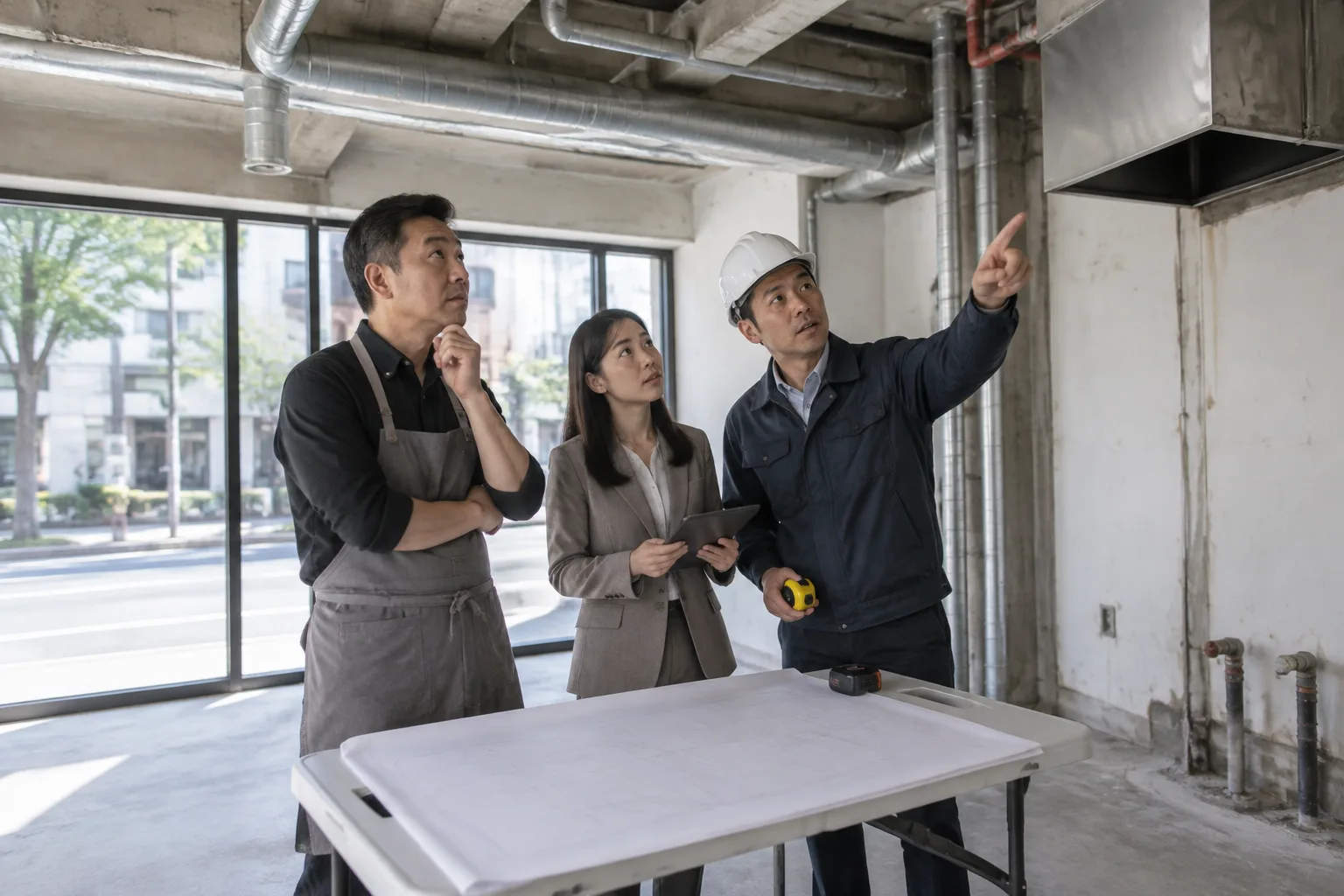
One easily overlooked part of turning an existing business into a franchise is checking which premises can accommodate your operating model. Even a site with strong footfall and attractive rent may be unable to open because of its permitted building use, ventilation routes or fire safety facilities. Building a healthy franchise network takes more than recommending good locations to franchisees: it requires a consistent process for checking whether a business can operate there before contracts are signed.
1. Turn the conditions behind your company-owned outlet’s success into site suitability criteria
The first step is not to copy the equipment list from your company-owned outlet, but to record why each item is needed. For a restaurant, separate out cooking methods, energy sources, water supply and drainage, electrical capacity, refrigerated storage and extraction requirements. For a service business, identify the practical operating requirements, including internal layout, customer circulation, noise and sanitary facilities. Two premises with the same floor area will not necessarily support the same operation.
Divide your checklist into legal requirements to verify, brand operating requirements and requirements that can be adjusted. If facilities required for a business notification are grouped together with the franchisor’s preferred interior design, franchisees may mistake every item of building work for a legal obligation. Conversely, treating extraction performance that is essential to the brand’s operations as merely recommended can lead to quality problems after opening.
For example, if your company-owned outlet uses only electric cooking equipment but a proposed site would use a different energy source, you must reassess equipment and safety requirements as well as food quality. Describing a property as a ‘former restaurant’ is not enough either. The previous and proposed businesses may differ in their category of operation, cooking methods and equipment layout.
Assign a verification method to each requirement. Distinguish between items that can be checked through building records, those requiring on-site measurements and those requiring enquiries with the relevant local authority. Specify who will decide whether a site is suitable and what evidence they will use, rather than relying entirely on verbal assurances from equipment contractors.
The fact that your company-owned outlet has operated without problems is useful background, not proof that a new site will comply with the law. If you are expanding based on a long-established outlet, check how its existing facilities were installed and notified to the authorities. Avoid turning exceptional circumstances at one site into the brand’s standard criteria for new openings.
2. Manage franchise law procedures separately from premises licensing
Franchising in South Korea is governed by the Fair Transactions in Franchise Business Act. Registration and advance provision of a franchise disclosure document under this Act are procedures relating to the franchise transaction. Registering a disclosure document does not authorise an individual outlet to trade. Nor does the franchisor’s approval of a site replace an authority’s acceptance of a business notification or the granting of a permit.
As a rule, a franchisor must not enter into a franchise agreement or accept franchise fees until 14 days have passed after providing the registered disclosure document and the document detailing nearby franchise outlets. Any special provision shortening this period where the prospective franchisee has received advice from a lawyer or a qualified franchise transaction adviser should be checked separately. The need to secure premises quickly does not justify skipping these procedures.
Restaurants must check the facility standards and business notification or other requirements applicable to their category of operation under the Food Sanitation Act. Permitted building use must be checked against the relevant requirements of the Building Act. Where applicable, safety facility requirements under the Special Act on the Safety Control of Publicly Used Establishments must also be reviewed. Do not assume that the same fire safety procedures apply to every restaurant.
The checks required may vary with the type of business, floor level, floor area and entrance layout. For hygiene training and health examinations, confirm who is covered and when these must be completed, based on the actual business and the work staff will perform. The franchisor should provide general guidance while helping the franchisee establish the specific requirements with the relevant authorities and professionals, using the proposed site’s address and plans.
Show franchise transaction procedures and premises licensing procedures on separate lines in the project timetable. Make it clear that completing one does not allow the project to move forward if the other remains outstanding. In particular, franchise agreements, leases and building contracts involve different parties and obligations: do not suggest that cancelling one automatically terminates the others.
3. Set review gates and stop criteria before signing the lease
A practical site development process has three review gates: document review; site inspection and checks with the relevant authorities; and a review of costs and timing. These are internal management stages for the franchisor, not statutory procedures. The key is to keep unverified matters clearly identified at each stage rather than marking everything as ‘suitable’.
- Document review: Check the building register, the proposed premises’ location and floor area, the status of the existing business and the landlord’s conditions of use.
- Site inspection: Examine water supply and drainage, electrical capacity, extraction routes, use of common areas, escape routes and whether the premises match the plans.
- Cost review: Identify remedial works, additional equipment, the time needed for administrative procedures and the people responsible, then decide whether to proceed with the site.
Present the actual operating plan when contacting the authorities. A question setting out the business category, cooking methods, seating layout and equipment locations is more useful than simply asking, ‘Can a restaurant operate here?’ Record the response alongside the enquiry date, department contacted, materials supplied and any assumptions or conditions. Also note that preliminary advice does not guarantee a final decision or approval.
Set stop criteria in advance. If the necessary extraction route cannot be secured, or the landlord will not consent to essential works, the project should stop even if projected sales look promising. Where a problem can be remedied, assign an owner and a completion deadline before reviewing it again. Do not let an optimistic judgement from the sales team override technical risks.
If signing a lease before completing the review is unavoidable, negotiate with the landlord how the contract and repayment of sums paid will be handled if the required approvals or a change of building use cannot be obtained, or if consent for essential works is refused. Such clauses require legal review because their effect depends on their wording and the facts. The franchisor should avoid guaranteeing repayment or merely supplying standard wording.
4. Record evidence and responsibilities when approving an opening
Set out the responsibilities of the franchisor, franchisee, designers and contractors in a table. For example, the franchisor may provide and review the brand’s premises standards; the franchisee may prepare the applications and documents needed for their business; and specialist firms may verify design and construction within their agreed scope. Allocate tasks in line with the contracts and scope of work, recognising that doing so does not automatically transfer legal liability.
The opening support described in the disclosure document and franchise agreement must also match the work actually provided. Rather than simply saying ‘licensing support’, specify whether this means directing the franchisee to advice, checking submission documents or handling applications for an additional fee. If the franchisor promises support and then shifts all responsibility for checks to the franchisee, disputes over costs and delays become more likely.
The opening approval checklist should record supporting documents for the business, inspection results for essential equipment, unresolved matters and the person responsible for final sign-off. If legal requirements still need to be confirmed with the authorities, internal approval from the franchisor must not be treated as sufficient grounds to start trading. Minor finishing repairs that do not directly affect whether the outlet can open can, however, be managed on a separate snagging list.
Use exceptional cases to improve subsequent site reviews. Keeping records of building types that repeatedly require extra work, documents frequently missed when preparing business notifications and facilities requiring landlord consent will make future checks faster. The aim is not to generate more paperwork for every outlet, but to identify risks before franchisees incur costs they may struggle to recover.
Practical takeaway: Before progressing the lease for your first franchise outlet, prepare a site suitability checklist and staged approval checklists. Assign a responsible person and a verification deadline to every unconfirmed requirement. If the legal requirements for trading remain unresolved, prioritise verification over the opening timetable.