Checking Company-Operated Franchise Outlets: How to Verify a Franchisor’s Experience Before Signing
Having a company-operated outlet does not prove that a franchise’s operating model works. Check who runs it, how long they have done so and how it differs from your proposed outlet to assess the franchisor’s practical capabilities.
Published
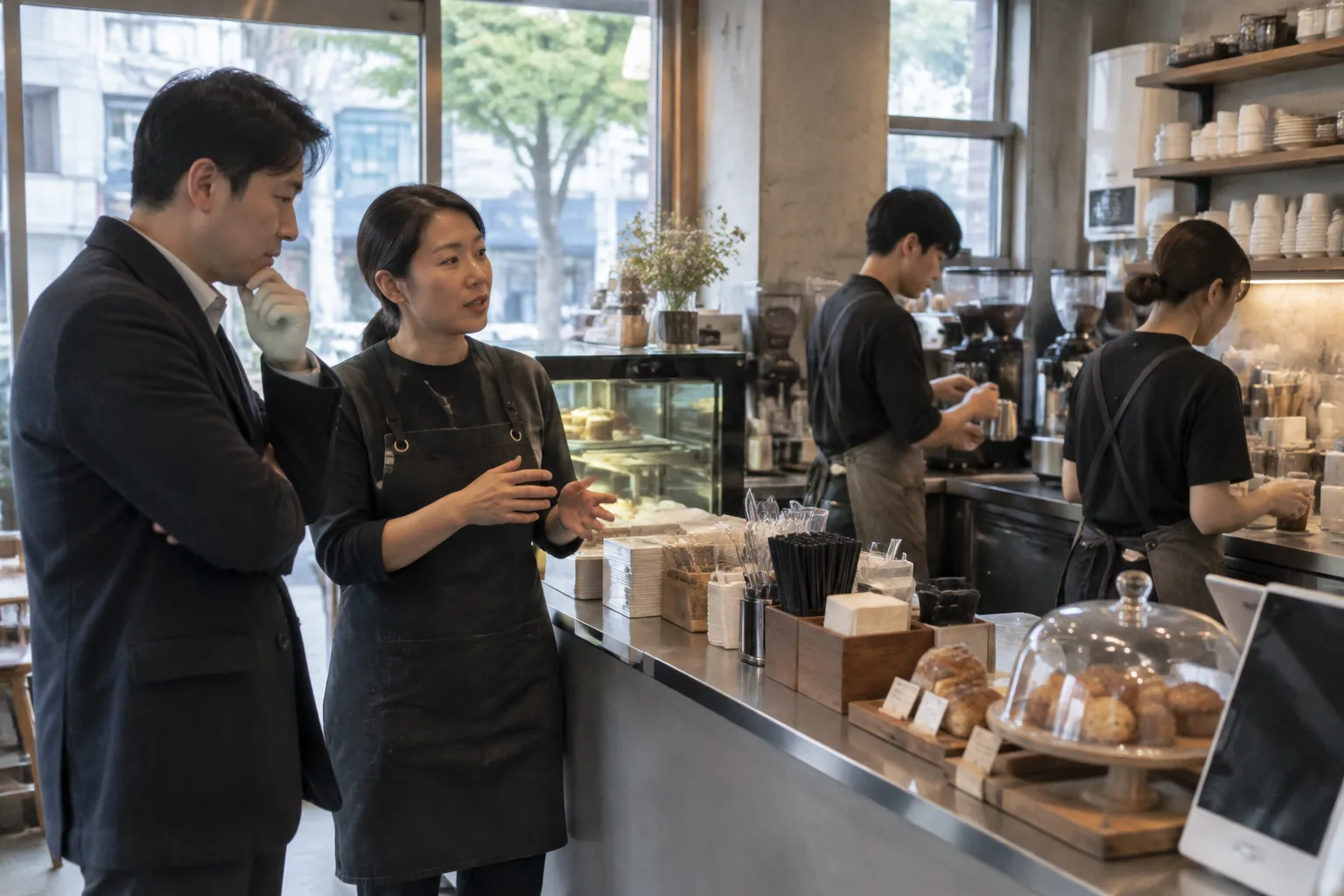
When choosing a franchise brand, look beyond an attractive shopfront and first establish how the franchisor has run the business. A company-operated outlet gives the franchisor a place to test products, staffing, workflows and customer service directly. But its value as a reference depends on whether it really is company-operated and whether its conditions match those of the outlet you plan to open. Before joining a franchise network in South Korea, here is how to check the franchisor’s operating experience.
Distinguish operating requirements from commercial viability
South Korea regulates franchising separately under the Fair Transactions in Franchise Business Act. Alongside requirements to register and provide a disclosure document in advance, the Act sets registration requirements relating to experience of running a company-operated outlet. In principle, a franchisor seeking to register a new disclosure document must be operating a company-run outlet under the same business identifier and quality standards or operating methods, and must have operated it for at least one year.
There are statutory exceptions, however, so the absence of an apparent company-operated outlet does not automatically mean that the franchisor is recruiting franchisees unlawfully. Equally, a registered disclosure document does not mean that every outlet’s profitability has been proven. Meeting registration requirements and being able to operate successfully at your chosen location are separate questions.
During discussions, go beyond asking, “Do you have a company-operated outlet?” Request written answers to the following:
- What are the addresses and actual opening dates of the company-operated outlets currently trading?
- Is the business operating each outlet the same entity that would sign the franchise agreement with me?
- Which outlet provided the evidence of operating experience used when registering the disclosure document?
- If an exception to the company-operated outlet requirement applied, on what grounds?
These questions are not intended to repeat the registration authority’s assessment. They are a starting point for understanding the operating experience behind the franchisor’s claims. If the explanation of an exception is vague, or the documents contradict one another, it is safer to ask a qualified Korean franchise transaction specialist or lawyer to review whether that exception applies before you sign.
Use records to establish who operated the outlet and for how long
Outlets with identical signage may have different ownership and operating arrangements. Do not assume an outlet is company-operated simply because you are told that a member of the franchisor’s staff or an associated person runs it. To understand the actual structure, check who is registered as the business operator and who is responsible for employing staff and paying rent and suppliers.
Start by comparing the company-operated outlets listed in the disclosure document with the list supplied by the franchisor. If the document’s reference date differs from your visit date, outlet numbers may have changed. Focus less on the discrepancy itself than on whether the explanations of openings, closures and changes in operating arrangements are consistent. If a company-operated outlet has become a franchised outlet, keep the current operator’s experience separate from the franchisor’s own direct operating experience.
You can request supporting material such as business registration records, opening records and documents identifying the operator. However, prospective franchisees do not automatically have a right to inspect all of a franchisor’s internal records. If documents contain personal data or commercially confidential information, suggest copies with sensitive details redacted, or summaries covering the relevant points.
Create a table recording each outlet’s name, address, operator, operating start date, any date when its operating arrangements changed, and the supporting evidence. Recording dates and responsible entities makes it easier to assess claims than relying on statements such as “We have run it for years”. Leave unverified entries blank rather than filling them with promotional claims.
Assess whether you could reproduce the operating model
When visiting a company-operated outlet, observe the work rather than the décor. Watch where staff are deployed when orders build up, how product preparation and customer service are divided, and when replenishment and cleaning take place. If possible, arrange visits with the franchisor during both busy and quiet periods. Do not draw conclusions about a full day’s operations from one brief visit.
In particular, compare the following conditions with those of your proposed outlet:
- Space: Are the storage areas, preparation rooms and staff movement routes comparable, as well as the sales area?
- Staffing: Are head-office staff or experienced support workers regularly deployed alongside the outlet manager?
- Equipment: Does the outlet use equipment that is not included in the quotation for your proposed outlet?
- Products: Does the range include products sold or trialled only at company-operated outlets?
- Customers: Do local workers, residents and visitors use the outlet in ways similar to those you would expect at your location?
For example, if head-office staff help prepare ingredients at the company-operated outlet but a franchisee would have to do that work themselves, comparing visible staff numbers alone is not enough. Reassess staffing and working time requirements to include tasks performed by head office. This is about checking whether the operating model can be reproduced, not forecasting sales.
When asking what makes the company-operated outlet successful, look for specific operating standards rather than an answer such as “It has a good location”. It helps to establish whether the franchisor has documented criteria for adding staff during order peaks, ordering methods that reduce stock shortages, and the training needed before new staff can work independently.
Turn your findings into criteria for deciding whether to sign
After your visit, divide your findings into three categories: facts verified through documents, things observed on site, and points supported only by the franchisor’s explanation. Mixing these types of evidence can allow a good impression from a short visit to obscure important gaps. Obtain the outlet’s permission before taking photographs or interviewing staff.
Next, record how you would address each difference between the visited outlet and your own. A smaller stockroom may require different delivery or storage arrangements; a shortage of experienced staff may require changes to task allocation and preparations for opening. Explain these differences to the franchisor and request workable alternatives. Record any additional equipment or staffing costs separately.
When comparing brands, do not rank them solely by the number of company-operated outlets they have. What matters is whether their operating experience can be adapted to a prospective franchisee’s circumstances. A franchisor that explains the experience of one outlet in detail may provide more useful evidence than one that showcases several outlets but cannot explain how their operations differ.
Action summary: Before signing, select one company-operated outlet, verify who has operated it and for how long, and draw up a table of the differences between that outlet and your proposed business. If the franchisor cannot explain how those differences will be addressed and what it will cost, do not rush to sign. A healthy franchise network is built on operating experience that can be shared and reproduced, not simply on an impressive showcase outlet.