Test a Pilot Outlet Before Franchising Your Business
Check whether your business can run without its owner before offering franchises. Use a pilot outlet to assess operating procedures, costs and support.
Published
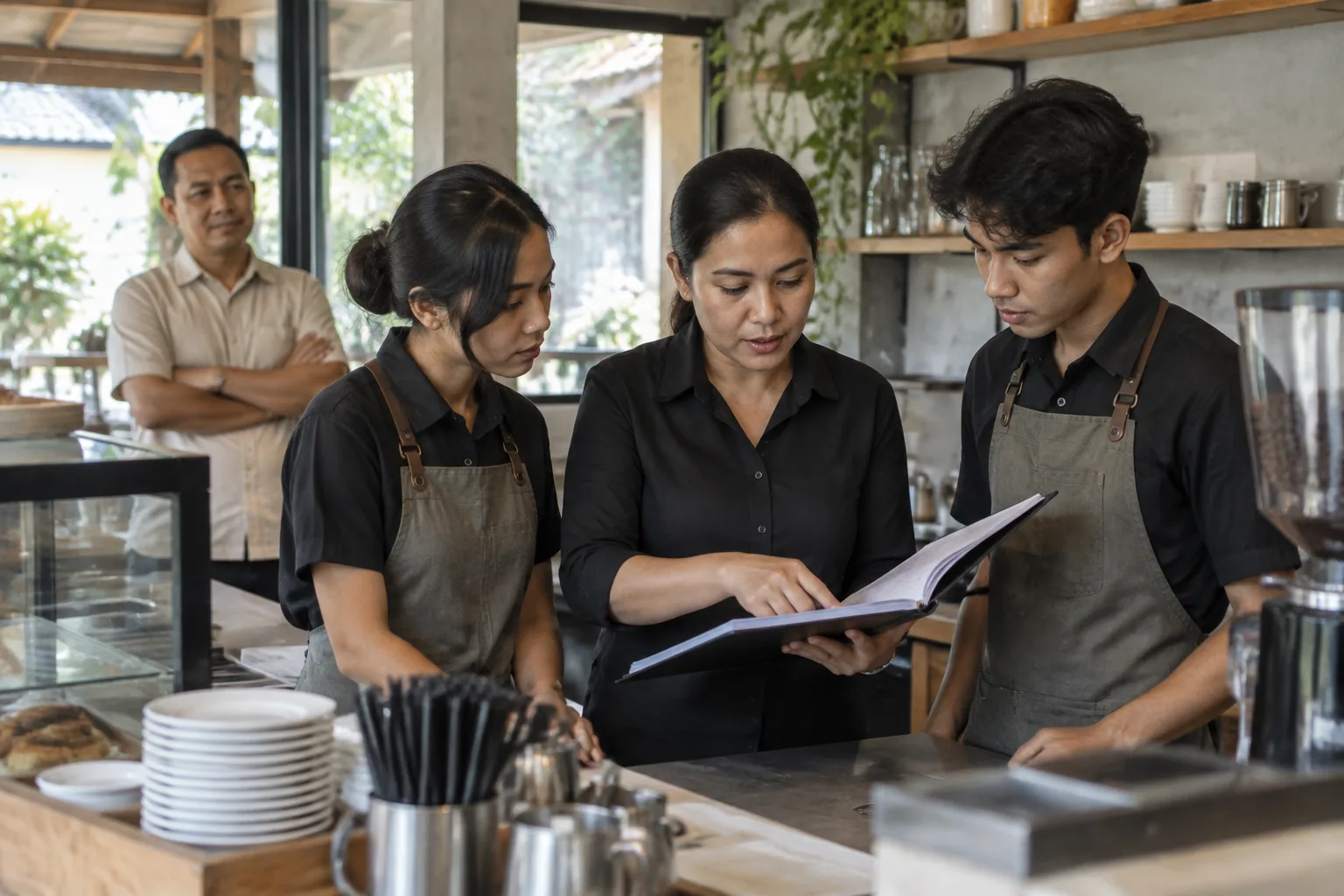
A busy outlet is not necessarily ready to be franchised. Its success may still depend on the owner supervising the kitchen, handling complaints or negotiating supplies every day. Before inviting partners to join your franchise network, use a pilot outlet to answer one question: can another team run the same system and achieve consistent results without the owner constantly stepping in?
1. Distinguish legal readiness from operational readiness
Indonesia’s Government Regulation No. 35 of 2024 on Franchising, which replaced Government Regulation No. 42 of 2007, sets out four franchise criteria: having a business system, having a business that has generated profits, holding recorded or registered intellectual property, and providing ongoing support to franchisees.
To demonstrate profitability, the regulation requires the business to have operated for at least three consecutive years. Its financial statements for the past two years must show a profit and have been audited by a public accountant with an unqualified opinion. Domestic franchisors classified as micro or small enterprises are exempt from this audit requirement.
Testing a pilot outlet is a management exercise, not a substitute for these legal requirements. A successful test does not remove obligations relating to intellectual property, support or the Franchise Registration Certificate (Surat Tanda Pendaftaran Waralaba, or STPW). Franchisors must hold an STPW before entering into a franchise agreement.
Keep two separate checklists: one for legal compliance and another for whether other people can operate the system. A business should only move on to preparing its franchise offering when there is sufficient evidence for both, rather than relying on the owner’s confidence alone.
2. Design a test that reflects a franchisee’s conditions
Choose an outlet that reasonably represents the format you intend to offer. Do not rely solely on a flagship outlet with an exceptional location, heavily discounted rent from family members or unpaid work by the owner as proof of success.
Set out the scope of the test in writing:
- Operators: managers and staff run the outlet with clearly defined authority.
- Guidance: the team uses the operations manual and training materials that will eventually be available to franchisees.
- Head office support: assistance is provided through channels that can scale as the number of franchisees grows.
- Test conditions: include busy days, quiet days, staff changes and supply disruptions that can be simulated safely.
- Evidence: record every problem, decision, additional cost and intervention by the owner.
Set the duration according to the business cycle, rather than simply working towards a launch date. The test must run long enough to reveal patterns in customer purchases, stock reordering, staff scheduling and complaint handling. The regulation does not prescribe a universal duration for pilot outlet testing.
3. Test the operations manual by reducing the owner’s role
Hand responsibility for carrying out tasks to the team, then observe which areas still require verbal explanation. A manual that looks comprehensive often falls short because it does not define decision-making authority: who may substitute ingredients, approve refunds or temporarily suspend service when equipment breaks down.
Keep a simple intervention log. For each incident, record the problem, the guidance staff looked for, the action taken, the owner’s assistance and any revisions needed. Identify whether the failure stems from unclear guidance, insufficient training or inadequate facilities.
For example, when the main supplier fails to deliver, staff should be able to find a list of approved alternatives, quality-check standards and rules on who can authorise emergency purchases. If the only solution is to call the owner, the system is not yet truly transferable.
Once the guidance has been improved, repeat the task with different staff. Do not assume a procedure works simply because the person who wrote it can follow it. Where food safety, workplace safety or customer protection is at stake, do not delay intervention merely to preserve the integrity of the test.
4. Calculate costs as though the outlet were run by a franchisee
The pilot outlet’s accounts need to reflect realistic costs. Include wages for someone to take over the owner’s work, a market-rate rent, maintenance, equipment depreciation, wastage and the cost of digital services actually used.
If the proposed franchise offering includes royalties or marketing contributions, include them in a separate financial scenario. Clearly label these figures as test assumptions, not historical costs already incurred. The aim is to see whether the outlet remains viable once a prospective franchisee’s obligations are taken into account.
Track a consistent set of measures: net sales, gross margin, labour costs, wastage, complaints and working capital requirements. Do not confuse profit with cash in the bank; an outlet reporting a profit can still struggle to pay suppliers.
Also record the hours of support provided by head office. An outlet that appears independent may actually need intensive assistance that has not yet been factored into the calculations.
5. Make an evidence-based decision
Before testing begins, set internal acceptance thresholds for quality, costs, service and reliance on the owner. Tailor these to the business; do not present them as legal standards or benchmarks for the entire franchise sector.
At the end of the test, make a clear decision: move on to preparing the franchise offering, make improvements and test again, or postpone the franchising plan. Keep the results report, the manual used, training records and a list of unresolved issues.
Practical first step: start by recording every intervention by the owner at one outlet. Turn recurring problems into procedures that can be taught, then test again before asking franchisees to invest.
Sources
- Pahami Ketentuan Pendaftaran Franchise
- Ubah Bisnis Jadi Penghasil Royalti: Panduan Urus Legalitas Bisnis ...
- [PDF] PENGATURAN HUKUM TENTANG FRANCHISE DI INDONESIA
- Peraturan Pemerintah Nomor: 35 TAHUN 2024 - Ortax
- 5
- Pengaturan Hukum Waralaba di Indonesia: Hak dan ...
- Microsoft Word - Draft Pedoman pasal 50b.doc
- Tinjauan Hukum Terhadap Eksistensi Waralaba Berdasarkan ...