Establishing a Franchise Site Approval Process in Indonesia
Put a site approval process in place to prevent prospective franchisees from committing to unsuitable premises.
Published
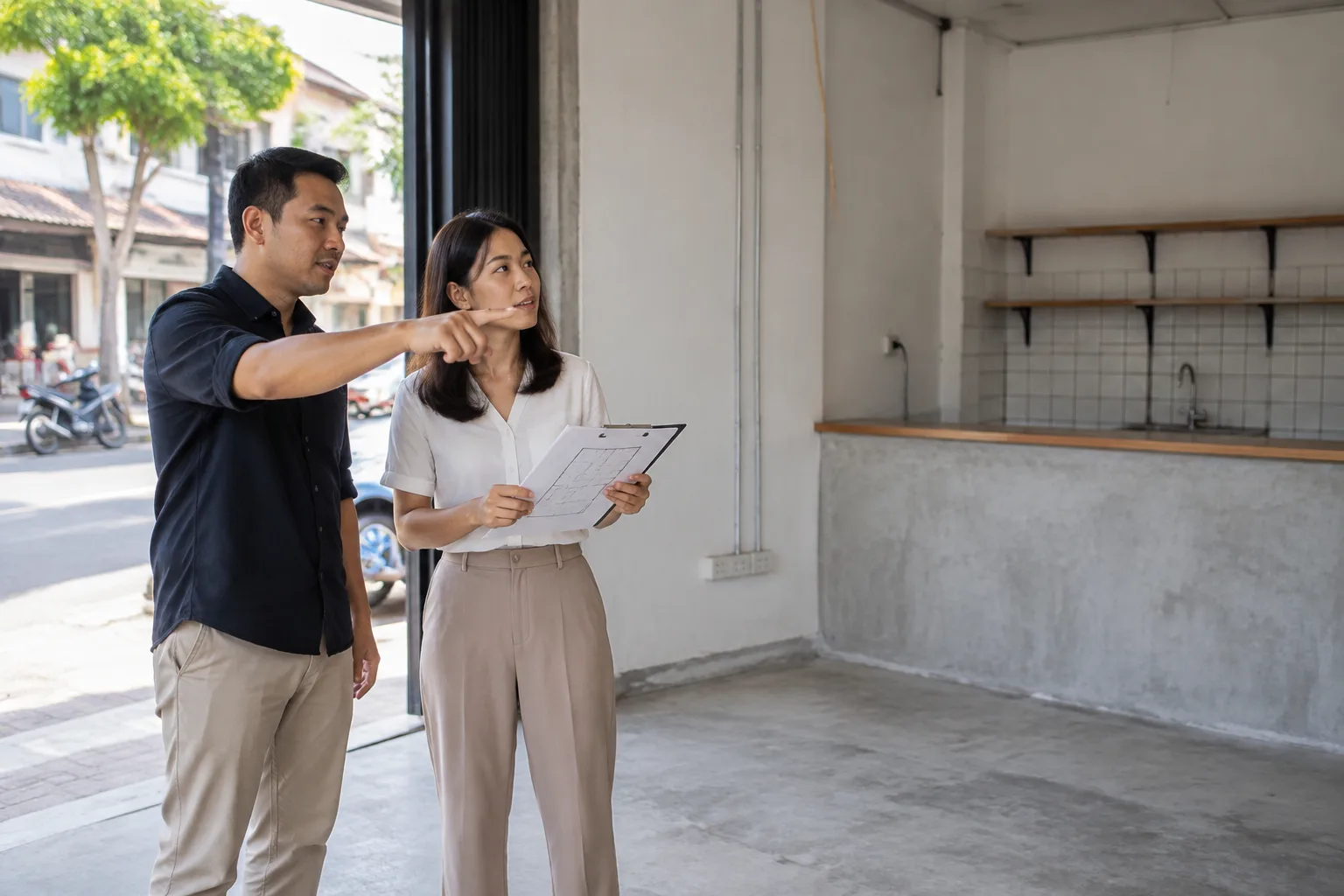
Before franchising a business, owners need to be able to explain not only how to run an outlet, but also how to select suitable premises. A busy location will not necessarily meet a franchisee’s operational needs or financial capacity. In franchising, a site approval process helps both parties make evidence-based decisions before money is committed to rent, refurbishment and equipment.
1. Turn site selection experience into written criteria
Start by reviewing the requirements of existing outlets. Go beyond broad conclusions such as “near offices” or “easy to see”. Set out the factors that genuinely influence sales and the team’s ability to serve customers.
Divide the criteria into three groups:
- Essential requirements: minimum working space for the service workflow, electrical capacity, water supply, waste disposal, delivery access and suitability of the building’s permitted use.
- Market fit: prospective customer profiles, visiting patterns, peak hours, pedestrian access and the presence of complementary businesses and competitors.
- Commercial viability: rent, building service charges, deposits, refurbishment and working capital requirements during the initial operating period.
Also define conditions that would lead to a site being rejected outright. For example, the business may require on-site food preparation, but the building management does not permit the installation of extraction ducting. High footfall must not be allowed to outweigh such an obstacle.
Use an assessment form that requires evidence rather than just ticked boxes. Photographs of delivery access, room dimensions, a written rental offer and footfall observation notes are more useful than a comment such as “it’s a good location”.
2. Set out the checks required before a franchisee commits to a lease
A sound process moves from low-cost checks towards larger commitments. A prospective franchisee should not sign an unconditional lease simply because the marketing team likes an address.
Use the following stages as a framework for your internal process:
- Initial screening: the prospective franchisee submits the address, floor plan, photographs, cost details and information about the owner or manager of the premises.
- Site visit: the team checks conditions on the ground, including access during peak hours and any technical work that may be needed.
- Commercial review: both parties assess projected sales transactions, premises costs and cash requirements using clearly explained assumptions.
- Document checks: verify the landlord’s authority to let the premises, the conditions governing their use and the permits relevant to the outlet’s activities.
- Written decision: the site is approved, approved subject to conditions or rejected, with documented reasons.
If the premises need to be secured in advance, consider negotiating a reservation agreement or conditional lease with legal advice. Make the refund conditions and deadlines clear; do not assume that a reservation payment is automatically refundable.
Site approval should also have an internal validity period. Changes to the rent, floor area or entrance access may make the original assessment outdated and require a fresh review.
3. Link site approval to the agreement and regulatory requirements
Indonesia’s principal legal framework for franchising is Government Regulation No. 35 of 2024 on Franchising, which repealed Government Regulation No. 42 of 2007. It sets out the criteria for a franchise, including a business system, a business that has already demonstrated profitability, recorded or registered intellectual property and ongoing support.
The regulation also requires the franchise offering prospectus to be provided at least 14 calendar days before the franchise agreement is signed. Franchisors must hold a Franchise Registration Certificate, known as a Surat Tanda Pendaftaran Waralaba or STPW, before entering into an agreement. Expediting site selection must therefore not be used as a reason to bypass these legal steps.
The site assessment process in this guide is a risk management recommendation, not a standard form mandated by the regulation. To make the allocation of responsibilities binding on the parties, set it out in the agreement or in a clearly referenced annex.
At a minimum, explain who will find the premises, pay for site surveys, sign the lease and bear the cost of any additional refurbishment. Also specify what happens if the site fails to meet the requirements following technical checks.
Distinguish business approval from building and licensing compliance. A franchisor’s approval does not replace checks on compliance with spatial planning requirements, Building Approval (Persetujuan Bangunan Gedung), a Certificate of Fitness for Use (Sertifikat Laik Fungsi) or relevant operating permits. The requirements must be checked against the building’s condition, the type of business and the outlet’s location.
4. Document the decision without promising success
The site approval letter should record the address, the floor plan reviewed, cost assumptions, any outstanding conditions and the internal officer granting approval. Avoid giving approval solely through a brief exchange that does not explain the scope and limits of the assessment.
Include a statement that the site assessment does not guarantee turnover or profit. However, that statement must not be used to justify misleading information. Projections must still have a reasonable basis and distinguish observed data from assumptions.
For example, the number of passers-by is not the same as the number of buyers. The team needs to explain how projected visits translate into projected transactions, then test the impact of lower sales volumes or a delayed opening.
Practical step: before offering your first franchise outlet, prepare a site assessment form, a list of grounds for rejection and a sample conditional approval letter. Make sure prospective franchisees understand all three before incurring any non-recoverable premises costs.
Sources
- Ubah Bisnis Jadi Penghasil Royalti: Panduan Urus Legalitas Bisnis ...
- PERATURAN PEMERINTAH REPUBLIK INDONESIA
- [PDF] PENGATURAN HUKUM TENTANG FRANCHISE DI INDONESIA
- Pahami Ketentuan Pendaftaran Franchise
- Peraturan Pemerintah Nomor: 35 TAHUN 2024 - Ortax
- 5
- [PDF] pelaksanaan perjanjian serta perlindungan hukum praktek - Neliti
- BAB 2 PERJANJIAN WARALABA DI TINJAU DARI HUKUM ...