Buying a Franchise: Check the Limits of Exclusive Territory Rights
Do not rely on promises of no competition from the same brand. Check the territorial boundaries, exceptions and protections in your franchise agreement.
Published
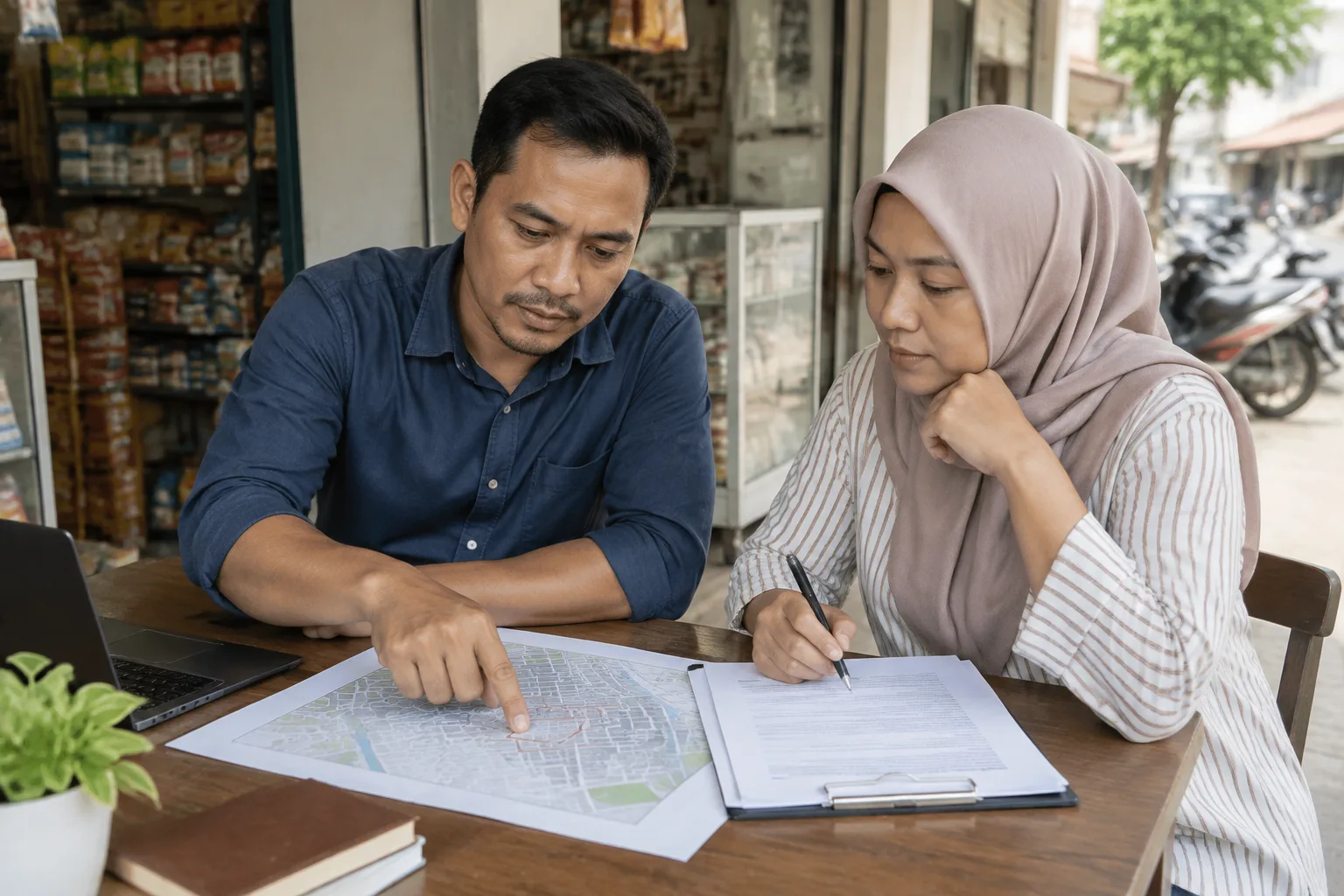
The promise of “one franchisee per territory” sounds reassuring when buying a franchise. But does it also rule out franchisor-owned outlets, delivery-only kitchens or sales through apps in the same area? Clear territorial arrangements help maintain good relations between franchisees and reduce business uncertainty. Before paying for exclusive rights, make sure the protection is clearly documented, can be mapped and is enforceable.
1. Distinguish site approval from exclusive territory rights
Approval to open an outlet at a particular address is not the same as exclusive rights over the surrounding area. An agreement may allow you to operate in a shopping centre while still permitting the franchisor to appoint another franchisee across the road.
Look out for these three types of arrangement:
- Site approval: you may operate an outlet at a specified address, with no promise to restrict other outlets.
- Protected territory: the opening of certain outlets is restricted within an agreed area, but exceptions may apply.
- Exclusive territory rights: you receive specified rights exclusively within the geographical boundaries and scope of business defined in the agreement.
These labels alone are not enough. Their meaning must be reflected in specific obligations on the franchisor. Ask who is prohibited from opening an outlet: only new franchisees, or also the franchisor itself and its affiliated companies?
Indonesia specifically regulates franchising through Government Regulation No. 35 of 2024 on Franchising, which replaced Government Regulation No. 42 of 2007. This regulation covers franchise offering prospectuses, agreements and registration. Franchise operations are based on an agreement between parties of equal legal standing and are governed by Indonesian law.
However, do not assume that these rules automatically give every franchisee a monopoly over an area. The extent of the protection you are buying must be made clear in the agreement, rather than inferred from a sales presentation.
2. Turn territorial promises into measurable boundaries
Phrases such as “the area around the outlet” or “the primary marketing territory” leave room for differing interpretations. Request a map with identifiable boundaries, then check it against the written description in the agreement.
If protection is defined by a radius, specify its centre point and how distances are measured. A straight-line distance is different from a distance measured along roads. If administrative boundaries are used, specify the name of the area and how the agreement will deal with any subsequent boundary changes.
If the site is within a large building, clarify whether protection covers the entire complex, one building or only a particular floor. An outlet within a station complex, for example, may serve different customers from one on the street outside, despite being close by.
Before agreeing to a territory, request written details of:
- Same-brand outlets already operating within and around the area.
- Sites that have been approved but have not yet opened.
- Territorial rights previously granted to other franchisees.
- Planned openings that could reduce the value of your protection.
Government Regulation No. 35 of 2024 requires the offering prospectus to be provided at least 14 calendar days before the franchise agreement is signed. Use this time to compare the territorial offer with the draft agreement. Do not treat a promotional map as a binding commitment if its status within the agreement is unclear.
3. Check exceptions and sales across different channels
Exclusive rights can lose much of their value if the exceptions are too broad. An agreement might protect conventional outlets but exclude temporary kiosks, hospital outlets, corporate sales or online orders.
Exceptions are not necessarily disadvantageous. What matters is understanding their impact before deciding whether the cost of buying the franchise still makes sense.
List the sales channels and ask what protection applies to each. Can the franchisor accept orders directly from customers within your territory? Can other outlets target advertising at customers in that area? How are app orders allocated when several outlets can serve the same address?
Distinguish between the outlet’s location and the customer’s location. A ban on opening new outlets within a territory does not necessarily prevent outlets outside it from delivering there. Equally, allocating delivery areas does not always confer exclusive rights to open a physical outlet.
Request written examples showing how the arrangements would work in realistic situations. For instance, a new outlet might open just outside your territorial boundary, while most of its delivery coverage overlaps with yours. Who receives the orders, and are there rules for allocating service?
The aim is not to prevent all competition, but to understand the scope of business you have actually been promised. Where necessary, ask a legal adviser to assess the territorial restrictions and their compliance with competition law.
4. Agree how territory changes and breaches will be handled
Territorial protection should have a clear start date and duration. Check whether the rights take effect when the agreement is signed, when the site is approved or only after the outlet opens. A gap in protection during the preparation period could cause problems if another site is approved while you are setting up your outlet.
Also check whether the franchisor can unilaterally reduce your territory. If changes are permitted, negotiate objective grounds, written notice, a consultation process and any required consent. Avoid provisions that leave every decision to “network development needs” without clearly defined limits.
Specify what happens if your territorial rights are breached. Negotiable options might include withdrawing a conflicting site approval, adjusting service arrangements or providing compensation for demonstrable losses. These are not automatic rights; the wording must be agreed and legally reviewed.
Practical step: before signing, prepare a territory map, a list of exceptions and a procedure for remedying breaches of your rights. If these three elements are not clear, do not assess the package price as though you already have an exclusive territory.
Sources
- Panduan Beli Waralaba, Tata Cara Hingga Akad Fikih Biar ...
- Menimbang
- Waralaba: Syarat dan Hukum di Indonesia | PDF
- Jurnal Lex Suprema
- Contoh Perjanjian Waralaba yang Aman & Anti Penipuan!
- BERITA NEGARA REPUBLIK INDONESIA - peraturan.go.id
- MAKALAH HUKBIS WARALABA
- [PDF] perlindungan hukum bagi penerima waralaba akibat wanprestasi ...